
St Andrews Cathedral
Archdiocese of St Andrews·Catholic (historical)·Scotland
St Andrews Cathedral is a ruined cathedral in St Andrews, Fife, Scotland, founded in 1158. It served as the principal center of the Medieval Catholic Church in Scotland and was the seat of the Archdiocese of St Andrews. Following its destruction during the 16th-century Scottish Reformation, it fell into disuse and ruin.
Key Facts
- ›Construction began in 1158 and the cathedral was completed and consecrated in 1318.
- ›The west end was rebuilt between 1272 and 1279 after being destroyed by a storm.
- ›A fire in 1378 necessitated restoration and further embellishments, completed by 1440.
- ›During the Reformation in 1559, a mob ransacked the cathedral, leading to its abandonment and ruin.
- ›The ruins are the largest church ever built in Scotland, measuring approximately 119 meters in length.
- ›It was the seat of the Archdiocese of St Andrews and the Bishops and Archbishops of St Andrews.

Norman, Early Scottish
St Rule's Tower, the Pends, Ruins of the Largest Church Built In Scotland
About St Andrews Cathedral
St Andrews Cathedral: A Ruined Monument to Scotland's Medieval Faith
St Andrews Cathedral, located in the historic town of St Andrews, Fife, Scotland, is a monumental ruin that once served as the heart of the Medieval Catholic Church in Scotland. Its construction began in 1158, intended to provide greater accommodation than the older church of St. Regulus (St. Rule). The cathedral's development spanned over a century, with significant rebuilding of its west end between 1272 and 1279 after it was damaged by a storm. It was finally completed and consecrated on July 5, 1318, in the presence of King Robert the Bruce.
History and Significance
As the seat of the Archdiocese of St Andrews, the cathedral was a pivotal religious and administrative center. The building itself was a testament to the era's architectural ambition, eventually measuring approximately 119 meters in length and standing as the largest church ever constructed in Scotland. Its architectural styles blend Norman and Early Scottish influences, with remnants of its grandeur visible in the surviving east and west gables, parts of the nave's south wall, and the west wall of the south transept.
Decline and Ruin
The cathedral's active religious life was dramatically cut short in June 1559 during the Scottish Reformation. Following inflammatory preaching, a Protestant mob ransacked the interior, leading to the cathedral's abandonment and subsequent decay. By 1561, it was left to ruin, and large portions were quarried for building materials. The central tower collapsed around the end of the 16th century, further contributing to its derelict state. Since 1826, efforts have been made to preserve the ruins, which are now managed by Historic Environment Scotland.
Associated Structures and Legacy
Adjacent to the cathedral are the remains of the St Andrews Cathedral Priory, served by Augustinian Canons. A notable surviving structure is St Rule's Tower, which predates the cathedral and originally housed the relics of Saint Andrew, reputedly brought from Patras in Greece. This tower, standing 33 meters high, remains a prominent landmark. Although the cathedral is no longer an active place of worship, its ruins stand as a powerful reminder of Scotland's medieval religious past and are a significant historical site, attracting visitors interested in its history and architectural remnants. The cathedral burial ground contains the graves of many notable figures, including bishops, scholars, and golfers like Old Tom Morris and Young Tom Morris.
Source: Wikipedia ↗
Frequently Asked Questions
When was St Andrews Cathedral built?
Work began on the new cathedral in 1158. It was finally completed and consecrated on July 5, 1318.
Why is St Andrews Cathedral in ruins?
The cathedral fell into ruin after a Protestant mob ransacked it in June 1559 during the Reformation. It was subsequently abandoned and used as a source of building material.
What was the significance of St Andrews Cathedral?
It was the center of the Medieval Catholic Church in Scotland and served as the seat of the Archdiocese of St Andrews, its Bishops, and Archbishops.
What is the size of St Andrews Cathedral?
The ruins indicate the building was approximately 119 meters (390 ft) long, making it the largest church ever built in Scotland.
What remains of St Andrews Cathedral today?
The principal portions extant include the east and west gables, the greater part of the south wall of the nave, and the west wall of the south transept. St Rule's Tower, predating the cathedral, also remains.
Related Cathedrals
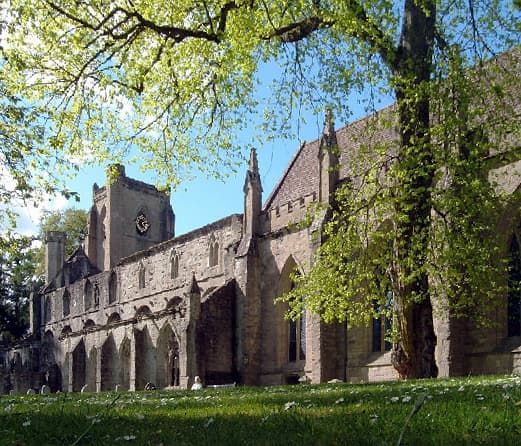
Dunkeld Cathedral
Dunkeld Cathedral is a historic Church of Scotland place of worship situated on the north bank of the River Tay in Dunkeld, Scotland. While no longer formally a cathedral with bishops, it retains the name and stands on the site of a former Culdee monastery, showcasing a blend of Gothic and Norman architectural elements. The cathedral is a significant historical site, believed to have once housed relics of Saint Columba, and is still an active parish church.

Glasgow Cathedral
Glasgow Cathedral is a historic parish church of the Church of Scotland, serving as the mother church of the Archdiocese of Glasgow and the province of Glasgow from the 12th century until the Scottish Reformation. It is the oldest cathedral in mainland Scotland and the oldest building in Glasgow, notable for surviving the Reformation largely intact. The cathedral is dedicated to Saint Mungo, the city's patron saint, whose tomb is located within the Lower Church.
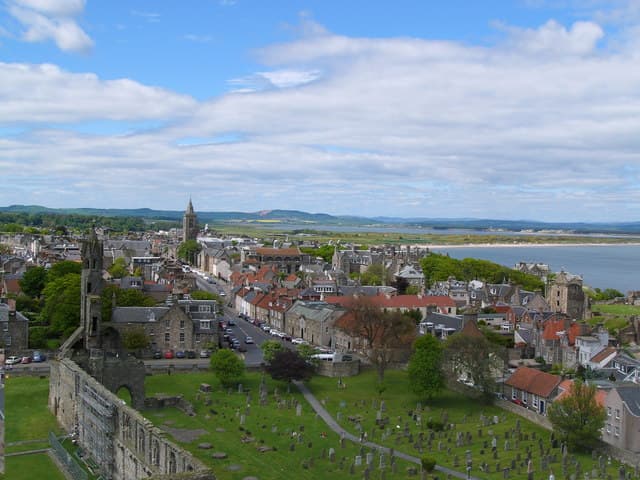
St Andrews
St Andrews Cathedral, a ruined Gothic structure in Fife, Scotland, was once the largest church in the country and the ecclesiastical capital of Scotland. Despite its current state, it remains a significant historical site, drawing visitors interested in its religious and architectural past. The town of St Andrews itself is globally recognized as the "home of golf" and hosts one of the oldest universities in the English-speaking world.