
Iona Abbey
Christian (historically Columban, Benedictine; currently ecumenical Christian)·Scotland
Iona Abbey is a historic religious site located on the island of Iona, off the west coast of Scotland. Founded by Saint Columba in 563 AD, it became a pivotal center for the spread of Christianity throughout Scotland and Western Europe. The abbey church, significantly rebuilt in the 15th century by the Lords of the Isles, is now a spiritual home for the ecumenical Iona Community and remains a popular site for Christian pilgrimage.
Key Facts
- ›Founded in 563 AD by Saint Columba and twelve companions, it was one of the earliest Christian centers in Western Europe.
- ›Played a crucial role in spreading Christianity among the Picts and Scots and influenced the establishment of Christianity in Northumbria.
- ›The abbey was a significant monastic center for manuscript production, including the creation of the Book of Kells.
- ›Suffered multiple Viking attacks between 795 and 825 AD, leading to the relocation of relics and monks to Kells, Ireland.
- ›In the 12th century, it became the ecclesiastical capital for the Macdonald lords of Clan Donald, who heavily endowed and maintained it.
- ›The medieval abbey church, known as the 'Cathedral of the Isles,' was largely rebuilt in the 15th century and restored in the 20th century.

Romanesque, Gothic, Reconstructed 20th Century
St. Martin's Cross, Replica of St. John's Cross, Graves of the Lords of the Isles, Cloisters With Carvings By Christopher Hall, Site of the Original Columban Monastery
Ian Gordon Lindsay
About Iona Abbey
Iona Abbey: A Foundation Stone of Scottish Christianity
Iona Abbey, situated on the small island of Iona off the west coast of Scotland, stands as one of the most significant and ancient Christian religious centers in Western Europe. Its history is intrinsically linked to Saint Columba, an Irish monk who, along with twelve companions, founded a monastery here in 563 AD. From this remote island, Iona became a pivotal hub for the dissemination of Christianity throughout Scotland and influenced religious life across the British Isles and the continent.
Early Monasticism and Scholarship
Columba's vision for the monastery was to create a model of Christian perfection, a "perfect monastery as an image of the heavenly city of Jerusalem." While not solely focused on missionary work, the monks followed strict Celtic Christian practices, engaging in daily worship and labor. The early monastery, initially composed of wattle and timber structures, evolved over centuries. A significant aspect of Iona's early life was its role in manuscript production. The Chronicle of Ireland incorporated annals compiled on Iona, and it is widely believed to be the place where the exquisite Book of Kells was produced in the years leading up to 800 AD. The island also featured impressive stone crosses, some carved from imported stone, which marked graves and broadcast Christian messages.
Challenges and Transformations
Iona Abbey faced considerable adversity, particularly from Viking raids that began in 795 AD, with a devastating attack in 806 AD resulting in the massacre of 68 monks. These attacks led to the relocation of many monks and relics to Kells in Ireland, though Iona remained important. In the 12th century, the abbey's prominence was renewed when it became the ecclesiastical center for the Macdonald lords of Clan Donald. From 1207 to 1493, the Macdonalds were instrumental in the abbey's medieval development and prestige. They endowed and maintained the abbey church, which they considered their "Cathedral of The Isles," leading to substantial rebuilding and expansion in the 15th century.
Medieval Patronage and Modern Revival
The medieval Iona Abbey, largely a legacy of the 15th-century Macdonald Lords, represented a significant architectural and spiritual achievement. However, following the Scottish Reformation, the abbey was dismantled and abandoned. The site remained in ruins until 1899 when ownership of the remains was transferred to the Iona Cathedral Trust. In the 20th century, inspired by Reverend George MacLeod, the abbey was extensively rebuilt, and the Iona Community, an ecumenical Christian order, was founded. This community continues to use the abbey as its spiritual home today, maintaining its status as a popular site for Christian pilgrimage and a place of reflection and renewal.
Source: Wikipedia ↗
Frequently Asked Questions
When was Iona Abbey founded?
Iona Abbey was founded in 563 AD by Saint Columba and his twelve companions. This marked the beginning of a significant Christian religious center in Western Europe.
What was the historical significance of Iona Abbey?
Iona Abbey was a focal point for the spread of Christianity throughout Scotland and beyond. It was a center for learning, manuscript production, and monastic life, influencing religious practices and the development of early Scottish kingdoms.
Who were the key patrons of Iona Abbey in its medieval history?
The Macdonald lords of Clan Donald were central to Iona Abbey's medieval existence from 1207 to 1493. They considered the abbey church their spiritual seat and endowed it significantly, leading to its substantial rebuilding in the 15th century.
Has Iona Abbey always been an active place of worship?
While Iona Abbey has a long history of continuous religious activity, it suffered periods of decline, particularly after the Reformation when it was dismantled and abandoned. It was significantly restored in the 20th century and is now the spiritual home of the Iona Community, remaining an active place of worship and pilgrimage.
What is the Book of Kells and its connection to Iona Abbey?
The Book of Kells is a highly ornate illuminated manuscript believed to have been produced by the monks of Iona Abbey in the years leading up to 800 AD. Its creation highlights the abbey's importance as a center for artistic and scholarly endeavor.
What happened to Iona Abbey after the Viking attacks?
Following Viking attacks in the late 8th and early 9th centuries, many monks relocated to Kells in Ireland, and the main relics were moved there in 878 AD. Despite these disruptions and the abbey being burned, Iona likely remained occupied due to its continued importance.
What is the role of the Iona Community at the Abbey today?
The Iona Abbey is currently the spiritual home of the Iona Community, an ecumenical Christian religious order founded in the 20th century. They use the site for worship, reflection, and as a base for their broader activities.
Related Cathedrals

Lucca Cathedral
Lucca Cathedral, officially dedicated to Saint Martin of Tours, is a Roman Catholic cathedral and the seat of the Archbishop of Lucca, Italy. Its history spans from the 6th century, with the current structure initiated in 1060 and consecrated in 1070. It is renowned for its Romanesque and Gothic architecture, housing significant relics like the Holy Face of Lucca and notable artworks.

Whithorn
Whithorn is a historic royal burgh in Dumfries and Galloway, Scotland, significant as the site of the first recorded Christian church in Scotland, Candida Casa, built by Saint Ninian around 397 CE. The town's historical importance is rooted in its role as a major medieval pilgrimage destination, particularly associated with Saint Ninian.
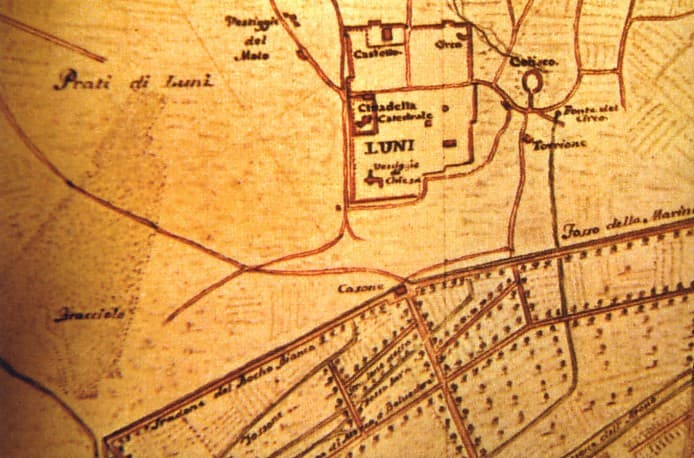
Luni Cathedral
Luni Cathedral, formerly the Pieve of Santa Maria, was a significant religious center located in the ancient Roman city of Luni, Liguria, Italy. Originally built by Romans in the late 4th and early 5th centuries, it served as the seat of the Diocese of Luni and was considered the "mother" church for the region. Despite its eventual abandonment and ruin as the city declined, it remained a site of annual liturgical observance until the early 14th century.