
Iona Abbey
Iona Abbey is one of the oldest Christian centers in Western Europe, established on the island of Iona off the west coast of Scotland. Founded by Saint Columba in 563, it served as a crucial hub for the spread of Christianity throughout Scotland. After periods of Viking raids and rebuilding, it became a Benedictine abbey and later the ecclesiastical capital for the Macdonald Lords of the Isles. Today, it is the spiritual home of the Iona Community, an ecumenical Christian order, and remains a significant site for Christian pilgrimage.
Key Facts
- ›Founded by Saint Columba and twelve companions in 563 AD.
- ›Was a focal point for the spread of Christianity in Scotland.
- ›Suffered multiple Viking attacks, including the massacre of 68 monks in 806 AD.
- ›Became a Benedictine abbey in the 12th century.
- ›Served as the ecclesiastical capital for the Macdonald Lords of the Isles.
- ›Restored in the 20th century and is now the spiritual home of the Iona Community.
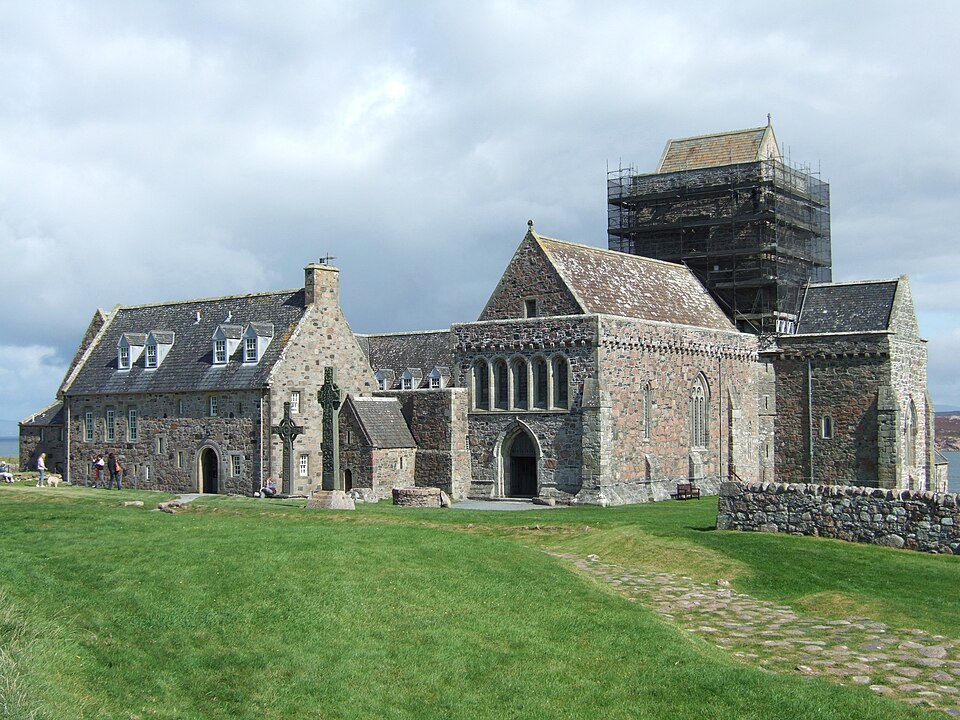
Gothic, Romanesque
- St Oran's Chapel
- St Martin's Cross
- Replica of St John's Cross
- High Crosses
- Graveyard Containing Burials of Early Nuns and Notable Figures
Hy, Hii, Ioua
Saint Columba, Saint Aidan, Angus, Somerled, BethóC of the Augustinian Order, Anna Maclean, George Macleod, Ian Gordon Lindsay, Reginald Fairlie, Theodore Marshall, John Smith
- Founding of the Monastery By Saint Columba
- Viking Attacks
- Relocation of Monks To Kells, Ireland
- Establishment of Benedictine Order and Augustinian Nunnery
- Expansion By Macdonald Lords of the Isles
- Dismantling and Abandonment After the Scottish Reformation
- Restoration Efforts
- Founding of the Iona Community
- Reopening After Major Renovation
About Iona Abbey
Iona Abbey: A Cradle of Christianity and a Beacon of Pilgrimage
Iona Abbey, situated on the remote island of Iona off the west coast of Scotland, stands as one of Western Europe's most significant and ancient Christian religious centers. Its history is deeply intertwined with the spread of Christianity throughout Scotland, serving as a pivotal monastic settlement from its founding in 563 AD by Saint Columba and his twelve companions.
Early Foundation and Columban Monasticism
Originally known as "Hy" or "Hii," the island and its abbey became a spiritual heartland. Saint Columba's vision was to create a monastic community that exemplified Christian virtues, acting as a model for others. The monks followed Celtic Christian practices, engaging in daily worship, work, and community involvement. During this early period, the monastery was known for its manuscript production, including the likely creation of the Book of Kells, and the erection of distinctive stone crosses. However, the community faced severe challenges from Viking raids starting in the late 8th century, leading to the massacre of many monks and the eventual relocation of key relics and the primary Columban center to Kells in Ireland.
Transformation and Macdonald Influence
Following a period of Norwegian control and subsequent recapture, Iona experienced a significant transformation in the 12th century. The Benedictine order was invited to establish a new monastery on the foundations of the original Columban site, and an Augustinian Nunnery was founded nearby. The abbey church was substantially expanded in the 15th century by the Macdonald Lords of the Isles, who considered it their spiritual seat and effectively their "Cathedral of The Isles." This era cemented Iona's status as an ecclesiastical capital for the royal family of Macdonald and their successors.
Modern Revival and Pilgrimage
After falling into disrepair following the Scottish Reformation, the ruined remains of Iona Abbey and Nunnery were transferred to the Iona Cathedral Trust in 1899. Extensive restoration efforts, notably inspired by Reverend George MacLeod, led to the rebuilding of the abbey and the founding of the Iona Community in 1938. This ecumenical Christian community continues to inhabit and care for the site, which remains a profoundly popular destination for Christian pilgrimage. The abbey reopened in 2021 after a significant renovation, incorporating modern amenities while preserving its rich historical and spiritual legacy.
Source: Wikipedia ↗
Frequently Asked Questions
When was Iona Abbey founded?
Iona Abbey was founded in 563 AD by Saint Columba and his twelve companions. This marked the beginning of a significant Christian center in Western Europe.
What was the primary role of Iona Abbey in early Christianity?
The primary purpose of the monastery was to be an example of Christian virtues and a 'perfect monastery as an image of the heavenly city of Jerusalem.' It was a focal point for the spread of Christianity throughout Scotland among the Picts and Scots.
What major historical events affected Iona Abbey?
Iona Abbey was subjected to numerous Viking attacks, beginning in 795 AD, which led to the relocation of many monks and the eventual movement of relics. It was also dismantled following the Scottish Reformation.
What is the significance of the Macdonald Lords of the Isles to Iona Abbey?
From the 12th century, the Macdonald lords of Clan Donald made Iona their ecclesiastical capital. They endowed and maintained the abbey, and the medieval abbey seen today is largely their legacy, with the church functioning as their 'Cathedral of The Isles'.
What is the status of Iona Abbey today?
Today, Iona Abbey is the spiritual home of the Iona Community, an ecumenical Christian religious order. It remains an active site of Christian pilgrimage and was reopened in 2021 after significant renovations.
What architectural styles are present at Iona Abbey?
The medieval Iona Abbey, as seen today after restoration, is largely the legacy of the 15th-century Clan Donald Lords of the Isles. Earlier structures would have been wattle and timber or wood and thatch, with a stone chapel possibly built around 800 AD.
Related Monasteries

Hinba Monastery
Hinba Monastery was a small monastic settlement associated with the Columban church on Iona, active in the late 6th century. While its exact location remains a subject of scholarly debate, it served as a retreat for Columba and was administered by early superiors like St. Ernan and Baithéne. The monastery is primarily known through Adomnán's "Vita Columbae," which records mystical events and anecdotes about Columba's time there.

Kilrimont Monastery
Kilrimont Monastery, also known as St Mary's Collegiate Church or St Mary of the Culdees, originated from an ancient association of clergy called the Culdees (Céli Dé). Established as a collegiate church in the 1240s, it served as Scotland's first and functioned as a secular college of priests. The institution played a role in ecclesiastical disputes and royal affairs until its decline following the Scottish Reformation, with little of its original structure surviving today.

Bangor Monastery
Bangor Cathedral, dedicated to its founder Saint Deiniol, stands on a site of Christian worship since the sixth century. Originally established as St Deiniol's Monastery, it has a long and tumultuous history marked by destruction and rebuilding, evolving from its Norman origins to its current Gothic Revival appearance. The cathedral is a significant religious and historical landmark in Gwynedd, Wales, known for its architectural evolution and notable features.