
Bangor Monastery
Bangor Cathedral, dedicated to its founder Saint Deiniol, stands on a site of Christian worship since the sixth century. Originally established as St Deiniol's Monastery, it has a long and tumultuous history marked by destruction and rebuilding, evolving from its Norman origins to its current Gothic Revival appearance. The cathedral is a significant religious and historical landmark in Gwynedd, Wales, known for its architectural evolution and notable features.
Key Facts
- ›Founded as St Deiniol's Monastery around 530 AD.
- ›The present building's earliest section dates to the episcopate of Bishop David (1120–1139).
- ›Suffered destruction and damage multiple times throughout its history, including by Viking raids and English kings.
- ›Underwent extensive rebuilding and restoration, notably in the 13th century and again in the Gothic Revival style under George Gilbert Scott.
- ›Features include the 'Mostyn Christ' sculpture and a 'Biblical Garden'.
- ›Has a significant history of organ music, with instruments dating back to the 14th century.

Norman, Gothic, Gothic Revival
Mostyn Christ, Biblical Garden, Robert Thompson Woodwork
Eglwys Gadeiriol Bangor
Saint Deiniol, Maelgwn Gwynedd, Saint David, Gruffudd Ap Cynan, Owain Gwynedd, Giraldus Cambrensis, King John, King Edward I, Bishop Anian, Owain GlyndŵR, Bishop Thomas Skevington, Rowland Meyrick, George Gilbert Scott, Robert Thompson, Dafydd Ap Gwilym
- Establishment of St Deiniol's Monastery
- Sacked By Vikings
- Synod of Westminster Measures To Restore Cathedral
- Construction of Earliest Part of Present Building
- Burial of Gruffudd Ap Cynan
- Giraldus Cambrensis Describes Service
- Destroyed By King John's Army
- Choir Extended
- Damaged During King Edward I's Invasion
- Extensive Rebuilding Under Bishop Anian
- Nave Rebuilt
- Possible Damage During Owain GlyndŵR's Rebellion
- Extensive Reconstruction Completed
- Repairs and Interior Alterations
- Restoration Under George Gilbert Scott
- Used As A Covid-19 Vaccination Centre
About Bangor Monastery
Bangor Cathedral
Bangor Cathedral, officially known in Welsh as Eglwys Gadeiriol Bangor, is the cathedral church of the city of Bangor in Gwynedd, Wales. It is dedicated to its founder, Saint Deiniol, and stands on a site that has been used for Christian worship since the sixth century. The monastery was established around 530 AD by Saint Deiniol on land granted by Maelgwn Gwynedd, the king of Gwynedd. This original monastery was later sacked on two occasions, in 634 and again in 1073, and no remnants of the original structure survive.
History and Architecture
The history of Bangor Cathedral is one of resilience, marked by numerous destructions and subsequent rebuildings. The earliest part of the present edifice dates from the episcopate of Bishop David (1120–1139), with the assistance of King Gruffudd ap Cynan, who was later buried there. This initial structure was cruciform and in the Norman style. Over centuries, the cathedral faced further devastation, including raids by King John's army in 1211 and damage during King Edward I's invasion in 1282. Significant rebuilding occurred in the late 13th century and again from the end of the 15th century, completed in 1532, which included the construction of the tower. The cathedral as seen today is largely the result of extensive work carried out in the Gothic Revival style under the supervision of George Gilbert Scott, beginning in 1868.
Notable Features and Significance
Integral to the rich history of Bangor Cathedral are its notable features and the figures associated with it. The 'Mostyn Christ,' a carved oak figure of Christ prior to the crucifixion, is a significant artistic piece dating from the late 15th century. The grounds also boast a 'Biblical Garden,' thoughtfully planted with every species of plant mentioned in the Bible. The cathedral has a long-standing tradition of musical excellence, with a history of organs dating back to the 14th century, and has hosted many distinguished organists. It has also served as the final resting place for several Welsh kings and bishops, including Gruffudd ap Cynan and Owain Gwynedd. In recent times, the cathedral has adapted to contemporary needs, including serving as a COVID-19 vaccination centre.
Source: Wikipedia ↗
Frequently Asked Questions
When was Bangor Cathedral founded?
The site of Bangor Cathedral has been a place of Christian worship since the sixth century, with the establishment of St Deiniol's Monastery around 530 AD. The earliest part of the present building was constructed during the episcopate of Bishop David, between 1120 and 1139.
What is the architectural style of Bangor Cathedral?
The cathedral exhibits a mix of architectural styles due to its long history of rebuilding. Its origins were in the Norman style, with significant medieval additions and a major Gothic Revival restoration overseen by George Gilbert Scott starting in 1868.
What notable features can be found at Bangor Cathedral?
Among its points of interest are the 'Mostyn Christ,' a late 15th-century oak carving of Christ, and the 'Biblical Garden' in its grounds, which contains examples of every plant mentioned in the Bible. It also houses woodwork by Robert Thompson, including his signature wooden mice.
Has Bangor Cathedral been damaged historically?
Yes, Bangor Cathedral has a history of being sacked and destroyed. It was attacked by Vikings in 634 and 1073, by King John's army in 1211, and by King Edward I's forces in 1282. There is also a tradition that it was burnt during Owain Glyndŵr's rebellion in 1402, though contemporary evidence for this is lacking.
Who is buried at Bangor Cathedral?
Several notable figures are interred at Bangor Cathedral, including Gruffydd ap Cynan and Owain Gwynedd, Kings of Gwynedd, and numerous Bishops of Bangor. Gwilym Owen Williams, Bishop of Bangor and Archbishop of Wales, is also buried in the Lady Chapel.
Related Monasteries

Caldey Island Priory
Caldey Island Priory, also known as Caldey Abbey, is a historic monastery located on a small island off the coast of Pembrokeshire, Wales. With a history stretching back over 1,500 years, it began as a Celtic monastery and later hosted Tironensian monks. The current community is Cistercian (Trappist), having been established by Belgian monks in the early 20th century following a period of Anglican Benedictine ownership. The island is a significant spiritual retreat that also relies on tourism and the production of perfumes and chocolate for its economy.

Llangaffo
Llangaffo is a Welsh village in Anglesey, named after the 6th-century saint Caffo. The village is known for St Caffo's Church, a 19th-century building incorporating elements from a medieval predecessor, and its historical significance as a community with a notable past. The surrounding landscape features marshy areas and fertile pastureland, with archaeological finds suggesting ancient activity.
Llantwit-Major Monastery
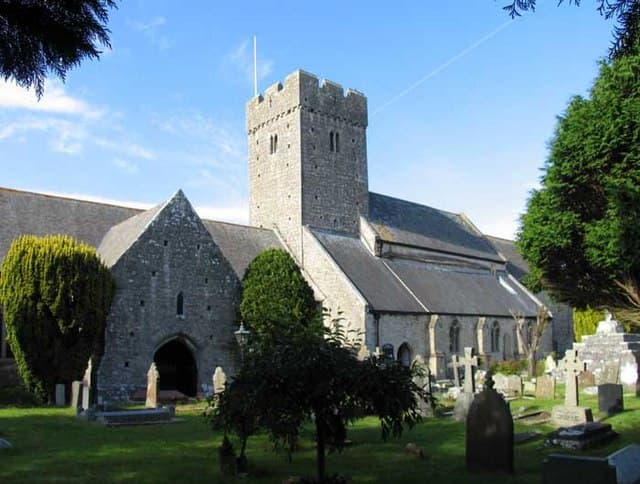
St Illtyd's Church in Llantwit Major is a significant ecclesiastical complex in Wales, built on the site of one of the UK's oldest educational institutions. Originally believed to be founded by Emperor Theodosius II around AD 395, it is now widely accepted as being established by St. Illtud circa AD 508. The current church structure, a Grade I listed building, began in the 11th century by the Normans and has undergone significant rebuilding and additions in the 13th and 15th centuries, earning it the moniker "Westminster Abbey of Wales" for its unique collection of carved stones and effigies.