
Llangaffo
Llangaffo is a Welsh village in Anglesey, named after the 6th-century saint Caffo. The village is known for St Caffo's Church, a 19th-century building incorporating elements from a medieval predecessor, and its historical significance as a community with a notable past. The surrounding landscape features marshy areas and fertile pastureland, with archaeological finds suggesting ancient activity.
Key Facts
- ›Named after Saint Caffo, a 6th-century martyr.
- ›St Caffo's Church, built in 1846, is a Grade II listed building.
- ›The churchyard contains early Christian monuments, including 9th/10th-century cross fragments.
- ›Archaeological finds include Roman coins and stone concentrations suggesting monastic activity.
- ›The village was formerly a community in its own right until 1984.
- ›Llangaffo offers vistas of Snowdonia and the Menai Strait from its vantage point.
Early English
St Caffo's Church, 9th/10th-Century Cross Fragments, 7th-Century Gravestones With Cross Carvings, War Memorial, Bodowyr Burial Chamber, Vistas of Snowdonia and Menai Strait
Saint Caffo
- 1851 Census Recorded 138 People.
- 1984: Ceased To Be A Community In Its Own Right.
- 2011 Census Recorded A Population of 357.
- 2019: Ysgol Llangaffo Primary School Closed.
- 2023: Llangaffo Reverted Its Ghost Town Status.
About Llangaffo
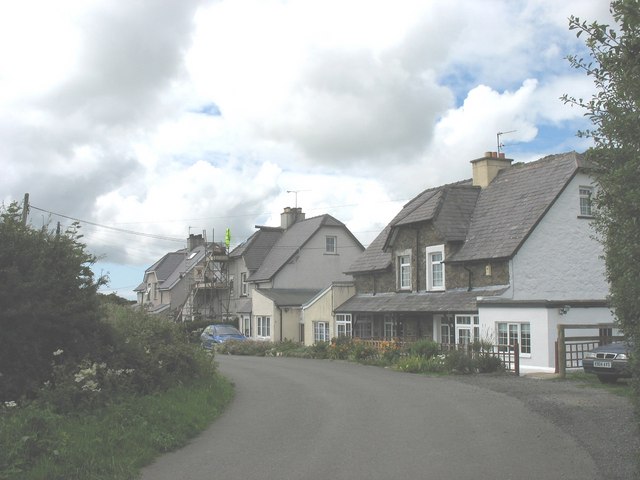
Llangaffo is a village located in Anglesey, in north-west Wales. Its name derives from Saint Caffo, a 6th-century Welsh saint and martyr, after whom the local church is dedicated. The village is situated on a hill ridge that offers picturesque views of the surrounding pastureland, the distant hills of Snowdonia, and the Menai Strait.
St Caffo's Church and Historical Context
The current St Caffo's Church, a Grade II listed building, was constructed in 1846. It was built to replace a medieval church on the same site and incorporates several monuments from the older structure. The church is recognized for its consistent Early English architectural style. The churchyard is notable for containing remnants of early Christian monuments, including fragments of stone crosses dating from the 9th or 10th centuries, and gravestones from the 9th to 11th centuries. The church remains an active place of worship as part of the Church in Wales.
Geography and Archaeology
Historically, Llangaffo was part of the hundred of Menai and covered an extensive area, including marshy lands that were later subject to embankment acts. The parish's soil is generally fertile, providing good pasturage. Archaeological finds within the parish have contributed to its historical understanding. These include two gold coins of Emperor Constantine found near the church in 1829, as well as other Roman coins. There have also been discoveries of small concentrations of stone, possibly indicating stone-cutting activities conducted under monastic direction.
Source: Wikipedia ↗
Frequently Asked Questions
What is the origin of the name Llangaffo?
Llangaffo is named after Saint Caffo, a Welsh saint and martyr who lived in the 6th century. His legacy is honored by the presence of St Caffo's Church in the village.
What is notable about St Caffo's Church?
St Caffo's Church was constructed in 1846 to replace an older medieval church. It is a Grade II listed building, recognized for its consistent Early English style. The church preserves monuments from its predecessor and features a spire as a local landmark.
Are there any ancient historical sites in or near Llangaffo?
Yes, the Bodowyr Burial Chamber, a Neolithic site, is located to the east of Llangaffo village. Additionally, archaeological discoveries in the parish include Roman coins and stone concentrations that may indicate monastic stone-cutting activities.
What was the population of Llangaffo in the past?
According to the 1851 census, Llangaffo had a population of 138 people. By the 2011 census, the population had grown to 357.
What is the geographical setting of Llangaffo?
Llangaffo is situated on a hill ridge in Anglesey, providing scenic views of pastureland, the hills of Snowdonia, and the Menai Strait. The parish includes marshy areas, hilly terrain, and cultivated land.
Related Monasteries

Bangor Monastery
Bangor Cathedral, dedicated to its founder Saint Deiniol, stands on a site of Christian worship since the sixth century. Originally established as St Deiniol's Monastery, it has a long and tumultuous history marked by destruction and rebuilding, evolving from its Norman origins to its current Gothic Revival appearance. The cathedral is a significant religious and historical landmark in Gwynedd, Wales, known for its architectural evolution and notable features.
Caergybi Monastery
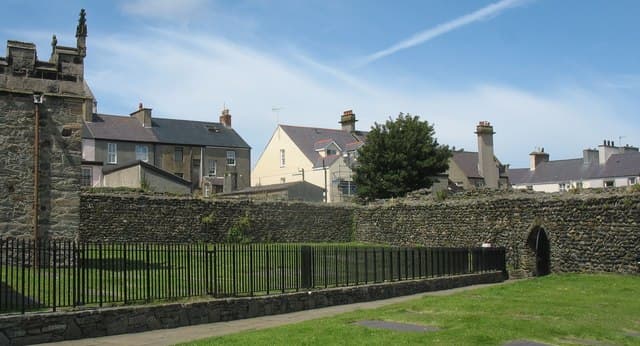
Caergybi Monastery, also known as the Church of St Cybi, is a historical religious site in Holyhead, Wales, with origins tracing back to a Roman fortlet. It was refounded as a monastery in the 6th century by Saint Cybi, and the church on the site today preserves elements of its long history, including its Roman foundations and a chapel reputedly over the saint's grave.

Llancarfan Monastery
Llancarfan Monastery was a significant 6th-century clas, a center of learning in the Vale of Glamorgan, Wales, founded by Saint Cadoc. It was renowned for its educational offerings, attracting many holy men who studied and taught there. Although the original monastic structures are not extant, the site is marked by its parish church, which still contains medieval wall paintings.