
Llancarfan Monastery
Christian·Wales·Historical site (parish church on former monastic grounds)·6th century
Llancarfan Monastery was a significant 6th-century clas, a center of learning in the Vale of Glamorgan, Wales, founded by Saint Cadoc. It was renowned for its educational offerings, attracting many holy men who studied and taught there. Although the original monastic structures are not extant, the site is marked by its parish church, which still contains medieval wall paintings.
Key Facts
- ›Founded in the 6th century by Saint Cadoc.
- ›Was a renowned center of learning (clas) in the Vale of Glamorgan.
- ›Attracted notable scholars and holy men, including Cainnech of Aghaboe and Caradoc of Llancarfan.
- ›The site is now primarily represented by its parish church.
- ›The parish church features medieval wall paintings, including a rare depiction of St. George.
- ›Historically belonged to Gloucester Abbey in the later Middle Ages.

Medieval Wall Paintings In the Parish Church, Depiction of St. George In Wall Paintings
Saint Cadoc, Cainnech of Aghaboe, Caradoc of Llancarfan
About Llancarfan Monastery
Llancarfan Monastery was a significant 6th-century clas, a monastic institution renowned for its learning and scholarly pursuits. Located in the rural village of Llancarfan in the Vale of Glamorgan, Wales, it was founded by Saint Cadoc and quickly became a prominent center for religious and intellectual life in the region. The clas attracted numerous holy men and scholars from Wales and beyond, contributing to its reputation as a place of study and spiritual development.
While the original monastic structures of Llancarfan have not survived, the site's historical importance is preserved through its parish church. This church, which in the later Middle Ages belonged to Gloucester Abbey, contains vestiges of its past, including a stoup and remnants of a rood screen. A particularly noteworthy discovery made in 2008 revealed extensive medieval wall paintings beneath layers of whitewash. Among these, a depiction of Saint George stands out as one of only three such representations found in churches across Wales, highlighting the artistic and religious significance of the site. The conservation of these murals was completed in 2013, offering a tangible link to the monastery's historical and artistic legacy.
Source: Wikipedia ↗
Frequently Asked Questions
When was Llancarfan Monastery founded?
Llancarfan Monastery was founded in the 6th century. It was established as a clas, a type of monastic institution common in early medieval Ireland and Wales.
What was Llancarfan Monastery known for?
Llancarfan Monastery was famous as a center of learning and education. It attracted many holy men and scholars who studied and taught within its walls.
Who were some notable figures associated with Llancarfan Monastery?
Saint Cadoc founded the monastery. Other notable figures who studied or were associated with Llancarfan include Cainnech of Aghaboe and Caradoc of Llancarfan.
What remains of Llancarfan Monastery today?
The original monastic buildings are not extant. Today, the site is primarily marked by the parish church, which contains medieval wall paintings and architectural elements from later periods.
Are there any special discoveries at Llancarfan's parish church?
Yes, in 2008, medieval wall paintings were discovered under layers of whitewash in the church. These include one of only three depictions of St. George found in churches in Wales.
Related Monasteries

Bangor Monastery
Bangor Cathedral, dedicated to its founder Saint Deiniol, stands on a site of Christian worship since the sixth century. Originally established as St Deiniol's Monastery, it has a long and tumultuous history marked by destruction and rebuilding, evolving from its Norman origins to its current Gothic Revival appearance. The cathedral is a significant religious and historical landmark in Gwynedd, Wales, known for its architectural evolution and notable features.
Caergybi Monastery
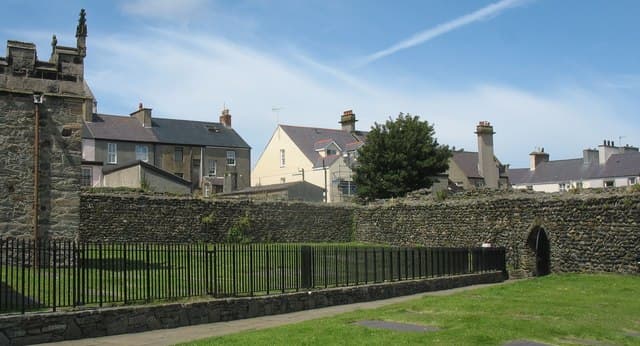
Caergybi Monastery, also known as the Church of St Cybi, is a historical religious site in Holyhead, Wales, with origins tracing back to a Roman fortlet. It was refounded as a monastery in the 6th century by Saint Cybi, and the church on the site today preserves elements of its long history, including its Roman foundations and a chapel reputedly over the saint's grave.
Llanfechell Clas
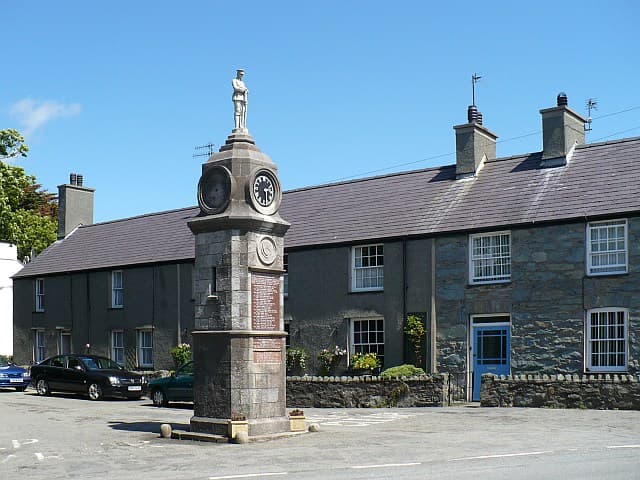
Llanfechell Clas was a monastic foundation attributed to Saint Mechell, a 6th-century missionary, in what is now Anglesey, Wales. Historical accounts suggest the monastery's land was demarcated by the flight of a hare, a detail found in a 17th-century manuscript. While the monastic community itself is no longer active, the village of Llanfechell retains its name and has a significant historical presence, including St. Mechell's Church with 12th-century elements.