
Llanfechell Clas
Christian·Wales·Ruins/Historical Site (monastery itself)·6th century
Llanfechell Clas was a monastic foundation attributed to Saint Mechell, a 6th-century missionary, in what is now Anglesey, Wales. Historical accounts suggest the monastery's land was demarcated by the flight of a hare, a detail found in a 17th-century manuscript. While the monastic community itself is no longer active, the village of Llanfechell retains its name and has a significant historical presence, including St. Mechell's Church with 12th-century elements.
Key Facts
- ›Founded by Saint Mechell, a 6th-century missionary.
- ›The monastery's founding legend involves land demarcated by a hare's route.
- ›The village of Llanfechell was first mentioned in written records in 1291.
- ›St. Mechell's Day is celebrated on November 15th.
- ›St. Mechell's Church in the village has features dating back to the 12th century.

Medieval
St. Mechell's Church, Prehistoric Standing Stones, Bronze Age Burial Mound, Later Prehistoric Enclosure, Medieval Mills
Saint Mechell, William Jones, William Bulkeley
- First Written Mention In 1291
- William Bulkeley's Diary Documenting 18th-Century Life
- World Wars Memorial
About Llanfechell Clas
Llanfechell Clas refers to a historic monastic site in Llanfechell, a village on the island of Anglesey in Wales. The foundation is traditionally attributed to Saint Mechell, a 6th-century missionary believed to be of Breton origin. Historical accounts suggest that the land for the monastery was miraculously demarcated by the path of a released hare, a narrative preserved in a 17th-century manuscript.
While the monastic community itself is no longer extant, the village of Llanfechell retains its name and historical significance. The area surrounding Llanfechell is rich in prehistoric monuments, indicating a long history of human settlement. The village's current church, St. Mechell's Church, contains architectural elements dating back to the 12th century, reflecting the enduring religious heritage of the site.
History and Founding
The origins of Llanfechell Clas are tied to Saint Mechell, a missionary who is thought to have flourished in the 6th century. According to a Welsh poem recorded in a 17th-century manuscript, St. Mechell was offered a gift of land as a token of gratitude for a miraculous healing. This land was to be defined by the route taken by a hare released under divine guidance, which subsequently marked out the extent of the parish of Llanfechell, where he then established his monastery.
The village of Llanfechell itself first appears in written records in 1291. The area has a deep history, with numerous prehistoric remains found nearby, suggesting habitation for millennia. Life in the 18th century in Llanfechell was meticulously documented by William Bulkeley, a local landowner who kept a daily diary.
Legacy and Current Status
Today, the monastic institution of Llanfechell Clas is no longer an active religious community. However, the village of Llanfechell continues to be a local centre. St. Mechell's Church, a Grade II* listed building, stands as a testament to the historical religious importance of the site, featuring elements from the 12th century. The church holds bilingual services and is part of the Diocese of Bangor. The village also retains a connection to its past through its name and the presence of historical structures and archaeological sites in the vicinity.
Source: Wikipedia ↗
Frequently Asked Questions
Who founded the monastery at Llanfechell?
The monastery at Llanfechell is believed to have been founded by Saint Mechell, a 6th-century missionary. He is said to have been the son of Echwydd and grandson of Gwyn Gohoyw.
What is the origin of the name Llanfechell?
The name Llanfechell originates from the Welsh words 'llan' (church) and Saint Mechell. It translates to 'Church of St. Mechell'.
When was the village of Llanfechell first recorded?
The first written mention of Llanfechell itself dates back to 1291. The area around it, however, shows evidence of habitation for thousands of years.
What is the legend behind the monastery's land demarcation?
According to tradition recorded in a 17th-century manuscript, St. Mechell was granted land for his monastery, which was to be marked by the route of a released hare. The hare's path under divine guidance defined the extent of the parish.
Is there a church associated with Saint Mechell in Llanfechell today?
Yes, St. Mechell's Church stands in the center of the village and is part of the Anglican Church in Wales. It incorporates architectural features that date back to the 12th century.
Related Monasteries

Bangor Monastery
Bangor Cathedral, dedicated to its founder Saint Deiniol, stands on a site of Christian worship since the sixth century. Originally established as St Deiniol's Monastery, it has a long and tumultuous history marked by destruction and rebuilding, evolving from its Norman origins to its current Gothic Revival appearance. The cathedral is a significant religious and historical landmark in Gwynedd, Wales, known for its architectural evolution and notable features.
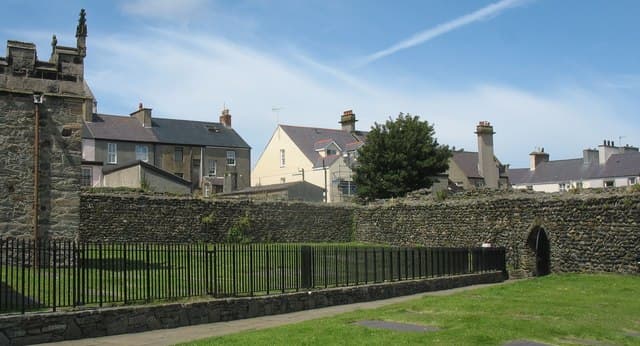
Caergybi Monastery
Caergybi Monastery, also known as the Church of St Cybi, is a historical religious site in Holyhead, Wales, with origins tracing back to a Roman fortlet. It was refounded as a monastery in the 6th century by Saint Cybi, and the church on the site today preserves elements of its long history, including its Roman foundations and a chapel reputedly over the saint's grave.

Llancarfan Monastery
Llancarfan Monastery was a significant 6th-century clas, a center of learning in the Vale of Glamorgan, Wales, founded by Saint Cadoc. It was renowned for its educational offerings, attracting many holy men who studied and taught there. Although the original monastic structures are not extant, the site is marked by its parish church, which still contains medieval wall paintings.