
Caldey Island Priory
Cistercian (Trappist)·Wales·active·6th century
Caldey Island Priory, also known as Caldey Abbey, is a historic monastery located on a small island off the coast of Pembrokeshire, Wales. With a history stretching back over 1,500 years, it began as a Celtic monastery and later hosted Tironensian monks. The current community is Cistercian (Trappist), having been established by Belgian monks in the early 20th century following a period of Anglican Benedictine ownership. The island is a significant spiritual retreat that also relies on tourism and the production of perfumes and chocolate for its economy.
Key Facts
- ›The island's Welsh name, Ynys Bŷr, honors Saint Pyr, an abbot around 500 AD.
- ›The English name 'Caldey' derives from Viking terms meaning 'cold island'.
- ›A Celtic monastery was first established on the island in the 6th century.
- ›The present abbey was built in 1910 in the Arts and Crafts style by Anglican Benedictines.
- ›Belgian Cistercian monks purchased the property in 1929 after the Anglican order faced financial difficulties.
- ›Caldey Island is known for its wildlife, including introduced red squirrels and a large cormorant colony.

Arts and Crafts
Red Squirrel Population, Large Cormorant Colony, Perfume and Chocolate Production, Spiritual Retreat, Post Office With Museum, Island Postage Stamps and Currency
Ynys BŷR, Caldey Abbey, Caldy Island
Saint Pyr, James Van Nedervelde, Father Thaddeus Kotik, Father John Shannon, John Cronin, Father Jan Rossey
- Establishment of A Celtic Monastery
- Founding of Caldey Priory By Tironensian Monks
- Dissolution of the Monasteries
- Building of the Current Abbey By Anglican Benedictines
- Purchase By Belgian Cistercians
- Rat Eradication Program and Red Squirrel Introduction
- Independent Review of Historical Child Sexual Abuse
About Caldey Island Priory
Caldey Island Priory, also known as Caldey Abbey, is a significant monastic site situated on a small island off the coast of Pembrokeshire, Wales. Recognized as one of Britain's holy islands, it boasts a recorded history of spiritual activity spanning over 1,500 years. The island's Welsh name, Ynys Bŷr, honors Saint Pyr, believed to have been an abbot there around the year 500 AD. The English name, Caldey, is derived from Viking terms meaning "cold island."
History and Monastic Life
The continuous monastic tradition on Caldey Island began with the establishment of a Celtic monastery in the 6th century. During the Middle Ages, it thrived, and in the 12th century, Tironensian monks founded Caldey Priory, a daughter house of St Dogmaels Abbey, which continued until the dissolution of the monasteries in 1536. The current abbey structure was built in 1910 by Anglican Benedictine monks, designed in the Arts and Crafts style. However, financial difficulties led to its purchase in 1929 by Belgian Cistercian monks, who form the present-day community, often referred to as Trappists.
Economy and Modern Significance
Today, Caldey Island continues its role as a spiritual retreat, accommodating visitors and maintaining a monastic community. Its economy is significantly supported by tourism, with visitors ferried from Tenby Harbour primarily during the spring and summer months. The monks also contribute to the island's economy through the production and sale of popular perfumes and chocolates. The island has its own unique features, including its own postage stamps and a local monetary unit. Recent historical accounts have also addressed past issues of child sexual abuse, leading to independent reviews and enhanced safeguarding measures to ensure the island's safety for residents and visitors.
Landmarks and Wildlife
Notable landmarks on Caldey Island include the restored 13th-century church of St Illtyd, a 6th-century ogham cross, a Norman chapel, and the Caldey Abbey itself. The Caldey Lighthouse, erected in 1829, served as a navigational aid for coastal traffic. The island is also celebrated for its rich wildlife, which includes a significant colony of cormorants and, following conservation efforts, a breeding population of red squirrels. The diverse flora and fauna contribute to its appeal as a natural sanctuary.
Source: Wikipedia ↗
Frequently Asked Questions
What is Caldey Island Priory known for?
Caldey Island Priory is known as one of Britain's holy islands with a history of monastic life dating back over 1,500 years. The current Cistercian community is recognized for its production of perfumes and chocolate, as well as being a spiritual retreat that attracts tourists.
What is the history of monastic life on Caldey Island?
Monastic traditions on Caldey Island began with a Celtic monastery in the 6th century. Later, Tironensian monks established a priory in the 12th century. The island was re-established with Anglican Benedictines in 1906, who built the current abbey, before Belgian Cistercians took over in 1929.
How can visitors access Caldey Island?
Access to Caldey Island is primarily by boat from Tenby Harbour, operating during the spring and summer months when weather conditions permit. The ferry service transports visitors to experience the island's sanctuary and natural beauty.
What economic activities support Caldey Island?
The economy of Caldey Island is supported by tourism, which is its main source of income. Additionally, the monks are known for producing and selling perfumes and chocolate, with an online shop also contributing to their revenue.
What are some notable landmarks on Caldey Island?
Key landmarks on Caldey Island include the 13th-century church of St Illtyd, a 6th-century ogham cross, a Norman chapel, and Caldey Abbey. The Caldey Lighthouse, built in 1829, also stands as a significant historical structure.
Has Caldey Island faced any historical challenges?
Historically, Caldey Island experienced financial difficulties in the 1920s, leading to the sale of the abbey. More recently, concerns have been raised and addressed regarding past cases of child sexual abuse, with independent reviews and safeguarding measures implemented.
Related Monasteries

Bangor Monastery
Bangor Cathedral, dedicated to its founder Saint Deiniol, stands on a site of Christian worship since the sixth century. Originally established as St Deiniol's Monastery, it has a long and tumultuous history marked by destruction and rebuilding, evolving from its Norman origins to its current Gothic Revival appearance. The cathedral is a significant religious and historical landmark in Gwynedd, Wales, known for its architectural evolution and notable features.

Llangaffo
Llangaffo is a Welsh village in Anglesey, named after the 6th-century saint Caffo. The village is known for St Caffo's Church, a 19th-century building incorporating elements from a medieval predecessor, and its historical significance as a community with a notable past. The surrounding landscape features marshy areas and fertile pastureland, with archaeological finds suggesting ancient activity.
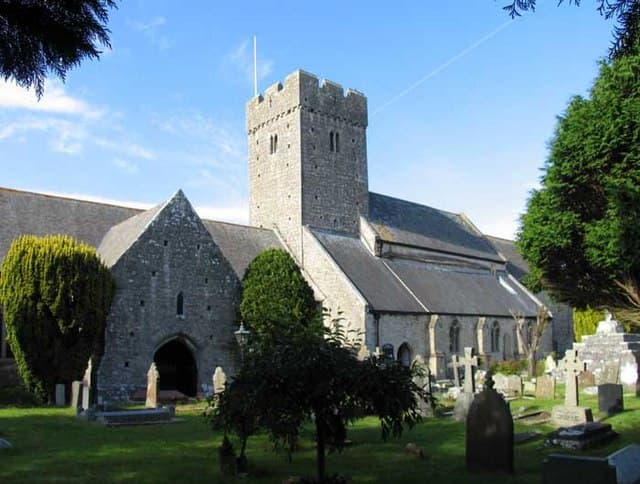
Llantwit-Major Monastery
St Illtyd's Church in Llantwit Major is a significant ecclesiastical complex in Wales, built on the site of one of the UK's oldest educational institutions. Originally believed to be founded by Emperor Theodosius II around AD 395, it is now widely accepted as being established by St. Illtud circa AD 508. The current church structure, a Grade I listed building, began in the 11th century by the Normans and has undergone significant rebuilding and additions in the 13th and 15th centuries, earning it the moniker "Westminster Abbey of Wales" for its unique collection of carved stones and effigies.