
St Dogmaels Abbey
St Dogmaels Abbey, originally founded in 1115 by the Fitzmartin family, was a medieval Benedictine monastery established by the Order of Tiron. Situated on the banks of the River Teifi in Pembrokeshire, Wales, it experienced periods of destruction and rebuilding before its dissolution in 1536. Today, it stands as a Grade I listed ruin, with significant portions of its structures preserved, attracting visitors and hosting events.
Key Facts
- ›Founded in 1115 by the Fitzmartin family.
- ›Established by thirteen monks of the Tironensian Order from Normandy.
- ›Achieved Abbey status in 1121 with the installation of its first Abbot.
- ›Suffered damage in a 1138 raid by Welsh princes and Danish mercenaries.
- ›Dissolved in 1536, with possessions later leased and parts of the complex altered into a mansion.
- ›Significant surviving structures include the western end wall, north wall, and north transept.

Medieval
Western End Wall, North Wall, Northern Transept, Crypt, Fifteenth-Century Floor Tiles, Visitor Centre In Former Coach House
Abbey of St Mary
Dogmael, Robert Fitz-Martin, Maud Peverel, Fulchard, Gruffudd Ap Cynan, Owain Gwynedd, Cadwaladr, Anaraud, Cadell, Gerald of Wales, Baldwin, Archbishop of Canterbury, John Bradshaw
- Sacked By Welsh Princes and Danish Mercenaries In 1138
- Gerald of Wales Stayed At the Abbey In 1188 During A Preaching Tour For the Third Crusade
- Dissolution of the Monasteries In 1536
About St Dogmaels Abbey
The Abbey of St Dogmaels, also known as the Abbey of St Mary, is a significant ruined medieval abbey located in St Dogmaels, Pembrokeshire, Wales. Situated on the banks of the River Teifi and near Cardigan and Poppit Sands, the abbey's site is believed to have been a location of a Celtic monastery founded by the 6th-century saint Dogmael. The Norman abbey itself was established in 1115 by Lord Robert Fitz-Martin and his wife Maud Peverel, who brought thirteen monks of the Tironensian Order from Normandy. The priory was elevated to abbey status in 1121, with Fulchard installed as the first Abbot.
History and Significance
St Dogmaels Abbey played a role in regional history, experiencing periods of conflict and development. In 1138, it was sacked by Welsh princes and Danish mercenaries, prompting a major rebuilding project in the mid-12th century. The abbey was known for its library, with a 13th-century manuscript of Eusebius's Historia Ecclesiastica surviving today. During the Third Crusade, Gerald of Wales and Baldwin, Archbishop of Canterbury, stayed at the abbey in 1188 while gathering support for the crusade. The abbey was dissolved in 1536 as part of Henry VIII's Dissolution of the Monasteries, with only eight monks and the abbot remaining at that time. Its possessions were largely leased to John Bradshaw, who converted parts of the complex into a mansion.
The Ruins and Visitor Experience
Today, St Dogmaels Abbey is a Grade I listed ruin, with substantial portions of the church and monastic buildings preserved. Notable surviving elements include the western end wall, the north wall, and the northern transept, as well as the crypt. Excavation and consolidation efforts have taken place since the mid-20th century. The site now hosts events, including 'Shakespeare in the Abbey' productions, and features a visitor centre in the former Coach House, making it a destination for those interested in historical and cultural heritage.
Source: Wikipedia ↗
Frequently Asked Questions
When was St Dogmaels Abbey founded?
St Dogmaels Abbey was founded in 1115 by the Norman Lord Robert Fitz-Martin and his wife, Maud Peverel. It was formally established with its first Abbot installed on September 10, 1121.
What religious order was St Dogmaels Abbey part of?
The abbey was established by the Order of Tiron, a medieval monastic order originating from Normandy. It remained a daughter house of Tiron until its dissolution.
What is the current state of St Dogmaels Abbey?
Today, St Dogmaels Abbey is a Grade I listed ruin. Substantial parts of the abbey church and several monastic buildings survive, undergoing excavation and consolidation.
Are there any notable surviving features of the abbey?
Yes, significant surviving structures include the western end wall, the north wall, and the northern transept of the church. The crypt beneath the former eastern bays of the presbytery is also preserved, and fifteenth-century floor tiles remain in large areas of the nave.
Was the abbey ever damaged or attacked?
In 1138, the village and abbey of St Dogmaels were sacked by the sons of Gruffudd ap Cynan, Owain Gwynedd and Cadwaladr, with the assistance of Danish mercenaries. A subsequent building project in 1150–53 May have been intended to repair this damage.
What happened to the abbey after its dissolution?
The abbey was dissolved in 1536. Its possessions were largely leased to John Bradshaw, who built a mansion within the precinct and significantly altered or destroyed parts of the abbey complex.
Is St Dogmaels Abbey open to the public?
Yes, a visitor centre was created in the former Coach House, which opened in June 2008, and 'Shakespeare in the Abbey' productions have been staged there, indicating accessibility for visitors.
Related Monasteries

Basingwerk Abbey
Basingwerk Abbey, located near Holywell in Flintshire, Wales, was a ruined Cistercian monastery founded in 1132. It played a strategic role in medieval Welsh history and maintained extensive lands, notably in Derbyshire. Following its dissolution in 1536, the abbey's assets were dispersed, and its buildings fell into ruin, though parts were later repurposed. Today, the site is managed by Cadw and is a Grade I listed ruin within Greenfield Valley Heritage Park.

Llanthony Priory
Llanthony Priory is a ruined Augustinian priory located in the secluded Vale of Ewyas, south-east Wales. Founded around 1100, it became the first priory of Canons Regular in Wales and was a significant medieval building. Despite periods of rebuilding and later attempts at domestic conversion, it ultimately fell into ruin after the Dissolution of the Monasteries.
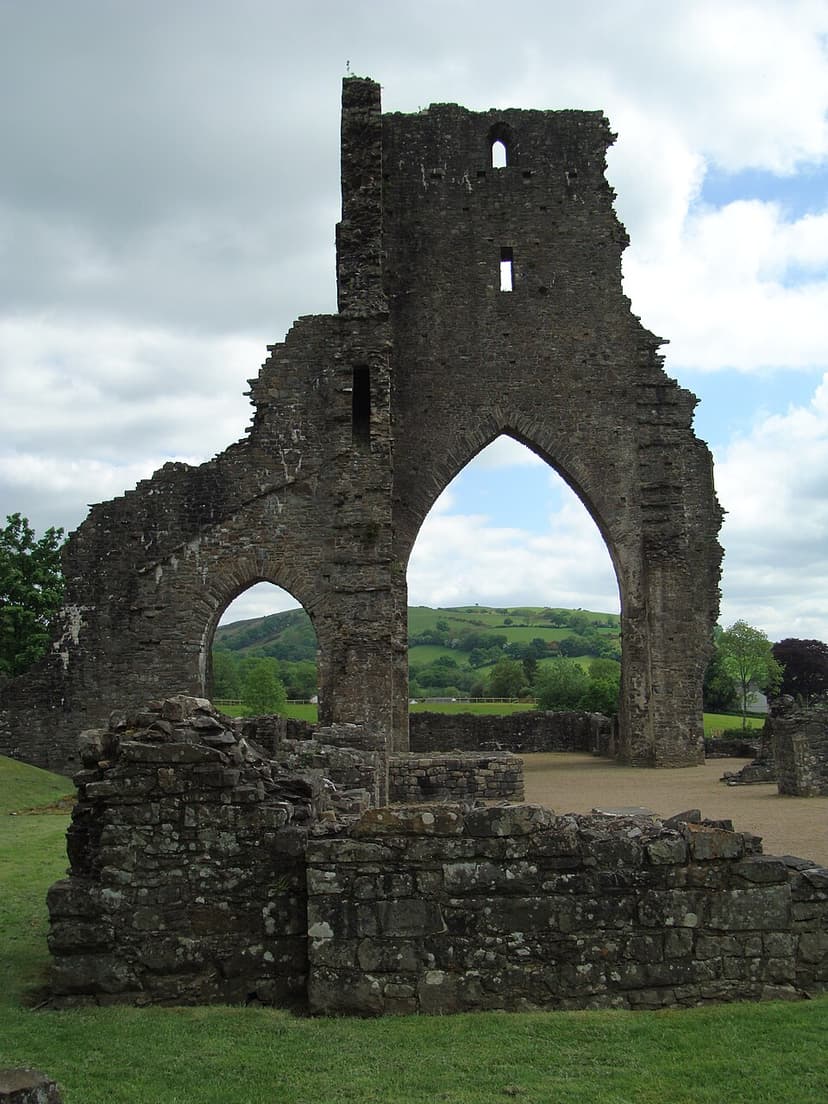
Talley Abbey
Talley Abbey, also known as Abaty Talyllychau, was a ruined monastery of the Premonstratensian Order located in the village of Talley, Carmarthenshire, Wales. Founded around 1185 by Rhys ap Gruffydd, it was part of a significant monastic network across Europe. The abbey was dissolved by Henry VIII, and its stones were largely repurposed for local buildings, leaving behind only ruins today.