
Llanthony Priory
Llanthony Priory is a ruined Augustinian priory located in the secluded Vale of Ewyas, south-east Wales. Founded around 1100, it became the first priory of Canons Regular in Wales and was a significant medieval building. Despite periods of rebuilding and later attempts at domestic conversion, it ultimately fell into ruin after the Dissolution of the Monasteries.
Key Facts
- ›Founded around the year 1100 by monks inspired by a chapel of St. David.
- ›Became the first priory of Canons Regular in Wales.
- ›Suffered attacks by the local Welsh population, leading to a secondary cell being founded in Gloucester.
- ›Rebuilt starting around 1186 with funds from Irish estates.
- ›Deposed King Edward II stayed at the Priory in 1327.
- ›Suppressed in 1538 during Henry VIII's dissolution of the monasteries.

Norman, Gothic
Ruined Priory Church, St. David's Church, Gatehouse, Abbey Hotel, Court Farm Barn
Priordy Llanddewi Nant Hodni
William, Ersinius, Giraldus Cambrensis, Edward Ii, Colonel Sir Mark Wood, Walter Savage Landor, Joseph Leycester Lyne
- Foundation Around 1100
- Consecration of Church In 1108
- Foundation of Llanthony Secunda In 1135
- Rebuilding Completed By 1217
- Edward Ii Stayed At the Priory In 1327
- Suppression During the Dissolution of the Monasteries In 1538
- Conversion of Infirmary To St David's Church In Early 18th Century
- Acquisition and Conversion By Colonel Sir Mark Wood
- Acquisition and Attempted Domestic Building By Walter Savage Landor
- Founding of Anglican Monastic Institution By Joseph Leycester Lyne Nearby In 1869
About Llanthony Priory
Llanthony Priory, also known by its Welsh name Priordy Llanddewi Nant Hodni, is a significantly ruined former Augustinian priory situated in the isolated and picturesque Vale of Ewyas. Nestled within the Black Mountains region of the Brecon Beacons National Park in Monmouthshire, south-east Wales, its history stretches back to around 1100. The priory's secluded location, surrounded by steep-sided mountains, was noted by Giraldus Cambrensis in the late 12th century, who described it as a place "justly suited for religious exercises, and most proper for canonical discipline." This setting, coupled with its architectural significance, makes Llanthony Priory a compelling historical site.
Foundation and Early History
The Priory's origins trace to a knight named William who, around 1100, discovered a ruined chapel of St. David and was inspired to pursue a life of prayer. He was soon joined by Ersinius, a former chaplain to Queen Matilda, and a growing community of followers. A church dedicated to St. John the Baptist was constructed and consecrated in 1108. By 1118, the community had established itself as a priory of Canons Regular, marking it as the first of its kind in Wales. The priory faced challenges, including persistent attacks from the local Welsh population, which led to the establishment of a secondary cell, Llanthony Secunda, in Gloucester in 1135. However, later endowments, particularly from the de Lacy family's Irish estates, facilitated a significant rebuilding of the priory church between approximately 1186 and 1217, resulting in a structure that blended Norman and Gothic architectural styles.
Medieval Significance and Decline
Llanthony Priory grew to become one of the great medieval buildings in Wales. Further construction, including a new gatehouse, occurred around 1325. Notably, the deposed King Edward II sought refuge at the priory on Palm Sunday in 1327 while en route to Berkeley Castle. The priory's fortunes began to wane in the aftermath of Owain Glyndŵr's rebellion in the early 15th century, with its functioning capacity seemingly diminished. Formal merger with its daughter cell occurred in 1481, and by 1538, both houses were suppressed and dissolved under Henry VIII's monastic reforms.
Post-Dissolution and Later History
Following the Dissolution, Llanthony Priory gradually succumbed to decay, becoming a ruin. In the early 18th century, the medieval infirmary was repurposed as the Church of St. David. The estate saw a period of attempted revival in the late 18th and early 19th centuries when Colonel Sir Mark Wood converted some buildings into a domestic residence and shooting box. The poet Walter Savage Landor later acquired the estate and, through an Act of Parliament in 1809, attempted to construct a house, though it remained unfinished. Landor's ambitious plans for rural improvement were ultimately thwarted by disputes and financial difficulties, leading him to abandon the priory to his creditors. In the late 19th century, an Anglican monastic institution named Llanthony Abbey was founded nearby by Joseph Leycester Lyne, though it ceased to exist by 1908. The ruins themselves continued to attract artists, including J. M. W. Turner, and are now maintained by Cadw, with free public access to the main ruins.
Source: Wikipedia ↗
Frequently Asked Questions
When was Llanthony Priory founded?
Llanthony Priory dates back to around the year 1100. It was established by a knight named William who was inspired by a ruined chapel of St. David at the location.
What religious order was Llanthony Priory a part of?
Llanthony Priory was a priory of Canons Regular, making it an Augustinian institution. It was the first such priory established in Wales.
What is the current state of Llanthony Priory?
The priory is now a partly ruined structure. The main ruins are under the care of Cadw, and entrance is free.
Who described Llanthony Priory in the 12th century?
Giraldus Cambrensis (Gerald of Wales) visited the priory in March 1188 and later wrote a description of it. He noted its secluded location and the surrounding mountains.
What happened to Llanthony Priory after its dissolution?
After the Dissolution of the Monasteries in 1538, the buildings gradually decayed into ruin. Parts were later converted into a domestic house and shooting box in the early 18th century, and later an unfinished house by Walter Savage Landor.
Is Llanthony Priory still an active monastery?
No, Llanthony Priory is a former Augustinian priory and is now largely in ruins. It does not house an active monastic community.
Related Monasteries

Basingwerk Abbey
Basingwerk Abbey, located near Holywell in Flintshire, Wales, was a ruined Cistercian monastery founded in 1132. It played a strategic role in medieval Welsh history and maintained extensive lands, notably in Derbyshire. Following its dissolution in 1536, the abbey's assets were dispersed, and its buildings fell into ruin, though parts were later repurposed. Today, the site is managed by Cadw and is a Grade I listed ruin within Greenfield Valley Heritage Park.

St Dogmaels Abbey
St Dogmaels Abbey, originally founded in 1115 by the Fitzmartin family, was a medieval Benedictine monastery established by the Order of Tiron. Situated on the banks of the River Teifi in Pembrokeshire, Wales, it experienced periods of destruction and rebuilding before its dissolution in 1536. Today, it stands as a Grade I listed ruin, with significant portions of its structures preserved, attracting visitors and hosting events.
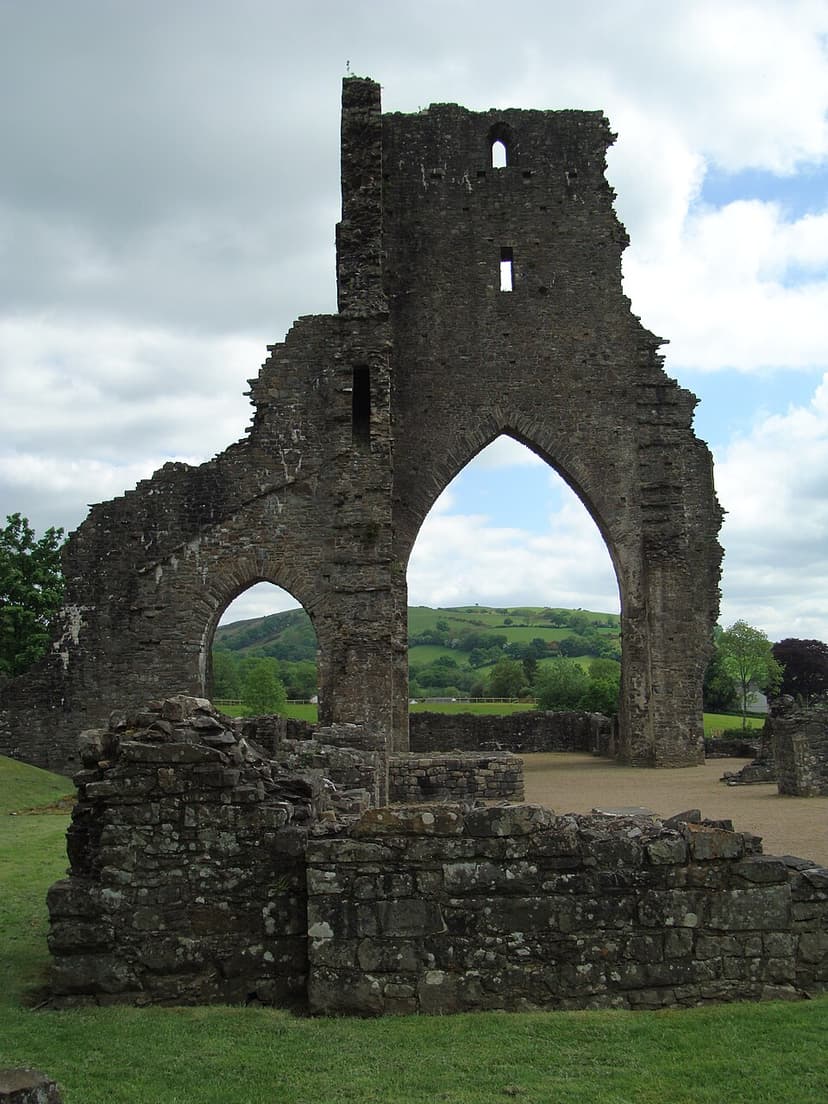
Talley Abbey
Talley Abbey, also known as Abaty Talyllychau, was a ruined monastery of the Premonstratensian Order located in the village of Talley, Carmarthenshire, Wales. Founded around 1185 by Rhys ap Gruffydd, it was part of a significant monastic network across Europe. The abbey was dissolved by Henry VIII, and its stones were largely repurposed for local buildings, leaving behind only ruins today.