
Basingwerk Abbey
Basingwerk Abbey, located near Holywell in Flintshire, Wales, was a ruined Cistercian monastery founded in 1132. It played a strategic role in medieval Welsh history and maintained extensive lands, notably in Derbyshire. Following its dissolution in 1536, the abbey's assets were dispersed, and its buildings fell into ruin, though parts were later repurposed. Today, the site is managed by Cadw and is a Grade I listed ruin within Greenfield Valley Heritage Park.
Key Facts
- ›Founded in 1132 by Ranulf de Gernon, 4th Earl of Chester.
- ›Belonged to the Order of Cistercians after 1147.
- ›Held significant landholdings in Derbyshire, including a manor near Glossop.
- ›Played a strategic role during conflicts between Welsh princes and English kings.
- ›Dissolved in 1536 under Henry VIII, with assets sold off.
- ›Managed today by Cadw and is a Grade I listed ruin.

Gothic, Romanesque
- South Transept Wall Standing High With A Window and Arch.
- Chapter House With A Vaulted Eastern Section and Arcade.
- Monks' Dormitory Undercroft.
- Warming Room Added In the Mid-13th Century.
- Refectory With Elaborate Lancets and Reader's Pulpit.
Abaty Dinas Basing
Ranulf De Gernon, 4th Earl of Chester, Owain Gwynedd, Henry Ii, Llywelyn the Great, Dafydd Ap Llywelyn, Edward I, Nicholas Pennant, Thomas, Tudor Aled
- Founded In 1132.
- Became Part of the Cistercian Order In 1147.
- Owain Gwynedd Encamped Army Before Battle of Ewloe In 1157.
- Gained Market Charter For Glossop In 1290.
- Gained Market Charter For Charlesworth In 1328.
- Sided With English During Edward I's Conquest of Wales.
- Leased Glossopdale To the Talbot Family In 1433.
- Dissolved In 1536.
About Basingwerk Abbey
Basingwerk Abbey, known in Welsh as Abaty Dinas Basing, is a significant ruined monastery situated near Holywell in Flintshire, Wales. Founded in 1132, it originally housed Benedictine monks before transitioning to the Cistercian Order in 1147. The abbey held considerable land holdings, notably in Derbyshire, and played a strategic role in medieval Welsh history, serving as an encampment for Owain Gwynedd before the Battle of Ewloe in 1157 and later coming under the patronage of Llywelyn the Great.
Medieval History and Dissolution
The abbey's medieval history is marked by its relationships with powerful Welsh princes and English monarchs. It received grants of land, including a manor near Glossop from Henry II, and market charters for Glossop and Charlesworth. By the 13th century, it was under the patronage of Llywelyn the Great, whose son Dafydd ap Llywelyn granted the monks St Winefride's Well. The monks aligned with the English during Edward I's conquest of Wales, which brought them rewards. However, by the 15th century, there were indications of increasing worldliness and some laxity in religious observance. The abbey was assessed as one of the smaller monastic houses in the Valor Ecclesiasticus of 1535. Its monastic life concluded in 1536 with the Dissolution of the Monasteries under Henry VIII, leading to the abandonment of the site and the dispersal of its assets. Legends suggest that parts of its roof and other architectural elements were repurposed for local churches and castles after the dissolution.
Present Day
Today, the remains of Basingwerk Abbey are managed by Cadw, the Welsh national heritage agency, and are a Grade I listed structure within Greenfield Valley Heritage Park. The majority of the abbey buildings, including the cruciform church, were erected in the 13th century. While the church is largely reduced to foundations and low walls, the south transept still stands high. More of the cloister buildings survive, having been converted into a house after the Dissolution. These include the chapter house, the dormitory undercroft, and a warming room. The refectory, a high-quality chamber, also retains elaborate lancet windows and a reader's pulpit. The abbey ruins mark the starting point of the North Wales Pilgrims Way, continuing to draw visitors interested in its history and architectural remnants.
Source: Wikipedia ↗
Frequently Asked Questions
When was Basingwerk Abbey founded?
Basingwerk Abbey was founded in 1132. It was originally established by Benedictine monks before becoming part of the Cistercian Order in 1147.
What religious order did Basingwerk Abbey belong to?
Basingwerk Abbey belonged to the Order of Cistercians. It initially housed Benedictine monks from Savigny Abbey, but the Savignac Order merged with the Cistercians in 1147.
What happened to Basingwerk Abbey after its dissolution?
Following the Dissolution of the Monasteries in 1536, Basingwerk Abbey was abandoned, and its assets were sold. The buildings fell into ruin, though some parts were later converted into a house. The ruins are now managed by Cadw.
What is the current status of Basingwerk Abbey?
Basingwerk Abbey is now a Grade I listed ruin. The site is managed by Cadw, the Welsh heritage agency, and is part of Greenfield Valley Heritage Park.
Does Basingwerk Abbey have any notable historical connections?
Yes, Basingwerk Abbey was strategically important and was used as an encampment by Owain Gwynedd before facing Henry II in 1157. It was also under the patronage of Llywelyn the Great by the 13th century.
Related Monasteries

Llanthony Priory
Llanthony Priory is a ruined Augustinian priory located in the secluded Vale of Ewyas, south-east Wales. Founded around 1100, it became the first priory of Canons Regular in Wales and was a significant medieval building. Despite periods of rebuilding and later attempts at domestic conversion, it ultimately fell into ruin after the Dissolution of the Monasteries.

St Dogmaels Abbey
St Dogmaels Abbey, originally founded in 1115 by the Fitzmartin family, was a medieval Benedictine monastery established by the Order of Tiron. Situated on the banks of the River Teifi in Pembrokeshire, Wales, it experienced periods of destruction and rebuilding before its dissolution in 1536. Today, it stands as a Grade I listed ruin, with significant portions of its structures preserved, attracting visitors and hosting events.
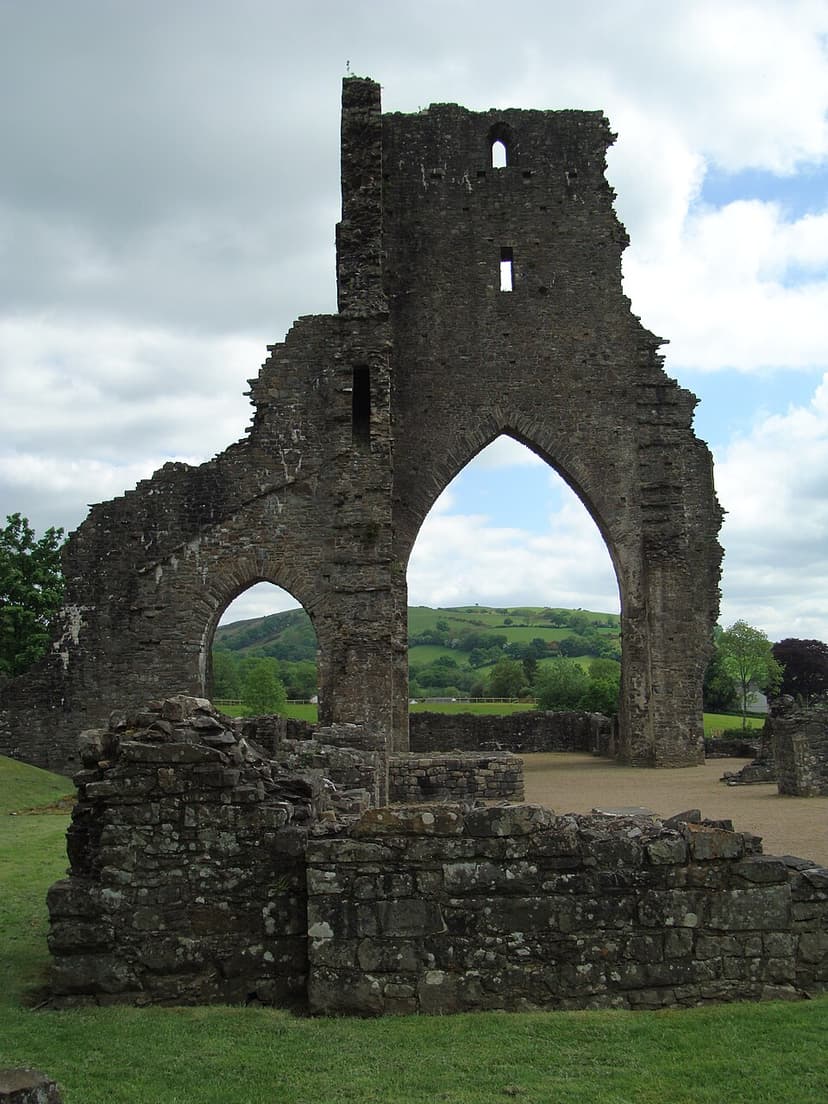
Talley Abbey
Talley Abbey, also known as Abaty Talyllychau, was a ruined monastery of the Premonstratensian Order located in the village of Talley, Carmarthenshire, Wales. Founded around 1185 by Rhys ap Gruffydd, it was part of a significant monastic network across Europe. The abbey was dissolved by Henry VIII, and its stones were largely repurposed for local buildings, leaving behind only ruins today.