
Trappists
The Trappists, officially the Order of Cistercians of the Strict Observance (OCSO), are a Catholic religious order of cloistered monastics that originated from a reform movement within the Cistercians. Founded by Abbot Armand Jean le Bouthillier de Rancé in 1664 at La Trappe Abbey, the order emphasizes a life of penitence, hard manual labor, silence, and isolation from the world, following the Rule of Saint Benedict. While originally part of the Cistercian Order, they formally constituted as a separate order in 1892, known for their austere lifestyle and distinctive products like Trappist beers.
Key Facts
- ›Officially known as the Order of Cistercians of the Strict Observance (OCSO).
- ›Originated from reforms led by Abbot Armand Jean le Bouthillier de Rancé at La Trappe Abbey in 1664.
- ›Follow the Rule of Saint Benedict with an emphasis on 'Strict Observance'.
- ›Communities exist for both monks (Trappists) and nuns (Trappistines).
- ›Known for their austere lifestyle including hard manual labor, silence, and a meatless diet.
- ›Famous for producing high-quality Trappist beers and other goods.

Trappist Beers, Monastic Sign Language, Emphasis On Manual Labor, Austere Diet
- Order of Cistercians of the Strict Observance
- Ocso
- Order of Reformed Cistercians of Our Lady of La Trappe
Armand Jean Le Bouthillier De Rancé, Augustin De Lestrange, Thomas Merton, Rafael ArnáIz BaróN
- French Revolution
- Formation of Separate Congregations In 1847
- Formal Constitution As A Separate Order In 1892
- Separation of Mariannhill Trappists In 1909
About Trappists
The Trappists: Order of Cistercians of the Strict Observance
The Trappists, officially designated as the Order of Cistercians of the Strict Observance (OCSO), are a prominent Catholic religious order of cloistered monastics. They emerged from a reform movement within the broader Cistercian Order, seeking a more rigorous adherence to monastic principles. The order's identity is deeply rooted in the reforms initiated by Abbot Armand Jean le Bouthillier de Rancé at La Trappe Abbey in Normandy, France, beginning in 1664. This movement eventually led to the formal constitution of the Trappists as a distinct religious order in 1892, though they continue to follow the foundational Rule of Saint Benedict.
History and Development
The reform movement that gave rise to the Trappists began at La Trappe Abbey, where Armand Jean le Bouthillier de Rancé, after a profound personal conversion, introduced a strict regimen focused on penitence, hard manual labor, and isolation from worldly affairs. This austere lifestyle was designed to foster spiritual growth and self-sufficiency. The reforms spread to other Cistercian monasteries, which adopted the name "Trappist" in reference to their origin. During the French Revolution, monasteries were confiscated, leading to exiles and the establishment of communities in new locations, such as Val-Sainte in Switzerland. Over time, differing observances led to the formation of separate Trappist congregations, which were eventually unified into the Order of Reformed Cistercians of Our Lady of La Trappe in 1892.
Monastic Life and Observance
Trappists are known for their dedication to the "Strict Observance" of the Rule of Saint Benedict. This entails a life of prayer, contemplation, and significant manual labor. While they do not take a vow of absolute silence, conversation is minimized, and a monastic sign language is often employed. Their diet is notably austere, featuring a complete abstinence from "flesh meats." Daily life is structured around the Liturgy of the Hours, with early rising for Vigils and extensive periods dedicated to meditation, prayer, and work. The manual labor aspect is crucial, serving both to support the community and as a spiritual discipline, with notable products including high-quality Trappist beers, cheeses, and other foodstuffs.
Notable Figures and Expansion
Several significant figures are associated with the Trappist order. Thomas Merton, a prolific author and theologian, entered the Abbey of Gethsemani and became one of the most widely read spiritual writers of the 20th century. Saint Rafael Arnáiz Barón was the first Trappist to be canonized, recognized for his deep piety despite illness. The order has seen considerable expansion, with the number of monasteries more than doubling globally in recent decades, extending significantly into Africa, Asia, and Latin America, though the total number of monks and nuns has decreased slightly.
Source: Wikipedia ↗
Frequently Asked Questions
What is the origin of the Trappist order?
The Trappist order originated from reforms introduced by Abbot Armand Jean le Bouthillier de Rancé at La Trappe Abbey in Normandy, France, starting in 1664. This movement sought to return to a more austere observance of the Cistercian rule.
What is the Rule followed by Trappists?
Trappists follow the Rule of Saint Benedict, which forms the foundation of their monastic life. The 'Strict Observance' in their name refers to their commitment to adhering closely to this rule.
Do Trappists take a vow of silence?
Contrary to popular belief, Trappists do not take a vow of silence. However, they generally speak only when necessary, strongly discouraging idle talk, and have developed a monastic sign language to facilitate communication without speech.
What is the daily life of a Trappist like?
A Trappist's daily life is centered around the Liturgy of the Hours, meditation, private prayer, and periods of manual labor. Their schedule begins very early, with vigils around 4:00 AM and concludes with compline and retiring around 8:00 PM, with meals taken in contemplative silence.
What kind of work do Trappist monks do?
Manual labor is a central aspect of Trappist life, supporting the community's economy and reinforcing spiritual growth. They are particularly famous for brewing high-quality Trappist beers, but also produce cheeses, bread, clothing, and coffins.
Are there both monks and nuns in the Trappist order?
Yes, the Trappist order includes communities of both monks, known as Trappists, and nuns, known as Trappistines. Both follow the same Rule of Saint Benedict and the 'Strict Observance'.
Related Monasteries
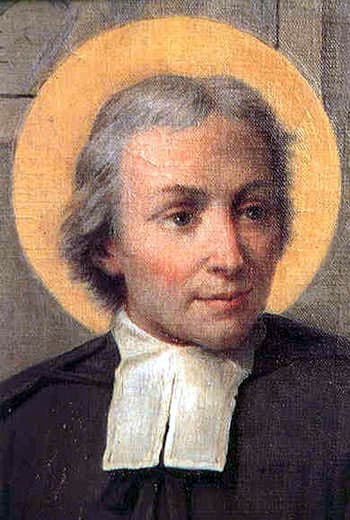
De La Salle Brothers
The De La Salle Brothers, officially the Institute of the Brothers of the Christian Schools (FSC), is a Catholic lay religious congregation founded in France by Jean-Baptiste de La Salle in 1679. Dedicated to providing a human and Christian education, especially to the poor, the institute operates over a thousand educational centers in nearly 80 countries, serving over a million students. While lauded for their educational mission and recognized by the Pope, the order has also faced significant controversy due to admitted long-standing cases of physical and sexual abuse within some of its institutions.

diocese of La Rochelle
The Diocese of La Rochelle and Saintes is a Catholic diocese in France, established in 1648. It encompasses the Charente-Maritime department and the overseas collectivity of Saint-Pierre and Miquelon. The diocese has a complex history, including mergers and re-establishments of its constituent sees, and played a role in the religious tensions of the French Reformation.

Kapuzinergruft
The Imperial Crypt, also known as the Capuchin Crypt (Kapuzinergruft), is a significant burial chamber located beneath the Capuchin Church and monastery in Vienna, Austria. Established in 1618 and consecrated in 1632, it has served as the primary resting place for members of the House of Habsburg since 1633. The crypt houses the remains of numerous Habsburg royalty, including emperors and empresses, entombed in a variety of sarcophagi, with a resident community of Capuchin friars acting as guardians.