
Kapuzinergruft
The Imperial Crypt, also known as the Capuchin Crypt (Kapuzinergruft), is a significant burial chamber located beneath the Capuchin Church and monastery in Vienna, Austria. Established in 1618 and consecrated in 1632, it has served as the primary resting place for members of the House of Habsburg since 1633. The crypt houses the remains of numerous Habsburg royalty, including emperors and empresses, entombed in a variety of sarcophagi, with a resident community of Capuchin friars acting as guardians.
Key Facts
- ›Founded in 1618 and dedicated in 1632.
- ›Primary burial site for the House of Habsburg since 1633.
- ›Contains the remains of 145 Habsburg royalty, including 12 emperors and 18 empresses.
- ›Features 107 metal sarcophagi and five heart urns, ranging in style from plain to rococo.
- ›Maintained by a dozen resident Capuchin friars.
- ›The most recent entombment was in 2023.

Baroque, Rococo
Founders Vault, Leopold Vault, Children's Columbarium, Funeral Entrance Ritual, 107 Metal Sarcophagi, 5 Heart Urns
Kaisergruft, Capuchin Crypt
Anna of Tyrol, Emperor Matthias, Emperor Ferdinand Ii, Emperor Leopold I, Emperor Joseph I, Emperor Charles Vi, Empress Maria Theresa, Emperor Francis Ii, Emperor Franz Joseph I, Archduchess Yolande of Austria
- Founding of the Crypt
- Dedication of the Church
- First Royal Entombment
- Enlargements and Additions By Various Emperors
- Rebuilding of the Monastery
- Major Rearrangement and Conservation Project In 1960
- Accessibility Improvements For Disabled Visitors and Air Conditioning Installation In 2003
About Kapuzinergruft
The Imperial Crypt (Kaisergruft)
The Imperial Crypt, also widely known as the Capuchin Crypt (Kapuzinergruft), stands as a monumental burial chamber situated beneath the Capuchin Church and monastery in Vienna, Austria. Its foundation dates back to 1618, with its formal dedication occurring in 1632. Since 1633, it has served as the principal necropolis for the illustrious House of Habsburg, housing the remains of emperors, empresses, and other royal family members. The crypt is a testament to centuries of imperial history, containing the sarcophagi of 145 Habsburg royalty, including twelve emperors and eighteen empresses, alongside urns holding the hearts or cremated remains of others. The visible collection features 107 metal sarcophagi, their styles varying dramatically from austere simplicity to the opulent grandeur of the rococo period, reflecting the changing tastes and eras of the ruling dynasty.
History and Architecture
The conception of the Capuchin Crypt and cloister originated with Anna of Tyrol, wife of Emperor Matthias, who envisioned it as a final resting place near the Hofburg Palace. Her will in 1617 provided the funds, and construction commenced after her death in 1618. The Thirty Years' War caused delays, but the church was eventually dedicated in 1632, and the remains of the founding couple were transferred the following year. Over subsequent centuries, the crypt underwent significant expansions, driven by the needs of the growing Habsburg lineage. Emperors Leopold I, Joseph I, Charles VI, Maria Theresa, Francis II, and Franz Joseph I each contributed to its growth, involving notable architects such as Lukas von Hildebrandt and Jean Jadot de Ville-Issey. The monastery itself was rebuilt in 1840, and further mausoleum chambers were added, notably in 1908 and 1960, the latter incorporating a "New Vault" as part of a comprehensive reorganization of the tombs.
Preservation and Ritual
The conservation of the ancient tombs has been a continuous challenge due to environmental factors. Recognizing the deteriorating condition of the sarcophagi, a dedicated association was formed in 1956 to raise funds and oversee restoration. A major project in 2003 not only improved accessibility for disabled visitors but also implemented a full air-conditioning system to control humidity and temperature, crucial for preserving the historic metalwork. A unique aspect of the crypt is its long-standing Funeral Entrance Ritual. This solemn ceremony involves a dialogue between a funeral official and the resident Capuchin friars, who initially deny entry to the deceased until they are identified as a "poor sinner," a tradition emphasizing humility and the shared human condition before death.
Source: Wikipedia ↗
Frequently Asked Questions
When was the Imperial Crypt founded and dedicated?
The Imperial Crypt was founded in 1618, with its dedication taking place on July 25, 1632. The first royal remains were transferred to the crypt the following year.
Who is buried in the Imperial Crypt?
The crypt is the principal burial place for members of the House of Habsburg. It contains the remains of 145 Habsburg royalty, including 12 emperors and 18 empresses, as well as numerous other family members and spouses.
What is the architectural style of the sarcophagi?
The 107 visible metal sarcophagi range in style from puritan plain to exuberant rococo. Materials used include bronze-like tin alloys, true bronze, copper, brass, and silver plating.
What is the significance of the Funeral Entrance Ritual?
The long-cherished burial ceremony involves a dialogue between a funeral official and the Capuchin friars. The friars initially deny knowledge of the deceased, only opening the doors after being told the person is a 'poor sinner,' symbolizing humility and the universality of death.
What efforts have been made to conserve the tombs?
Over the centuries, conservation efforts have addressed issues like humidity, temperature variations, and visitor impact. Major restoration work, including dehumidification and the construction of new vaults, has been undertaken, with the entire crypt being air-conditioned in 2003.
Where are the hearts and organs of some individuals buried?
For some individuals, their hearts have been placed in silver urns and sent to other locations, such as the Herzgruft in the Augustinerkirche. Similarly, intestines and other organs have been deposited in copper urns in the Ducal Crypt of Vienna's Stephansdom.
Related Monasteries

Reutte Friary
Reutte Friary was a Roman Catholic Franciscan religious community and its associated church located in Reutte, Austria, established in the early 17th century. Despite facing destruction during the Thirty Years' War and significant fires in later centuries, the complex was repeatedly rebuilt with local support and served various roles, including a theological study center and a novice community. The friary's associated church, St. Anna, exhibits a blend of Gothic and Baroque architectural elements.
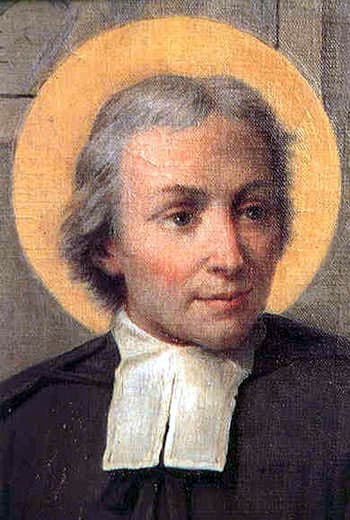
De La Salle Brothers
The De La Salle Brothers, officially the Institute of the Brothers of the Christian Schools (FSC), is a Catholic lay religious congregation founded in France by Jean-Baptiste de La Salle in 1679. Dedicated to providing a human and Christian education, especially to the poor, the institute operates over a thousand educational centers in nearly 80 countries, serving over a million students. While lauded for their educational mission and recognized by the Pope, the order has also faced significant controversy due to admitted long-standing cases of physical and sexual abuse within some of its institutions.

diocese of La Rochelle
The Diocese of La Rochelle and Saintes is a Catholic diocese in France, established in 1648. It encompasses the Charente-Maritime department and the overseas collectivity of Saint-Pierre and Miquelon. The diocese has a complex history, including mergers and re-establishments of its constituent sees, and played a role in the religious tensions of the French Reformation.