
La Trappe Abbey
La Trappe Abbey, located in Soligny-la-Trappe, Orne, France, is historically significant as the origin of the Trappist order, deriving its name from this very monastery. Founded in the 12th century, it has undergone periods of destruction and reconstruction, notably during the Hundred Years' War and the French Revolution. Under the leadership of Abbot Armand Jean le Bouthillier de Rancé in the 17th century, it became the center of a major reform of the Cistercian Order, which eventually gave rise to the Trappist name.
Key Facts
- ›Founded in 1122 as an oratory chapel and monastery.
- ›Became a Cistercian abbey in 1147.
- ›Central to the 17th-century reform led by Abbot Armand Jean le Bouthillier de Rancé, which established the Trappist Order.
- ›Suppressed during the French Revolution and its property sold, later repurchased by the community.
- ›The current buildings are primarily Neo-Gothic in style.
- ›Directly supervises four other Trappist houses.
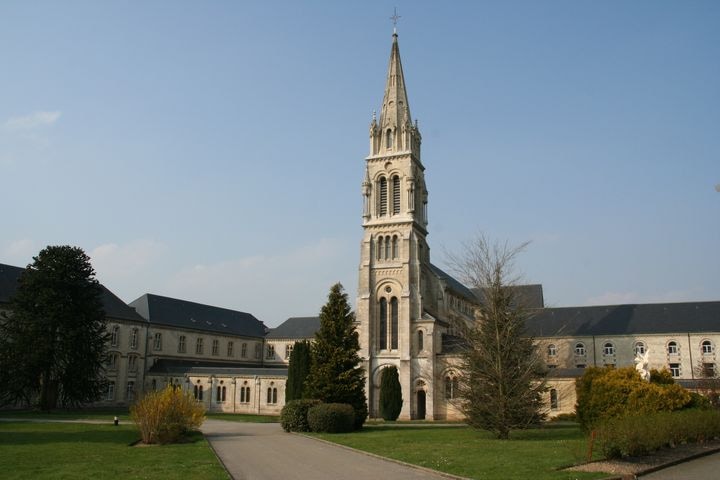
Neo-Gothic
- House of Origin of the Trappist Order
- Site of the 17th-Century Reform of the Cistercian Order
La Grande Trappe
Rotrou Iii, Count of Perche, Matilda Fitzroy, Countess of Perche, Armand Jean Le Bouthillier De Rancé, Augustin De Lestrange, Bossuet, James Ii of England, Dom Jean Mabillon, Dom Guerric Reitz-SéJotte
- Founded As An Oratory and Monastery
- United With the Cistercian Order
- Suffered Destruction During the Hundred Years' War
- Became the Center of the Trappist Reform Under Abbot De Rancé
- Suppressed During the French Revolution
- Repurchased and Rebuilt After the Bourbon Restoration
- Expelled and Returned Under French Laws Against Religious Institutions In 1880
About La Trappe Abbey
La Trappe Abbey, also known as La Grande Trappe, is a historic monastery situated in Soligny-la-Trappe, Orne, France. It holds profound significance as the birthplace and namesake of the Trappist Order, a prominent branch of Cistercian monasticism. The abbey's origins trace back to 1122 when it began as a small oratory chapel dedicated to the Virgin Mary, later expanding into a monastery and officially gaining abbey status in 1140. It was integrated into the Cistercian Order in 1147.
History and Reform
The early centuries of La Trappe were marked by periods of prosperity interspersed with devastating conflict. The abbey suffered significant damage during the Hundred Years' War, including being burnt and pillaged in the late 14th and mid-15th centuries. The 16th century saw a decline in its fortunes due to a series of absentee abbots in commendam. A pivotal moment in its history occurred in the 17th century with the installation of Abbot Armand Jean le Bouthillier de Rancé. Following a profound religious conversion, de Rancé revitalized the abbey, initiating a rigorous reform of the Cistercian Order from 1664. This reform movement, deeply influenced by the austere practices at La Trappe, eventually became known as the Trappist Order, a name derived directly from the abbey.
French Revolution and Reconstruction
La Trappe Abbey faced severe disruption during the French Revolution. It was suppressed by decree in 1790, with some of its monks martyred and others forced into exile. The abbey's property was sold as national goods. Following the Bourbon Restoration, the community, led by Dom Augustin de Lestrange, managed to repurchase the property in 1815. They found the premises in a ruinous state and undertook a complete rebuilding of the monastery, with the new church consecrated in 1832. The abbey continued to attract notable visitors, including royalty. In 1880, the Trappists were expelled under French laws but were permitted to return a few years later. The monastery underwent further reconstruction, with its new church consecrated in 1895.
Present Day
Today, La Trappe Abbey remains an active Trappist community, housed in buildings primarily of Neo-Gothic architectural style. The abbot, Dom Guerric Reitz-Séjotte, appointed in 2004, leads the community, which directly oversees four other Trappist houses. In March 2026, the monks announced a potential departure from the abbey in 2028, citing a decline in vocations to the religious life as a primary reason. The abbey was registered as a Monument historique in 1975, recognizing its significant cultural and architectural heritage.
Source: Wikipedia ↗
Frequently Asked Questions
When was La Trappe Abbey founded?
La Trappe Abbey began as a small oratory chapel built in 1122 by Rotrou III, Count of Perche. A monastery was added a few years later, and it was raised to the status of an abbey in 1140.
What religious order is La Trappe Abbey associated with?
La Trappe Abbey is the house of origin of the Trappists, to whom it gave its name. It was originally part of the Order of Savigny and later united with the Cistercian Order before the reform that led to the Trappists.
What is the architectural style of La Trappe Abbey?
The current buildings of La Trappe Abbey are primarily in the Neo-Gothic style. The monastery has been rebuilt several times throughout its history.
Is La Trappe Abbey still an active monastery?
Yes, La Trappe Abbey is still occupied by a Trappist community. However, the monks have announced a potential departure in 2028 due to a lack of vocations.
What is the historical significance of Abbot Armand Jean le Bouthillier de Rancé?
Armand Jean le Bouthillier de Rancé, the 14th commendatory abbot, initiated a significant religious reform at La Trappe starting in 1664. This reform movement took the name of the abbey and became renowned as an order.
Has La Trappe Abbey been affected by historical conflicts?
Yes, La Trappe Abbey suffered during the Hundred Years' War, being burnt and pillaged in 1376 and again in 1465. It was also suppressed during the French Revolution.
Related Monasteries

Sénanque Abbey
Sénanque Abbey is a historic Cistercian monastery located in Provence, France, founded in 1148. It is renowned for its remarkably preserved Romanesque architecture and its austere beauty, reflecting the Cistercian ideals of simplicity. After periods of decline and upheaval, including destruction during the Wars of Religion and nationalization during the French Revolution, the abbey was re-established and continues to operate today, with monks cultivating lavender and tending bees.

Abbey of Loc-Dieu
Abbey of Loc-Dieu is a Cistercian abbey situated in Aveyron, France, founded in 1123 on a site historically known as "devil's place" before being renamed "place of God" by its monastic inhabitants. Despite facing destruction and rebuilding, it became a significant Gothic architectural site and, during World War II, served as a safe haven for artworks from the Louvre, including the Mona Lisa. Today, the abbey and its park are open to the public.

La Lucerne Abbey
La Lucerne Abbey, officially the Abbey of the Most Holy Trinity of La Lucerne, was a Premonstratensian canonry founded in the 12th century in Normandy. It grew to become a significant motherhouse for other monasteries and, after suppression during the French Revolution, has undergone extensive restoration since 1959 with the aim of re-establishing a monastic community.