
La Lucerne Abbey
Christian·France·active restoration·12th century
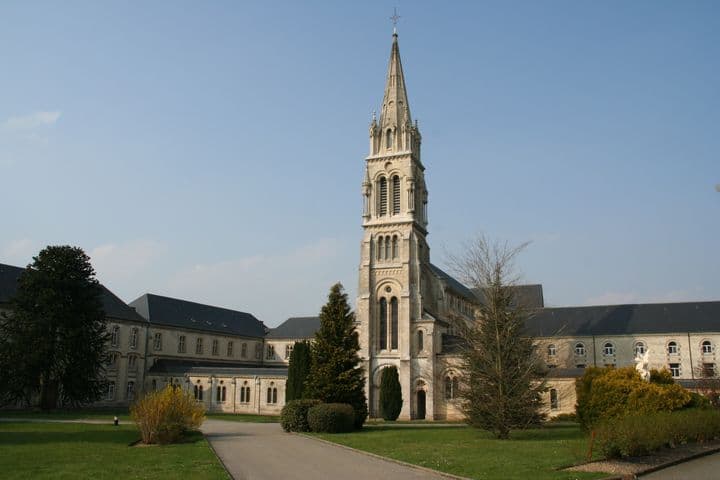
La Lucerne Abbey, officially the Abbey of the Most Holy Trinity of La Lucerne, was a Premonstratensian canonry founded in the 12th century in Normandy. It grew to become a significant motherhouse for other monasteries and, after suppression during the French Revolution, has undergone extensive restoration since 1959 with the aim of re-establishing a monastic community.
Key Facts
- ›Founded in 1143 by Hasculf de Subligny, with later support from the English crown.
- ›Settled by Norbertine canons from Dommartin Abbey.
- ›Initial location proved too remote and damp, leading to relocation in the 12th century.
- ›Construction of permanent buildings occurred between 1164 and 1178 in Romanesque and Anglo-Norman Gothic styles.
- ›Suffered suppression during the French Revolution in 1792 and its buildings were repurposed or used as a stone source.
- ›Restoration efforts began in 1959 under Abbé Marcel Lelégard and continue today with the goal of re-establishing a monastic community.

Romanesque, Anglo-Norman Gothic
Romanesque Lavatorium, Medieval Gatehouse With Bakery and Courtrooms, Tithe Barn, Dovecote, Abbot's Lodgings
Abbaye TrèS-Sainte-Trinité De La Lucerne, La Lucerne-D'Outremer
Hasculf De Subligny, Othoerne, William Adelin, Tancred, Richard of Subligny, Tescelin, Achard of St. Victor, Abbé Marcel LeléGard
White Ship Disaster, Suppression During the French Revolution
About La Lucerne Abbey
The Abbey of the Most Holy Trinity of La Lucerne, also known as La Lucerne Abbey and historically as La Lucerne-d'Outremer, stands as a significant Premonstratensian canonry located in the picturesque forests of the Thar river valley in Normandy, France. Founded in 1143 by Hasculf de Subligny, its establishment was supported by the English crown and it was settled by Norbertine canons from Dommartin Abbey, led by its first prior, Tancred.
History and Development
The abbey's early years saw a relocation due to an unfavorable initial site. The permanent buildings, constructed between 1164 and 1178, showcase a blend of Romanesque architecture, characterized by restraint and sobriety reminiscent of Cistercian principles, and an imposing Anglo-Norman Gothic tower. La Lucerne grew in stature, becoming the motherhouse for four other Premonstratensian monasteries across Normandy and Brittany. Despite structural updates in the 15th and 17th centuries, the abbey's monastic life was disrupted by its suppression in 1792 during the French Revolution, after which its structures were repurposed as a cotton mill and later quarried for stone.
Reconstruction and Revival
Recognized as a monument historique in 1928, La Lucerne Abbey embarked on an ambitious restoration journey beginning in 1959 under Abbé Marcel Lelégard. This ongoing effort, managed by the "Fondation Abbaye de La Lucerne d'Outremer," has systematically rebuilt key elements, including the abbey church, refectory, cellars, tithe barn, and the unique Romanesque lavatorium. A central objective of the restoration has been the re-establishment of an active monastic community, reflecting the abbey's enduring spiritual purpose and its architectural heritage.
Source: Wikipedia ↗
Frequently Asked Questions
When was La Lucerne Abbey founded?
La Lucerne Abbey was founded in 1143. The foundation stone for its permanent buildings was laid in 1164.
What religious order was La Lucerne Abbey a part of?
La Lucerne Abbey was a Premonstratensian canonry, also known as Norbertines. This order follows the Rule of Saint Augustine.
What happened to La Lucerne Abbey during the French Revolution?
During the French Revolution, the abbey was suppressed in 1792. Its buildings were subsequently used as a cotton mill and then as a source for building materials.
Is La Lucerne Abbey still active today?
Extensive restoration work has been underway since 1959 with the explicit aim of re-establishing a monastic community. While the restoration continues, the intention is to revive its active monastic life.
What is the architectural style of La Lucerne Abbey?
The permanent buildings constructed between 1164 and 1178 were primarily in the Romanesque style, influenced by Cistercian architecture. However, the complex was notable for its Anglo-Norman Gothic tower.
Is La Lucerne Abbey open to the public?
While currently undergoing extensive restoration with the goal of re-establishing a monastic community, many restored parts of the abbey, such as the tithe barn, lavatorium, and gatehouse, are accessible. The restoration efforts are ongoing.
Related Monasteries
La Trappe Abbey
La Trappe Abbey, located in Soligny-la-Trappe, Orne, France, is historically significant as the origin of the Trappist order, deriving its name from this very monastery. Founded in the 12th century, it has undergone periods of destruction and reconstruction, notably during the Hundred Years' War and the French Revolution. Under the leadership of Abbot Armand Jean le Bouthillier de Rancé in the 17th century, it became the center of a major reform of the Cistercian Order, which eventually gave rise to the Trappist name.

Melleray Abbey
Melleray Abbey was a Cistercian monastery founded around 1134 in Brittany, France. It later became a Trappist house from 1817 until 2016, when it was transferred to the Chemin Neuf Community. Historically, the abbey experienced periods of both strict observance and relaxation, undergoing suppression during the French Revolution before its re-establishment by Trappist monks.

Sénanque Abbey
Sénanque Abbey is a historic Cistercian monastery located in Provence, France, founded in 1148. It is renowned for its remarkably preserved Romanesque architecture and its austere beauty, reflecting the Cistercian ideals of simplicity. After periods of decline and upheaval, including destruction during the Wars of Religion and nationalization during the French Revolution, the abbey was re-established and continues to operate today, with monks cultivating lavender and tending bees.