
Luni Cathedral
Luni Cathedral, formerly the Pieve of Santa Maria, was a significant religious center located in the ancient Roman city of Luni, Liguria, Italy. Originally built by Romans in the late 4th and early 5th centuries, it served as the seat of the Diocese of Luni and was considered the "mother" church for the region. Despite its eventual abandonment and ruin as the city declined, it remained a site of annual liturgical observance until the early 14th century.
Key Facts
- ›Built by Romans in the late 4th and early 5th centuries, serving as the center of the Diocese of Luni.
- ›First documented in 879 by Carloman, King of Italy.
- ›Underwent several restorations before the city's abandonment in the early 13th century.
- ›The episcopal see was transferred to Sarzana in 1204 due to the decline and depopulation of Luni.
- ›Archaeological investigations have revealed its evolution from a Roman noble house to a three-nave apsidal church.
- ›The 12th-century rebuilding incorporated Lombard Romanesque elements in the apse and facade.
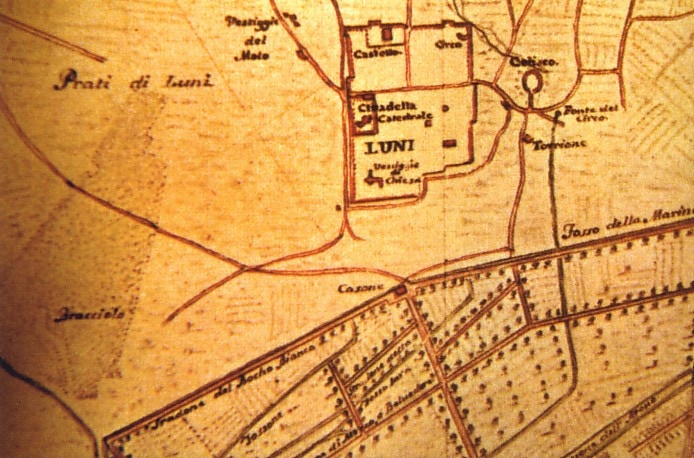
- Originally Built On the Site of A Roman Noble House
- Three-Nave Apsidal Church Plan
- Later Renovations In Byzantine and Lombard Romanesque Styles
- Remains Visible In Archaeological Excavations
1st Century Bc, 4th Century, 5th Century, 6th Century, 8th Century, 9th Century, 12th Century
About Luni Cathedral
Luni Cathedral: A Ruined Seat of Power
Luni Cathedral, known historically as the Pieve of Santa Maria, was a pivotal religious and administrative center situated in the ancient Roman city of Luni, in present-day Liguria, Italy. Its origins trace back to the late Roman period, with construction commencing in the late 4th and early 5th centuries on the site of a considerable Roman noble residence. This early structure evolved into a significant three-nave apsidal church that served as the principal seat of the Diocese of Luni, earning it the designation of the "mother" church for the surrounding area.
Historical Trajectory
The cathedral first appears in documented history in an 879 text by Carloman, King of Italy. Between its initial construction and the 12th century, it underwent numerous restorations. However, the city of Luni faced a progressive decline due to a combination of environmental factors, including marshland spread and malaria, and external threats such as Saracen and Norman raids. These challenges, coupled with the silting up of its port, led to the city's gradual abandonment in the early 13th century.
Transfer of the See and Legacy
By 1201, the situation in Luni had become untenable, with few inhabitants remaining to maintain the city and its ecclesiastical rights. Bishop Gualtiero II, in agreement with the canons and with papal approval from Innocent III, secured the transfer of the episcopal see from Luni to Sarzana. This move, finalized by 1204, marked the end of Luni Cathedral's primary function as a bishop's seat, with Sarzana Cathedral eventually replacing it. Despite the city's ruin, bishops of Luni continued to celebrate mass annually in the remains of the old cathedral, and the rite of investiture often took place there until at least the late 13th century. The burial of the dead also continued in the ancient cathedral at least into the early 14th century.
Archaeological Discoveries
Modern archaeological investigations, particularly since 1973, have shed light on the cathedral's complex history. These excavations have revealed that the site was first occupied by a large noble house at the end of the 1st century BC, identified as the "domus of Oceanus." The earliest place of worship, likely the bishop's seat, was constructed between the 4th and 5th centuries. Subsequent phases of development include renovations in the Byzantine era (6th century), potentially leading to a dedication to 'the name of Christ,' and from the Carolingian period onward, it is consistently referred to as the 'Pieve di Santa Maria.' The 12th century saw a significant rebuilding of the main apse and facade in the Lombard Romanesque style. While earlier excavations in the 18th and 19th centuries caused irreversible damage to the archaeological strata, more recent work has allowed for a reconstruction of the building's various life stages.
Source: Wikipedia ↗
Frequently Asked Questions
When was Luni Cathedral built?
Luni Cathedral was initially built by the Romans between the late 4th and early 5th centuries. Archaeological evidence suggests its origins as a Roman noble house dating back to the end of the 1st century BC.
What happened to Luni Cathedral?
The cathedral, along with the city of Luni, was gradually abandoned in the early 13th century due to factors like malaria, raids, and the silting up of its port. The episcopal see was eventually transferred to Sarzana in 1204, and the cathedral fell into ruin.
Was Luni Cathedral ever rebuilt?
While the city and cathedral were abandoned, there were renovations and rebuilding efforts. The church was renovated in the Byzantine era (6th century), and in the 12th century, the main apse and facade were rebuilt in the Lombard Romanesque style.
What was the significance of Luni Cathedral?
As the Pieve of Santa Maria, it was the central church of the Diocese of Luni and considered the 'mother' church for numerous other religious buildings in the region. It served as the bishop's seat until the city's decline.
What remains of Luni Cathedral today?
Today, Luni Cathedral exists primarily as an archaeological site. Archaeological investigations have uncovered parts of its structure, including sections of the nave and evidence of its various construction phases.
Who was the patron saint of Luni Cathedral?
The initial dedication of the building to a specific saint is not definitively known. However, during the Byzantine renovation in the 6th century, it may have been dedicated to 'the name of Christ.' From the Carolingian period (8th-9th century), it is consistently mentioned as the 'Pieve di Santa Maria'.
Related Cathedrals

Asti Cathedral
Asti Cathedral, officially the Cathedral of Santa Maria Assunta and San Gottardo, is the principal church of the Diocese of Asti in Piedmont, Italy. It is a significant example of Gothic architecture in the region and a notable instance of Lombard Romanesque style in northern Italy, boasting considerable length and impressive dimensions.

Locri Cathedral
Locri Cathedral, officially the Cattedrale di Santa Maria del Mastro, is a Roman Catholic cathedral located in Locri, Calabria, Italy. Since 1954, it has served as the episcopal seat for the Diocese of Locri-Gerace, a significant religious center in the region.

Whithorn
Whithorn is a historic royal burgh in Dumfries and Galloway, Scotland, significant as the site of the first recorded Christian church in Scotland, Candida Casa, built by Saint Ninian around 397 CE. The town's historical importance is rooted in its role as a major medieval pilgrimage destination, particularly associated with Saint Ninian.