
Asti Cathedral
Diocese of Asti·Roman Catholic·Italy
Asti Cathedral, officially the Cathedral of Santa Maria Assunta and San Gottardo, is the principal church of the Diocese of Asti in Piedmont, Italy. It is a significant example of Gothic architecture in the region and a notable instance of Lombard Romanesque style in northern Italy, boasting considerable length and impressive dimensions.
Key Facts
- ›The cathedral is dedicated to the Assumption of the Blessed Virgin Mary and Saint Gotthard.
- ›It is one of the largest churches in Piedmont and a prime example of Gothic architecture in the region.
- ›Construction likely began in the 5th or 6th century, replacing earlier structures.
- ›The rebuilt cathedral was consecrated in 1095 by Pope Urban II.
- ›The bell tower was significantly rebuilt starting in 1266, featuring seven floors and an octagonal spire.
- ›The interior exhibits a blend of architectural and artistic elements from Romanesque to Baroque periods.

Gothic, Lombard Romanesque
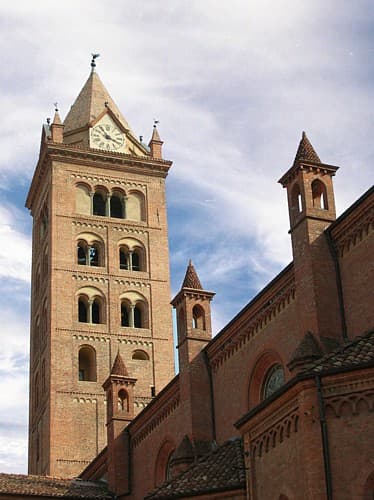
- Bell Tower With Octagonal Spire
- Fresco By Francesco Fabbrica Depicting Bishop Guidetto Recognizing Relics
- Pietà Group of Eight Polychrome Terracotta Figures
- Baroque High Altar
Jacopo Ghigo
About Asti Cathedral
Asti Cathedral, officially known as the Cathedral of Santa Maria Assunta e San Gottardo, stands as the principal church and episcopal seat of the Diocese of Asti in Asti, Piedmont, Italy. It is a significant monument embodying the Gothic architectural style in the region and is recognized as one of the finest examples of Lombard Romanesque architecture in northern Italy. The cathedral's impressive dimensions, measuring 82 meters in length and 24 meters in height and width, make it one of the largest churches in Piedmont.
History and Construction
Historical records suggest that the initial construction of Asti Cathedral began around the fifth or sixth century. Tradition holds that it replaced a series of earlier buildings, including a primitive church built over the crypt of the martyred saint, Secundus of Asti. Evidence of these earlier structures can still be seen, such as St. John's Church, which is presently used for baptisms.
A significant event in the cathedral's history occurred around 1070 when the building collapsed, exacerbated by a fire set by Adelaide of Susa during a dispute with the bishops. The rebuilt cathedral was consecrated in 1095 by Pope Urban II, who used the occasion to preach the First Crusade.
The bell tower underwent substantial rebuilding starting in 1266 under master builder Jacopo Ghigo. This reconstruction resulted in a seven-story tower crowned with an octagonal spire, an image of which is preserved in "Theatrum Statuum Sabaudiae," a comprehensive work documenting the territories of the House of Savoy in the late 17th century.
Architectural and Artistic Features
The interior of Asti Cathedral showcases a rich array of architectural and artistic elements. Pillars featuring holy water fonts made from Romanesque and Roman capitals are prominent. The right nave includes a fresco by Francesco Fabbrica depicting Bishop Guidetto's recognition of the relics of St. Secondo, as well as the Chapel of St. Philip Neri and a Baroque altar with an image of the Madonna.
The left nave contains the Chapel of St. Francis de Sales and a notable Pietà group composed of eight polychrome terracotta figures dating from 1502. Another fresco by F. Fabbrica illustrates Bishop Valperga laying the foundation stone of the cathedral. The cathedral's artistic heritage spans from Romanesque and Renaissance to Baroque styles, reflecting its long and complex history of construction and renovation.
Source: Wikipedia ↗
Frequently Asked Questions
What is Asti Cathedral dedicated to?
Asti Cathedral is dedicated to the Assumption of the Blessed Virgin Mary and to Saint Gotthard. These dedications are central to its religious significance and identity.
When was Asti Cathedral first built?
The initial construction of Asti Cathedral is believed to have commenced around the fifth or sixth century. It is thought to have been built on the site of earlier religious structures.
What architectural styles are present in Asti Cathedral?
Asti Cathedral is considered the highest expression of Gothic architecture in Piedmont and among the best examples of Lombard Romanesque in northern Italy. Its interior also features elements from the Renaissance and Baroque periods.
What is significant about the bell tower of Asti Cathedral?
The bell tower was rebuilt starting in 1266 and features seven floors topped by an octagonal spire. Its construction and appearance are documented in historical works like 'Theatrum Statuum Sabaudiae'.
What historical events are associated with Asti Cathedral?
The cathedral's history includes a collapse around 1070, partly due to a fire set during a dispute involving Adelaide of Susa. In 1095, the rebuilt cathedral was consecrated by Pope Urban II.
Related Cathedrals

Ardmore
Ardmore Cathedral, officially the ruins of St. Declan's Monastery, is a significant historical and architectural site in County Waterford, Ireland. Traditionally founded in the 5th century by St. Declan, it served as the seat of the Bishop of Ardmore before its diocese was merged into Lismore by the 13th century. The site features a remarkable collection of medieval structures, including a round tower, an oratory, and the remains of the cathedral itself, showcasing centuries of architectural development.

Albenga Cathedral
Albenga Cathedral, officially the Cathedral of Saint Michael the Archangel, is a Roman Catholic cathedral in Albenga, Italy, serving as the seat of the Diocese of Albenga-Imperia. Occupying a site with a church since the late 4th or early 5th century, its present medieval structure dates primarily from around 1100, with significant rebuilding in the late 12th century and later modifications, notably in 1582. A restoration in the 1970s aimed to restore its medieval appearance, and the bell tower was substantially rebuilt in the late 14th century.
Alba Cathedral
Alba Cathedral, officially the Cattedrale di San Lorenzo, is a Roman Catholic cathedral in Alba, Italy, dedicated to Saint Lawrence and serving as the episcopal seat of the Diocese of Alba. Its current Romanesque structure, largely dating from the 12th century, has undergone significant remodelling throughout its history, most notably in the late Gothic period and extensive renovations in the 19th century.