
Tiron Abbey
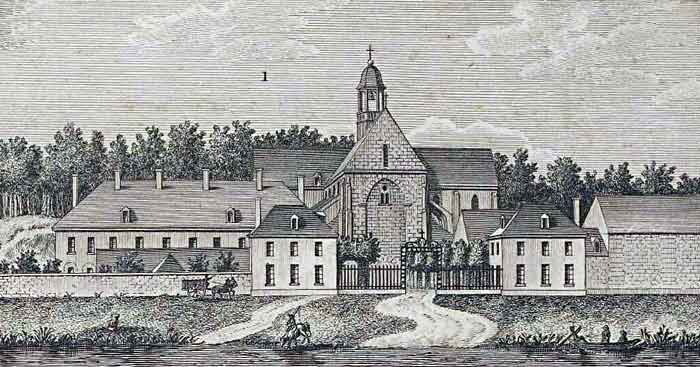
Tiron Abbey, founded in 1109 in the woods of Thiron-Gardais, France by Bernard of Abbeville, was the mother abbey of the Tironensian Order. This order, known for its adherence to strict Benedictine observance and emphasis on manual labor, rapidly expanded across France, England, Wales, Scotland, and Ireland. The monks were popularly called "Grey Monks" due to their distinctive grey robes.
Key Facts
- ›Founded in 1109 by Bernard of Abbeville.
- ›Mother abbey of the Tironensian Order.
- ›Known for strict observance of the Rule of St. Benedict and manual labor.
- ›Monks were called "Grey Monks" due to their grey robes.
- ›The order established over 117 priories and abbeys internationally within five years of its creation.
- ›Played a role in building abbeys in Scotland, serving as master craftsmen.

Mother Abbey of the Tironensian Order, Site of Skilled Craftsmen Who Built Abbeys
Abbaye De La Sainte-Trinité De Tiron
Bernard of Abbeville, Bernard D'Abbeville
- Foundation of the Tironensian Order
- Spread of the Order Internationally
- Construction of Abbeys In Scotland By Tironensian Monks
- Integration Into the Benedictine Congregation of St Maur In 1627
About Tiron Abbey
Tiron Abbey, officially the Abbaye de la Sainte-Trinité de Tiron, was founded in 1109 in the wooded region of Thiron-Gardais, located in Perche, France, roughly 35 miles west of Chartres. It served as the pivotal mother abbey for the Tironensian Order, a significant monastic movement that emerged in the early 12th century.
Foundation and Expansion
The Tironensian Order was established by Bernard of Abbeville, also known as Bernard d'Abbeville, a Benedictine monk who sought to revive strict observance and asceticism within monastic life. He emphasized manual labor, a practice that contributed to the abbey's early prosperity and its ability to shelter displaced persons during the famine of 1109–1111. The abbey's success led to its relocation to Thiron-Gardais, placed under the protection of the cathedral canons of Chartres to ensure its autonomy from secular lords.
The Tironensian Order
As the first of the new religious orders to achieve widespread international reach, the Order of Tiron rapidly established a formidable network. Within five years of its inception, it boasted 117 priories and abbeys spread across France, England, Wales, Scotland, and Ireland. The monks were popularly recognized by the moniker "Grey Monks" due to their characteristic grey robes, a distinctive feature also shared by the monks of the Savigny congregation.
International Influence and Legacy
The Tironensians were particularly active in Scotland, where they served as master craftsmen instrumental in the construction and occupation of abbeys such as Selkirk, Arbroath, Kilwinning, and Lindores Abbey. The order adopted administrative practices like annual general chapters, with provisions for overseas abbots to attend less frequently. In France, the Tironensian Order was eventually integrated into the Benedictine Congregation of St Maur in 1627. While the abbey itself is now in ruins, its historical significance lies in its role as the nucleus of a widespread monastic order that left a notable mark on religious and architectural history across Western Europe.
Source: Wikipedia ↗
Frequently Asked Questions
When was Tiron Abbey founded?
Tiron Abbey was established in 1109. It served as the foundational site for the Tironensian monastic order.
Who founded Tiron Abbey and the Tironensian Order?
The order was founded by Bernard of Abbeville, also known as Bernard d'Abbeville, around 1106. He established the mother abbey at Tiron in 1109.
What distinguished the monks of Tiron Abbey?
The monks of Tiron Abbey were popularly known as "Grey Monks" because of the grey robes they wore. They were also noted for their strict adherence to the Rule of St. Benedict and their emphasis on manual labor.
How far did the Tironensian Order spread?
The Tironensian Order experienced rapid international growth. Within five years of its inception, it had established 117 priories and abbeys across France, England, Wales, Scotland, and Ireland.
What role did Tironensian monks play in Scotland?
In Scotland, Tironensian monks were instrumental as master craftsmen in building and occupying several abbeys, including Selkirk, Arbroath, Kilwinning, and Lindores Abbey.
Related Monasteries

Abbaye Blanche
The Abbaye Blanche was a Benedictine nunnery founded in 1112 in Mortain, France, by Saint Vitalis. It was established for women with his sister, Adelina, as its first abbess. The community followed a strict interpretation of the Rule of Saint Benedict and later joined the Cistercian order in 1147. Though much has been lost to time, remnants of its Romanesque and Early Gothic architecture endure.
Barbeau Abbey
Barbeau Abbey was a Cistercian monastery founded in 1147 by King Louis VII of France. Located in Fontaine-le-Port, Seine-et-Marne, it was a site of royal burial and experienced periods of prosperity and destruction throughout its history, including the Hundred Years' War and the French Revolution. Today, few original structures remain, with a riding school occupying the former site.

Bellevaux Abbey
Bellevaux Abbey was a Cistercian monastery established in 1120 in Franche-Comté, France, by Pons de Morimond. It was a significant religious house, connected to local nobility and notable figures like Burchard of Bellevaux and Peter of Tarentaise. Though suppressed in 1790 and largely demolished shortly after, its history includes periods of destruction and rebuilding, with the final structures erected by Abbot Louis Albert de Lezay-Marnésia. The site later housed a Trappist community before being sold to private owners.