
Barbeau Abbey
Barbeau Abbey was a Cistercian monastery founded in 1147 by King Louis VII of France. Located in Fontaine-le-Port, Seine-et-Marne, it was a site of royal burial and experienced periods of prosperity and destruction throughout its history, including the Hundred Years' War and the French Revolution. Today, few original structures remain, with a riding school occupying the former site.
Key Facts
- ›Founded in 1147 by King Louis VII of France.
- ›Originally named Seine-Port or Sequanae Portus, later Barbeau.
- ›King Louis VII was buried at the abbey in 1180.
- ›Monks were displaced for 40 years during the Hundred Years' War.
- ›Suppressed and set on fire during the French Revolution in 1793.
- ›Few original structures remain, with much of the site now occupied by a riding school.
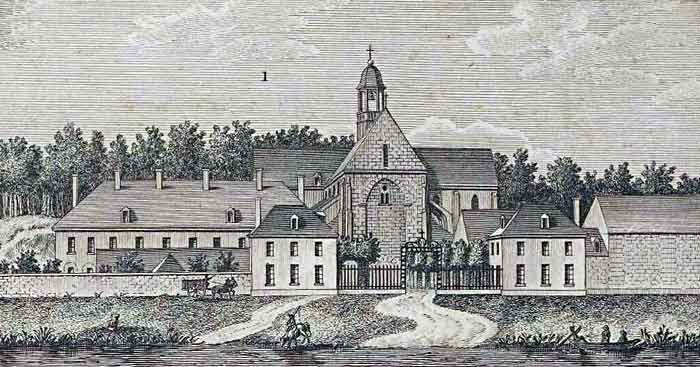
16th-Century Wooden Sculptures, 18th-Century Altar, Ice-Cellar
Abbaye De Barbeau, Abbaye Notre-Dame De Barbeau, Barbelum, Sequanae Portus, Sacer Portus
Louis Vii of France, Cardinal Wilhelm Egon Von FüRstenberg, Saint Loup
- Founded By King Louis Vii
- Transferred To Present Site
- Burial of Louis Vii
- Monks Displaced During Hundred Years' War
- Restoration and Enlargement After Return of Monks
- Suppressed and Set On Fire During French Revolution
About Barbeau Abbey
Barbeau Abbey was a Cistercian monastery established in Fontaine-le-Port, in the French department of Seine-et-Marne. It was founded in 1147 by King Louis VII of France, who chose the site on the banks of the Seine, initially leading to its Latin names Sequanae Portus or Seine-Port. The abbey was later transferred to its present location in 1156, and its name is thought to derive from the French word for barbel, a fish depicted in its coat of arms. According to foundation legend, the sale of a precious stone from a ring found in a barbel provided the funds for its construction.
History and Significance
The abbey held royal significance, with King Louis VII himself being buried there in 1180, though his remains were later moved. Barbeau Abbey enjoyed periods of prosperity but also suffered greatly due to conflict. It was significantly impacted by the Hundred Years' War, during which the monks were forced to flee for 40 years, only returning in 1460 to restore and enlarge the monastery. Further damage occurred during the Wars of Religion, and restorations were undertaken under commendatory abbot Cardinal Wilhelm Egon von Fürstenberg.
Decline and Legacy
The French Revolution marked the end of Barbeau Abbey as a monastic institution. It was suppressed in 1791 and subsequently set on fire in 1793. The state acquired the remaining structures for use as an orphanage before selling them in 1837. The new private owners demolished most of the abbey to build a country house, and today, a riding school occupies the former monastic site. Few original buildings survive, with the exception of an ice-cellar. However, some artistic elements, such as 16th-century wooden sculptures and an 18th-century altar, have been preserved in nearby churches.
Source: Wikipedia ↗
Frequently Asked Questions
When was Barbeau Abbey founded?
Barbeau Abbey was founded in 1147 by King Louis VII of France. It was initially established on the banks of the Seine and later transferred to its present site in 1156.
What is the origin of the name 'Barbeau'?
The name 'Barbeau' is supposedly derived from the French word for barbel, a type of fish. According to legend, a barbel was caught containing a ring lost by Saint Loup, and its sale funded the monastery's construction.
What significant historical figures are associated with Barbeau Abbey?
King Louis VII of France founded the abbey and was buried there in 1180. Cardinal Wilhelm Egon von Fürstenberg also oversaw restorations as a commendatory abbot.
What happened to Barbeau Abbey during the French Revolution?
Barbeau Abbey was suppressed in 1791 and set on fire in 1793 by the Sansculottes. The state later acquired the remaining buildings but sold them in 1837 to private owners who demolished them.
Are there any original buildings still standing at Barbeau Abbey?
Few remains of the original abbey exist today. An ice-cellar is one of the few surviving structures. Some 16th-century wooden sculptures from the abbey church are preserved in the church of Fontaine-le-Port.
Related Monasteries

Abbaye Blanche
The Abbaye Blanche was a Benedictine nunnery founded in 1112 in Mortain, France, by Saint Vitalis. It was established for women with his sister, Adelina, as its first abbess. The community followed a strict interpretation of the Rule of Saint Benedict and later joined the Cistercian order in 1147. Though much has been lost to time, remnants of its Romanesque and Early Gothic architecture endure.

Bellevaux Abbey
Bellevaux Abbey was a Cistercian monastery established in 1120 in Franche-Comté, France, by Pons de Morimond. It was a significant religious house, connected to local nobility and notable figures like Burchard of Bellevaux and Peter of Tarentaise. Though suppressed in 1790 and largely demolished shortly after, its history includes periods of destruction and rebuilding, with the final structures erected by Abbot Louis Albert de Lezay-Marnésia. The site later housed a Trappist community before being sold to private owners.

Cadouin Abbey
Cadouin Abbey was a Cistercian monastery founded in 1115 as a hermitage. It rose to prominence as a major pilgrimage site due to its possession of a relic believed to be the Sudarium of Christ, attracting significant prestige and wealth. The abbey was dissolved during the French Revolution in 1791, with its assets looted and library destroyed, though its church still remains.