
Abbaye Blanche
The Abbaye Blanche was a Benedictine nunnery founded in 1112 in Mortain, France, by Saint Vitalis. It was established for women with his sister, Adelina, as its first abbess. The community followed a strict interpretation of the Rule of Saint Benedict and later joined the Cistercian order in 1147. Though much has been lost to time, remnants of its Romanesque and Early Gothic architecture endure.
Key Facts
- ›Founded in 1112 in Mortain, France.
- ›Established by Saint Vitalis for women, with his sister Adelina as abbess.
- ›Nuns wore habits of undyed wool and followed a strict Rule of Saint Benedict.
- ›Joined the Cistercian order in 1147.
- ›Original 12th-century Romanesque cloister and chapter house remain.

Romanesque, Early Gothic
Chapter House, Cellar, Romanesque Cloister
White Abbey
Saint Vitalis, Adelina
Joined the Cistercian Order In 1147
About Abbaye Blanche
The Abbaye Blanche, meaning "White Abbey," was a significant Benedictine nunnery established in 1112 in Mortain, France. Its founding is attributed to Saint Vitalis, who was instrumental in establishing the monastic order of Savigny. Shortly after creating an abbey for men, he dedicated the Abbaye Blanche to women, appointing his own sister, Adelina, as its first abbess. The nuns of this community were known for adhering to a stringent interpretation of the Rule of Saint Benedict and for wearing habits made of undyed wool.
Historical Context and Architectural Significance
The community of Abbaye Blanche, alongside the men's abbey of Holy Trinity of Savigny, formally joined the Cistercian order in 1147. This integration brought the approximately thirty houses of the Order of Savigny into the broader Cistercian network. Architecturally, the original church was designed with a Latin cross floorplan, featuring a central nave and a wide transept, indicative of Early Gothic style. However, time has preserved only select elements of its original 12th-century structure. The chapter house, the cellar, and the Romanesque cloister remain as tangible links to the abbey's early period, offering a glimpse into its past monastic life.
Legacy
While the Abbaye Blanche no longer operates as an active monastic community and is considered a ruin, its historical and architectural remnants provide insight into the early development of monasticism in Normandy and its eventual integration into the Cistercian order. Saint Adelina, the founding abbess, is honored as a saint by the Catholic Church, with her feast day celebrated on October 20th, further cementing the spiritual significance of the site.
Source: Wikipedia ↗
Frequently Asked Questions
When was the Abbaye Blanche founded?
The Abbaye Blanche was founded in 1112. It was established shortly after the founding of an abbey for men by Saint Vitalis.
Who founded the Abbaye Blanche?
The Abbaye Blanche was founded by Saint Vitalis, who was the founder of the monastic order of Savigny. His sister, Adelina, became the first abbess.
What religious order did the nuns of Abbaye Blanche follow?
Initially, the nuns followed a strict interpretation of the Rule of Saint Benedict. In 1147, the community, along with the Order of Savigny, joined the Cistercian order.
What remains of the original Abbaye Blanche?
While the church itself is largely a reconstruction, the chapter house, cellar, and the Romanesque cloister still exist in their original 12th-century form.
What was the architectural style of the Abbaye Blanche?
The church was built on a Latin cross floorplan in the Early Gothic style. However, only the chapter house, cellar, and cloister retain their original 12th-century Romanesque form.
Related Monasteries
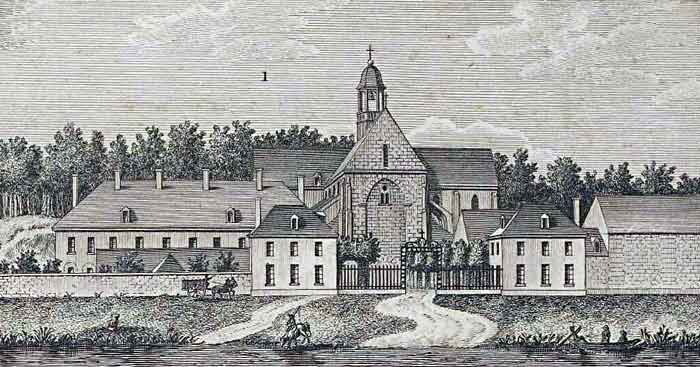
Barbeau Abbey
Barbeau Abbey was a Cistercian monastery founded in 1147 by King Louis VII of France. Located in Fontaine-le-Port, Seine-et-Marne, it was a site of royal burial and experienced periods of prosperity and destruction throughout its history, including the Hundred Years' War and the French Revolution. Today, few original structures remain, with a riding school occupying the former site.

Bellevaux Abbey
Bellevaux Abbey was a Cistercian monastery established in 1120 in Franche-Comté, France, by Pons de Morimond. It was a significant religious house, connected to local nobility and notable figures like Burchard of Bellevaux and Peter of Tarentaise. Though suppressed in 1790 and largely demolished shortly after, its history includes periods of destruction and rebuilding, with the final structures erected by Abbot Louis Albert de Lezay-Marnésia. The site later housed a Trappist community before being sold to private owners.

Cadouin Abbey
Cadouin Abbey was a Cistercian monastery founded in 1115 as a hermitage. It rose to prominence as a major pilgrimage site due to its possession of a relic believed to be the Sudarium of Christ, attracting significant prestige and wealth. The abbey was dissolved during the French Revolution in 1791, with its assets looted and library destroyed, though its church still remains.