
Saint-Papoul
Christianity·France·Active commune, historical ecclesiastical site·8th century
Saint-Papoul is a commune in the Aude department of southern France, with its origins tracing back to the 8th century with the founding of an abbey dedicated to Saint Papulus. The town later gained ecclesiastical importance with the creation of the diocese of Saint-Papoul in the 14th century, centered around its cathedral. While the abbey's initial establishment marks its founding, the town's history also includes a brief mention in notable ghost story literature.
Key Facts
- ›Founded in the 8th century with the establishment of an abbey.
- ›The abbey was dedicated to Saint Papulus.
- ›The diocese of Saint-Papoul was created by Pope John XXII in 1317.
- ›Saint-Papoul Cathedral served as the center of the diocese.
- ›Mentioned in M.R. James's ghost story 'Canon Alberic's Scrap-Book'.
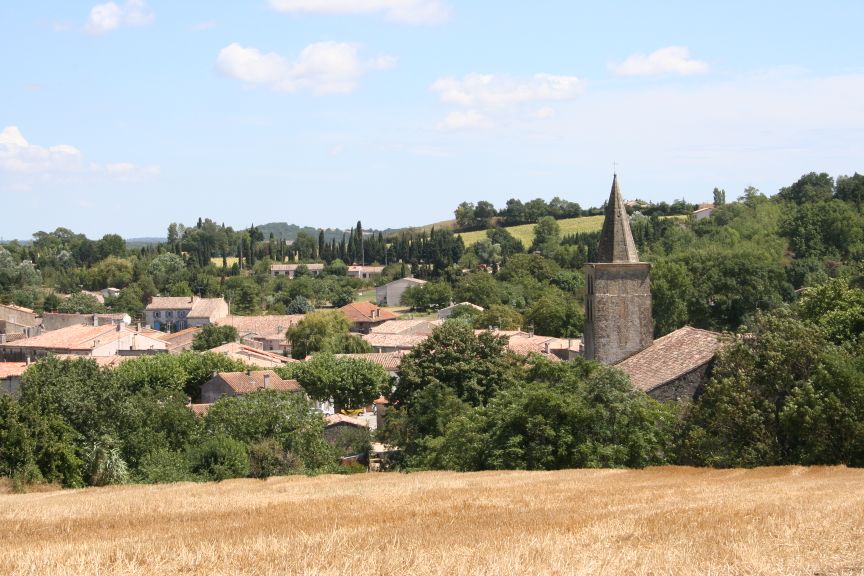
Saint-Papoul Cathedral
Sant PàPol
Saint Papulus, John Xxii
Founding of the Abbey, Creation of the Diocese of Saint-Papoul
About Saint-Papoul
Saint-Papoul is a commune situated in the Aude department in southern France. Its historical significance is deeply rooted in its ecclesiastical past, with its origins dating back to the 8th century when an abbey was established on the site, dedicated to Saint Papulus.
History and Significance
The foundation of the abbey in the 8th century marks the beginning of Saint-Papoul's recorded history. Much later, in 1317, the town's ecclesiastical importance was further solidified when Pope John XXII created the diocese of Saint-Papoul. The Saint-Papoul Cathedral served as the central edifice for this episcopal see, underscoring the town's role as a religious center during the medieval period.
Cultural Mentions
Beyond its historical and religious context, Saint-Papoul has found a place in literature. It is notably mentioned as a location within M.R. James's celebrated ghost story, 'Canon Alberic's Scrap-Book,' which was published in 1904 as part of 'Ghost Stories of an Antiquary.' This literary reference adds a layer of intrigue to the town's historical narrative.
Source: Wikipedia ↗
Frequently Asked Questions
When was the town of Saint-Papoul founded?
The town of Saint-Papoul was founded during the 8th century. This founding was established with the creation of an abbey at the site.
What is the religious significance of Saint-Papoul?
Saint-Papoul was the center of its own diocese, which was created in 1317 by Pope John XXII. The Saint-Papoul Cathedral was the seat of this episcopal see.
Is Saint-Papoul known in literature?
Yes, Saint-Papoul is briefly mentioned as a location in M.R. James's well-known ghost story, 'Canon Alberic's Scrap-Book', published in 1904.
Related Monasteries

Mont-Saint-Michel Abbey
Mont-Saint-Michel Abbey, an iconic medieval Catholic monastery and former church, is situated on a tidal island commune in Normandy, France. Originating as a sanctuary dedicated to Saint Michael in the 8th century, it evolved into a significant Benedictine monastic center during the 10th century. The abbey is renowned for its remarkable architecture, evolving from pre-Romanesque to Gothic styles, and its strategic historical role, including periods as a pilgrimage site and later a prison. Today, it stands as a major French national monument, a UNESCO World Heritage Site, and continues to host religious services.
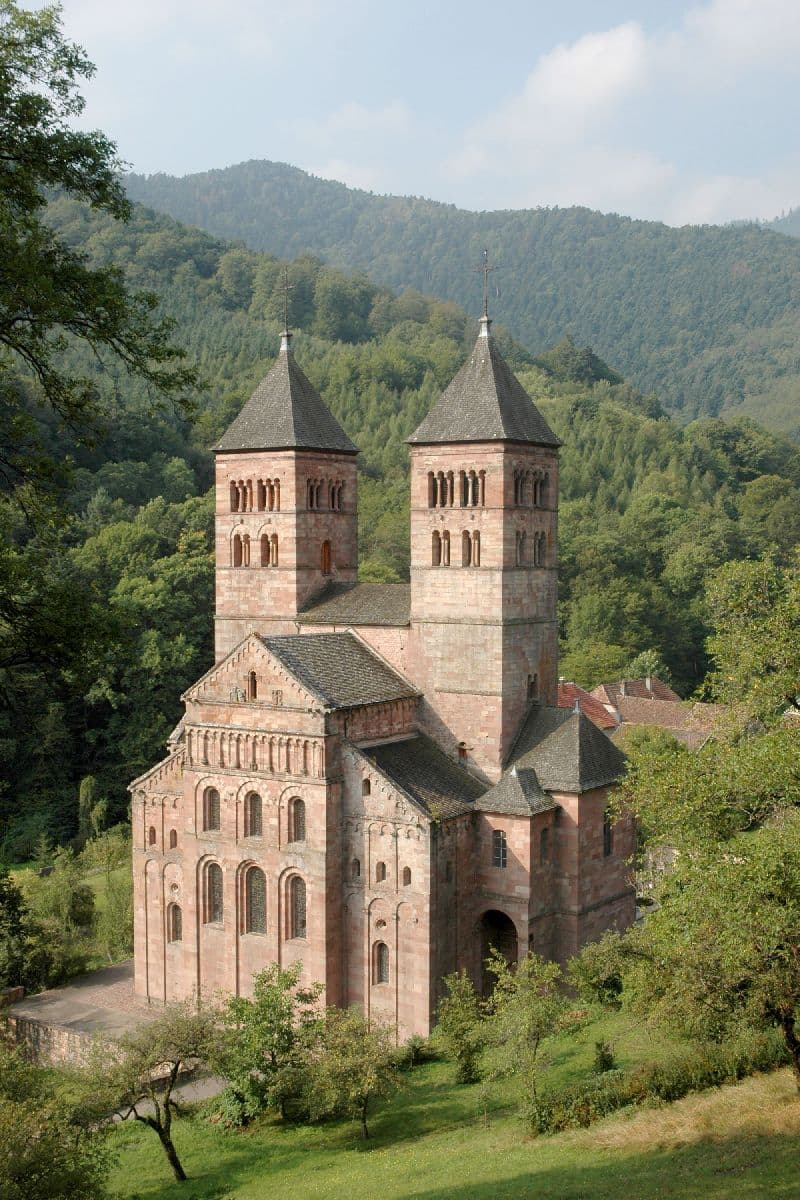
Murbach Abbey
Murbach Abbey was a significant Benedictine monastery founded in 727 by Count Eberhard of Alsace and established by Saint Pirmin. It became an important political and intellectual center, with a notable library that preserved classical texts. The abbey's territory was extensive, and it held imperial immediacy for a period. The monastery was dissolved and its buildings largely destroyed during the French Revolution.

Saint-Mihiel Abbey
Saint-Mihiel Abbey is an ancient Benedictine monastery located in Saint-Mihiel, France, founded in the early 8th century by Count Wulfoalde and his wife Adalsinde. It was dedicated to Saint Michael the Archangel and became renowned for its abbots, particularly Smaragdus, a notable writer. Although dissolved during the French Revolution, the abbey is now best known for its well-preserved library, which houses significant medieval manuscripts.