
Murbach Abbey
Murbach Abbey was a significant Benedictine monastery founded in 727 by Count Eberhard of Alsace and established by Saint Pirmin. It became an important political and intellectual center, with a notable library that preserved classical texts. The abbey's territory was extensive, and it held imperial immediacy for a period. The monastery was dissolved and its buildings largely destroyed during the French Revolution.
Key Facts
- ›Founded in 727 by Count Eberhard of Alsace.
- ›Established as a Benedictine house by Saint Pirmin.
- ›Once held jurisdiction over three towns and thirty villages.
- ›Its abbey church was one of the earliest vaulted Romanesque structures.
- ›Granted imperial immediacy in 1228.
- ›Dissolved and looted by peasants in 1789 during the French Revolution.
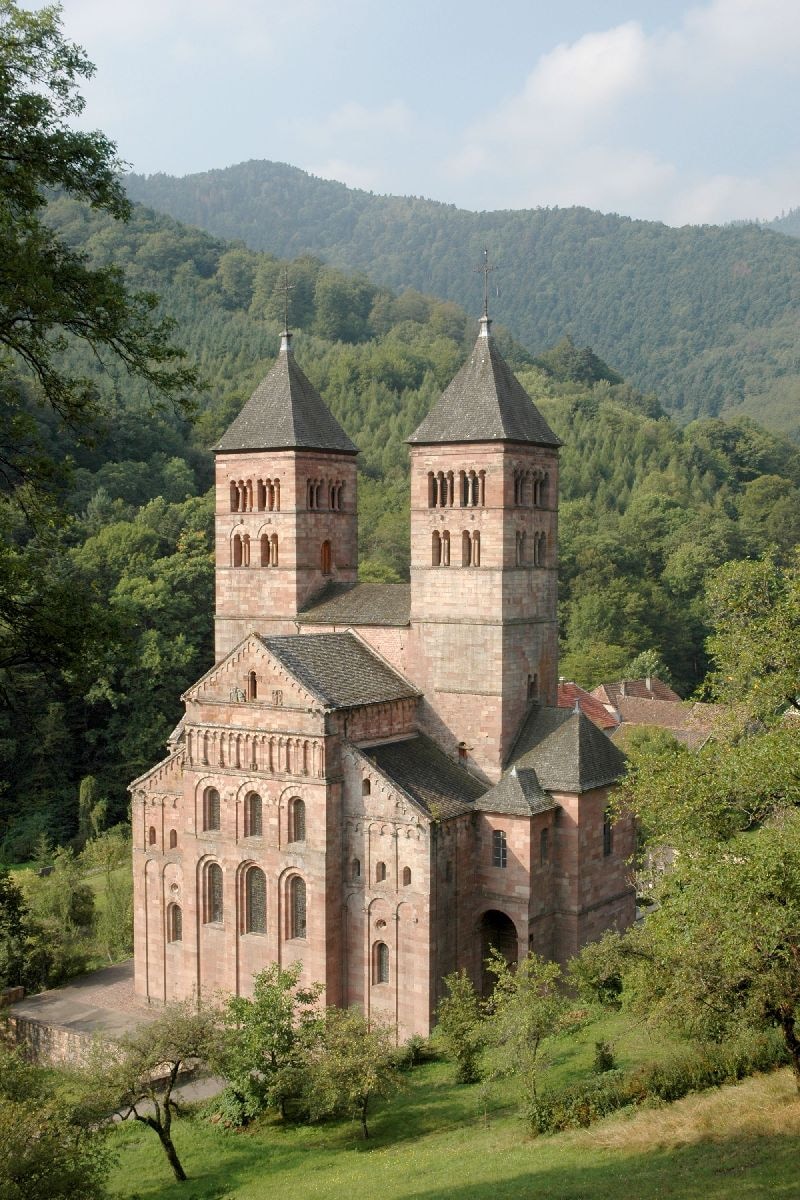
Romanesque
- Remnants of A 12th-Century Romanesque Abbey Church
- Two Steeples
- Site of Former Nave Used As A Burial Ground
- Library That Preserved Classical Texts
Abbaye De Murbach
Saint Pirmin, Count Eberhard of Alsace, Charlemagne, Poggio Bracciolini, Beatus Rhenanus
- Foundation In 727
- Introduction of the Benedictine Rule By Saint Pirmin
- Charlemagne Taking the Title 'Abbot of Murbach'
- Hungarian Invasion of Alsace In 936 Leading To Decline
- Granting of Imperial Immediacy In 1228
- Sale of Rights Over Lucerne In 1291
- Acquisition of De Facto Control By France In 1680
- Dissolution and Destruction During the French Revolution In 1789
About Murbach Abbey
Murbach Abbey, known in French as Abbaye de Murbach, was a historically significant Benedictine monastery situated in Murbach, in southern Alsace, nestled in a valley at the base of the Grand Ballon in the Vosges mountains.
History and Significance
The abbey's foundation dates to 727, established by Count Eberhard of Alsace and organized as a Benedictine house by Saint Pirmin. Its influence was substantial, with its territory once encompassing three towns and thirty villages. Murbach flourished as a political and intellectual hub, particularly by the 9th century, boasting a library of around 340 works and serving as a repository for classical texts, including those recovered by Poggio Bracciolini and Beatus Rhenanus.
Charlemagne himself held the title "Abbot of Murbach" in the late 8th century, underscoring its political importance. The abbey was granted the status of imperial immediacy in 1228, expanding its territorial control and leading to conflicts with neighboring powers.
A pivotal moment in its history occurred in 1291 when Murbach Abbey sold its rights over the city of Lucerne and associated estates, a transaction that significantly impacted the formation of the Old Swiss Confederacy.
Decline and Dissolution
Despite retaining its status as a principality through the 15th and 16th centuries, Murbach Abbey began a gradual decline from the 14th century. Control by the Kingdom of France was established in 1680, and by the mid-18th century, the monastic community moved to Guebwiller, transforming into a college for nobility. The abbey's final chapter came in 1789 during the French Revolution, when it was dissolved and its buildings were largely destroyed by rioting peasants.
Architectural Legacy
Of the original 12th-century Romanesque abbey church, dedicated to Saint Leodegar, only the transept with its two steeples and the east end with the choir remain today. The site where the nave once stood now serves as a burial ground, marking the monastic site as a historical ruin on the Route Romane d'Alsace.
Source: Wikipedia ↗
Frequently Asked Questions
When was Murbach Abbey founded?
Murbach Abbey was founded in the year 727. The founding was carried out by Count Eberhard of Alsace, with Bishop Pirmin playing a crucial role in establishing it as a Benedictine house.
What religious order was associated with Murbach Abbey?
Murbach Abbey was a Benedictine monastery. It initially followed the Rule of St. Columbanus but later adopted a mixed rule before fully embracing the Benedictine Rule, influenced by Saint Pirmin and later reforms.
What is the current status of Murbach Abbey?
Murbach Abbey was dissolved in 1789 and its buildings were largely destroyed during the French Revolution. Today, only remnants of the 12th-century Romanesque abbey church, specifically the transept with its steeples and the east end with the choir, remain. The former nave area now serves as a burial ground.
What was the significance of Murbach Abbey's library?
Murbach Abbey's library was a significant intellectual center, particularly by around 850. It housed approximately 340 works on theology, grammar, and history. Notably, it is believed to have been a source for the recovery of Lucretius's 'De rerum natura' and the discovery of Velleius Paterculus's 'Historia Romana'.
What historical event led to the decline of Murbach Abbey?
The abbey experienced a decline following an invasion of Alsace by Hungarians in 936. Further territorial disputes and the eventual acquisition of de facto control by the Kingdom of France in 1680 also contributed to its diminishing influence.
Is Murbach Abbey still an active monastery?
No, Murbach Abbey is no longer an active monastery. It was dissolved in 1789 during the French Revolution, and its monastic community ceased to exist.
Related Monasteries

Mont-Saint-Michel Abbey
Mont-Saint-Michel Abbey, an iconic medieval Catholic monastery and former church, is situated on a tidal island commune in Normandy, France. Originating as a sanctuary dedicated to Saint Michael in the 8th century, it evolved into a significant Benedictine monastic center during the 10th century. The abbey is renowned for its remarkable architecture, evolving from pre-Romanesque to Gothic styles, and its strategic historical role, including periods as a pilgrimage site and later a prison. Today, it stands as a major French national monument, a UNESCO World Heritage Site, and continues to host religious services.

Saint-Mihiel Abbey
Saint-Mihiel Abbey is an ancient Benedictine monastery located in Saint-Mihiel, France, founded in the early 8th century by Count Wulfoalde and his wife Adalsinde. It was dedicated to Saint Michael the Archangel and became renowned for its abbots, particularly Smaragdus, a notable writer. Although dissolved during the French Revolution, the abbey is now best known for its well-preserved library, which houses significant medieval manuscripts.
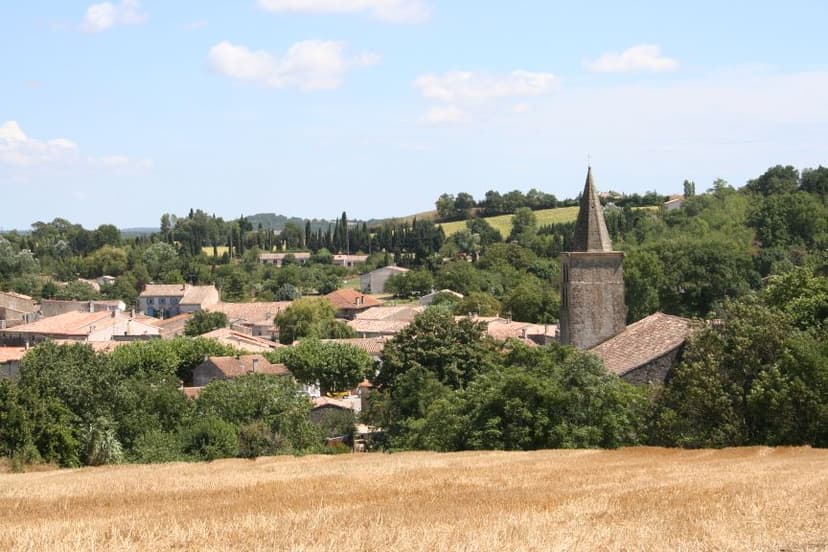
Saint-Papoul
Saint-Papoul is a commune in the Aude department of southern France, with its origins tracing back to the 8th century with the founding of an abbey dedicated to Saint Papulus. The town later gained ecclesiastical importance with the creation of the diocese of Saint-Papoul in the 14th century, centered around its cathedral. While the abbey's initial establishment marks its founding, the town's history also includes a brief mention in notable ghost story literature.