
Mont-Saint-Michel Abbey
Christianity·France·Active religious services, national monument, museum·8th century
Mont-Saint-Michel Abbey, an iconic medieval Catholic monastery and former church, is situated on a tidal island commune in Normandy, France. Originating as a sanctuary dedicated to Saint Michael in the 8th century, it evolved into a significant Benedictine monastic center during the 10th century. The abbey is renowned for its remarkable architecture, evolving from pre-Romanesque to Gothic styles, and its strategic historical role, including periods as a pilgrimage site and later a prison. Today, it stands as a major French national monument, a UNESCO World Heritage Site, and continues to host religious services.
Key Facts
- ›Founded as a sanctuary to Saint Michael in 708 AD.
- ›Became a Benedictine abbey in 966 AD under Duke Richard I of Normandy.
- ›Notable for its 'Merveille' complex, a masterpiece of Gothic architecture.
- ›Served as a state prison from the French Revolution until 1863.
- ›Designated a UNESCO World Heritage Site in 1979.
- ›Currently managed as a French national monument, with ongoing religious services and occasional monastic residences.

Pre-Romanesque, Romanesque, Gothic, Neo-Classic
- Tidal Island Location
- Medieval Architecture
- Notre-Dame-Sous-Terre
- Cloister
- Refectory
- Neogothic Spire With Statue of Archangel Michael
Mont Tombe, Mont-Saint-Michel Au PéRil De La Mer, Mons Sancti Michaelis In Periculo Maris, Saint-Michel-Aux-Deux-Tombes
Saint Aubert of Avranches, Rollo, Richard I of Normandy, William the Conqueror, Robert of Torigni, Philippe-Auguste, Victor Hugo
- Viking Incursions
- Treaty of Saint-Clair-Sur-Epte
- Establishment of Benedictine Monks
- Siege of Mont-Saint-Michel
- French Revolution
- Installation of Optical Telegraph
- Restoration Efforts Led By Viollet-Le-Duc and Successors
- Unesco World Heritage Site Designation
- Return of Monastic Communities
About Mont-Saint-Michel Abbey
Mont-Saint-Michel Abbey is a monumental Benedictine monastery perched atop a natural granite island off the coast of Normandy, France. Its history is deeply intertwined with the veneration of Archangel Michael, beginning with an oratory established in 708 AD on the site then known as Mont Tombe. The abbey's strategic location, coupled with its spiritual significance, led to its development into a major pilgrimage destination and a center of Benedictine monastic life from 966 AD onwards.
History and Development
The abbey's construction and evolution span over a millennium, reflecting the changing architectural and historical tides of France. Following Viking disruptions in the 9th century, it was revitalized under the dukes of Normandy. The 11th and 12th centuries saw significant expansion and intellectual flourishing under patrons like William the Conqueror and abbots such as Robert of Torigni. Architecturally, the site is a testament to layered construction, featuring pre-Romanesque, Romanesque, and the celebrated Gothic 'Merveille' complex, built to accommodate monastic life on the confined island.
During the Hundred Years' War, the abbey served a defensive role, and its importance as a pilgrimage site gradually waned. By the time of the French Revolution, few monks remained, leading to its closure in 1791 and subsequent conversion into a prison, earning it the moniker "bastille des mers" (Bastille of the sea). This period lasted until 1863, after which influential figures like Victor Hugo championed its restoration as a national architectural treasure.
Modern Significance
Designated a Monument Historique in 1862 and a UNESCO World Heritage Site in 1979, Mont-Saint-Michel Abbey is now a premier cultural attraction, drawing over a million visitors annually. Restoration efforts, initiated in the late 19th century, have preserved its architectural integrity. While no longer housing a large Benedictine community, Christian worship continues, and since 2001, the Monastic Fraternities of Jerusalem have maintained a spiritual presence, with monks occasionally invited to reside there, ensuring the abbey's enduring religious character alongside its status as a globally recognized historical monument.
Source: Wikipedia ↗
Frequently Asked Questions
When was Mont-Saint-Michel Abbey founded?
The origins of Mont-Saint-Michel date back to 708 AD when an oratory was erected to Saint Michael. The Benedictine abbey, as it is largely known today, was established in 966 AD when Duke Richard I of Normandy replaced the existing community with Benedictine monks.
What is the architectural significance of Mont-Saint-Michel Abbey?
The abbey showcases a remarkable evolution of architectural styles, beginning with pre-Romanesque elements in Notre-Dame-Sous-Terre, progressing through Romanesque construction, and culminating in the stunning Gothic 'Merveille' complex. This layered construction reflects centuries of development and adaptation.
Has Mont-Saint-Michel Abbey always been a religious site?
While its origins are religious, Mont-Saint-Michel Abbey has experienced various roles throughout its history. After its peak as a pilgrimage center, it was repurposed as a prison during the French Revolution and remained so until 1863. It has since been restored and returned to its role as a historical monument and a site for religious activities.
Is Mont-Saint-Michel Abbey still an active monastery?
While the Benedictine monks who resided there after 1966 have largely departed, religious services are still held at the abbey. Since 2001, members of the Monastic Fraternities of Jerusalem have been present, and monks are occasionally invited to take up residence, maintaining a spiritual presence.
What does 'Merveille' refer to at Mont-Saint-Michel?
The 'Merveille' (meaning 'Marvel') is a magnificent Gothic architectural ensemble built between the 13th and 15th centuries. It served as the monks' living quarters and includes impressive structures like the cloister, refectory, and study rooms, showcasing an advanced understanding of medieval construction.
Why is Mont-Saint-Michel Abbey a UNESCO World Heritage Site?
Mont-Saint-Michel and its bay were inscribed as a UNESCO World Heritage Site in 1979. This designation recognizes its exceptional cultural, historical, and architectural significance, as well as its unique natural setting and human-created beauty.
Related Monasteries
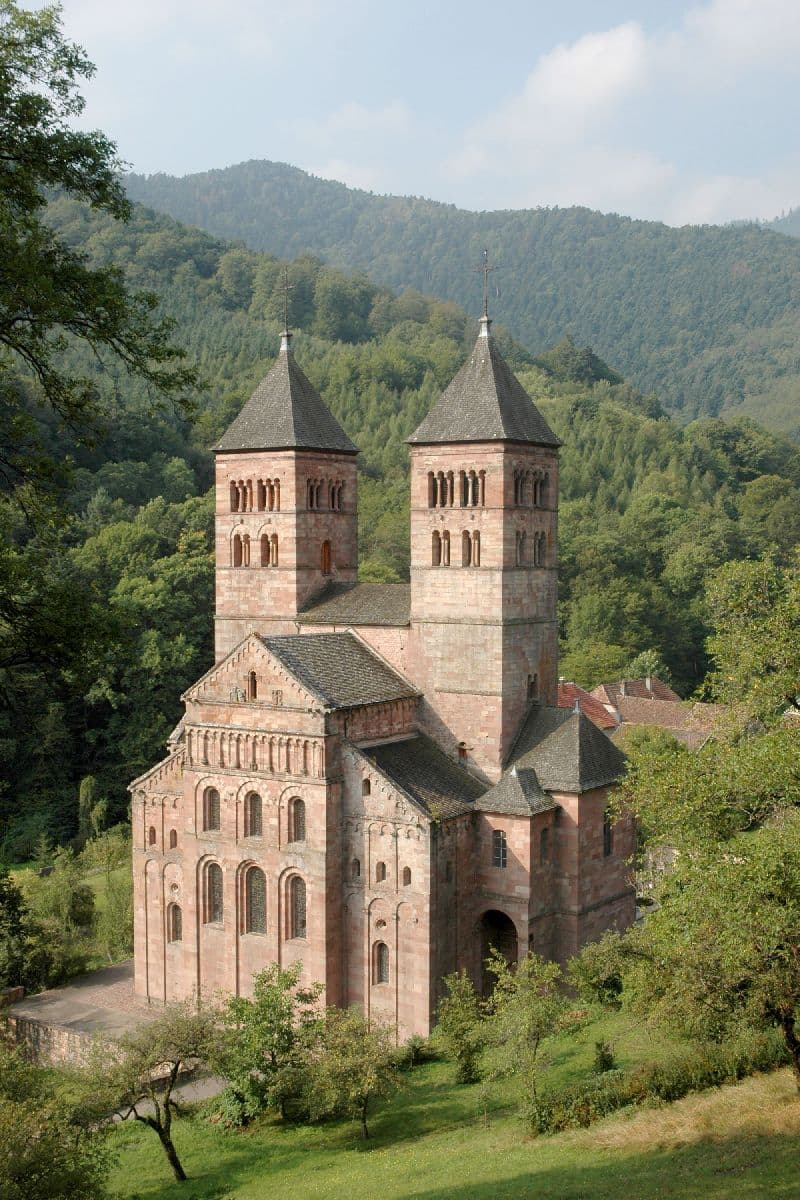
Murbach Abbey
Murbach Abbey was a significant Benedictine monastery founded in 727 by Count Eberhard of Alsace and established by Saint Pirmin. It became an important political and intellectual center, with a notable library that preserved classical texts. The abbey's territory was extensive, and it held imperial immediacy for a period. The monastery was dissolved and its buildings largely destroyed during the French Revolution.

Saint-Mihiel Abbey
Saint-Mihiel Abbey is an ancient Benedictine monastery located in Saint-Mihiel, France, founded in the early 8th century by Count Wulfoalde and his wife Adalsinde. It was dedicated to Saint Michael the Archangel and became renowned for its abbots, particularly Smaragdus, a notable writer. Although dissolved during the French Revolution, the abbey is now best known for its well-preserved library, which houses significant medieval manuscripts.
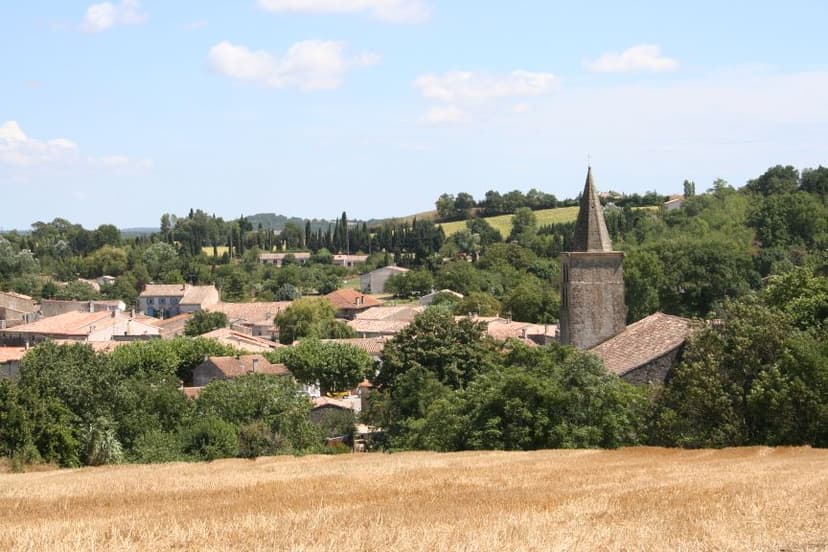
Saint-Papoul
Saint-Papoul is a commune in the Aude department of southern France, with its origins tracing back to the 8th century with the founding of an abbey dedicated to Saint Papulus. The town later gained ecclesiastical importance with the creation of the diocese of Saint-Papoul in the 14th century, centered around its cathedral. While the abbey's initial establishment marks its founding, the town's history also includes a brief mention in notable ghost story literature.