
Saint-Mihiel Abbey
Christianity·France·Museum and Library·8th century
Saint-Mihiel Abbey is an ancient Benedictine monastery located in Saint-Mihiel, France, founded in the early 8th century by Count Wulfoalde and his wife Adalsinde. It was dedicated to Saint Michael the Archangel and became renowned for its abbots, particularly Smaragdus, a notable writer. Although dissolved during the French Revolution, the abbey is now best known for its well-preserved library, which houses significant medieval manuscripts.
Key Facts
- ›Founded in 708 or 709 by Count Wulfoalde and Adalsinde.
- ›Dedicated to Saint Michael the Archangel.
- ›Known for Abbot Smaragdus, a writer and scholar in the early 9th century.
- ›Famous for its collection of relics during the Middle Ages, including those of Saint Anatole.
- ›Dissolved during the French Revolution.
- ›Houses a significant library with 8780 books, including incunabula and medieval manuscripts.

Romanesque, Gothic, Baroque
- Library With 8780 Books, Including 86 Incunabula and 74 Manuscripts .
- 11th-Century Porch .
- 16th-Century Nave, Modified In the 17th Century.
- Walnut Sculpture of the Swooning of Mary By Ligier Richier .
- 9th-Century Manuscript On the Holy Trinity By Pseudo-Athanasius.
Wulfoalde, Adalsinde, Fulrad of St Denis, Charlemagne, ChildéRic Ii, Smaragdus, Louis the Pious, Hadegaudus, Odon I, Sarovard, Odon Ii, GéRard, Duke of Lorraine, Saint Anatole, Ligier Richier
- Founding of the Abbey.
- Discovery of Tombs of Wulfoalde and Adalsinde .
- Accusation of Treason Against Wulfoald .
- Smaragdus Moving To the Abbey Around 814.
- Obtaining Royal Protection From Louis the Pious .
- Dissolution During the French Revolution.
- Theft and Subsequent Recovery of A 9th-Century Manuscript During World War I and 2007.
About Saint-Mihiel Abbey
Saint-Mihiel Abbey is a historic Benedictine monastery situated in the town of Saint-Mihiel, near Verdun in the Meuse department of northeastern France. The abbey's origins trace back to 708 or 709 CE, when it was established by Count Wulfoalde and his wife Adalsinde, likely to house relics Wulfoalde had acquired from Italy. It was dedicated to Saint Michael the Archangel, a popular saint during that era. The abbey's history is marked by significant figures such as Abbot Smaragdus, a noted writer on homilies and the Rule of St. Benedict, who relocated to Saint-Mihiel around 814 CE and secured royal protection for the monastery from Louis the Pious.
During the Middle Ages, Saint-Mihiel Abbey gained renown for its collection of relics, including those attributed to Saint Anatole, Bishop of Cahors. The abbey's church, known as the Church of Saint Michel, retains parts of an 11th-century porch, with its nave rebuilt in the 16th century and modified in the 17th century. A notable artistic treasure within the church is Ligier Richier's 1531 (or 1537) walnut sculpture depicting the swooning of Mary.
The abbey was eventually dissolved during the French Revolution. However, it is perhaps best known today for its exceptionally well-preserved library. The library, housed in a purpose-built building from 1775, still occupies its original site and is managed by the municipal library. Its extensive collection comprises 8,780 books, including 86 incunabula and 74 manuscripts dating from the ninth to the sixteenth centuries. Among its most prized possessions is a 9th-century manuscript on the Holy Trinity by Pseudo-Athanasius, which was famously stolen during World War I and recovered in 2007.
Source: Wikipedia ↗
Frequently Asked Questions
When was Saint-Mihiel Abbey founded?
Saint-Mihiel Abbey was founded in 708 or 709. The founding was likely motivated by the desire to house relics brought back from Italy by Count Wulfoalde.
Who founded Saint-Mihiel Abbey?
The abbey was founded by Count Wulfoalde and his wife Adalsinde. Their tombs were discovered within the abbey in 1734.
What is Saint-Mihiel Abbey best known for today?
Today, Saint-Mihiel Abbey is primarily known for its remarkable library. This library contains a substantial collection of historical books, including rare incunabula and medieval manuscripts.
What is the significance of Abbot Smaragdus at Saint-Mihiel Abbey?
Abbot Smaragdus, who lived around the early 9th century, was a distinguished figure at the abbey. He was known for his writings, including homilies and works on the Rule of St. Benedict, and secured royal protection for the monastery.
What happened to Saint-Mihiel Abbey during the French Revolution?
Saint-Mihiel Abbey was dissolved during the French Revolution. Despite this, parts of its structures and its valuable library collections have been preserved.
What notable relics were associated with Saint-Mihiel Abbey?
During the Middle Ages, the abbey was famous for its relics. A prominent example is the body of Saint Anatole, Bishop of Cahors, which was reputedly transferred to Mihiel in 779.
Related Monasteries

Mont-Saint-Michel Abbey
Mont-Saint-Michel Abbey, an iconic medieval Catholic monastery and former church, is situated on a tidal island commune in Normandy, France. Originating as a sanctuary dedicated to Saint Michael in the 8th century, it evolved into a significant Benedictine monastic center during the 10th century. The abbey is renowned for its remarkable architecture, evolving from pre-Romanesque to Gothic styles, and its strategic historical role, including periods as a pilgrimage site and later a prison. Today, it stands as a major French national monument, a UNESCO World Heritage Site, and continues to host religious services.
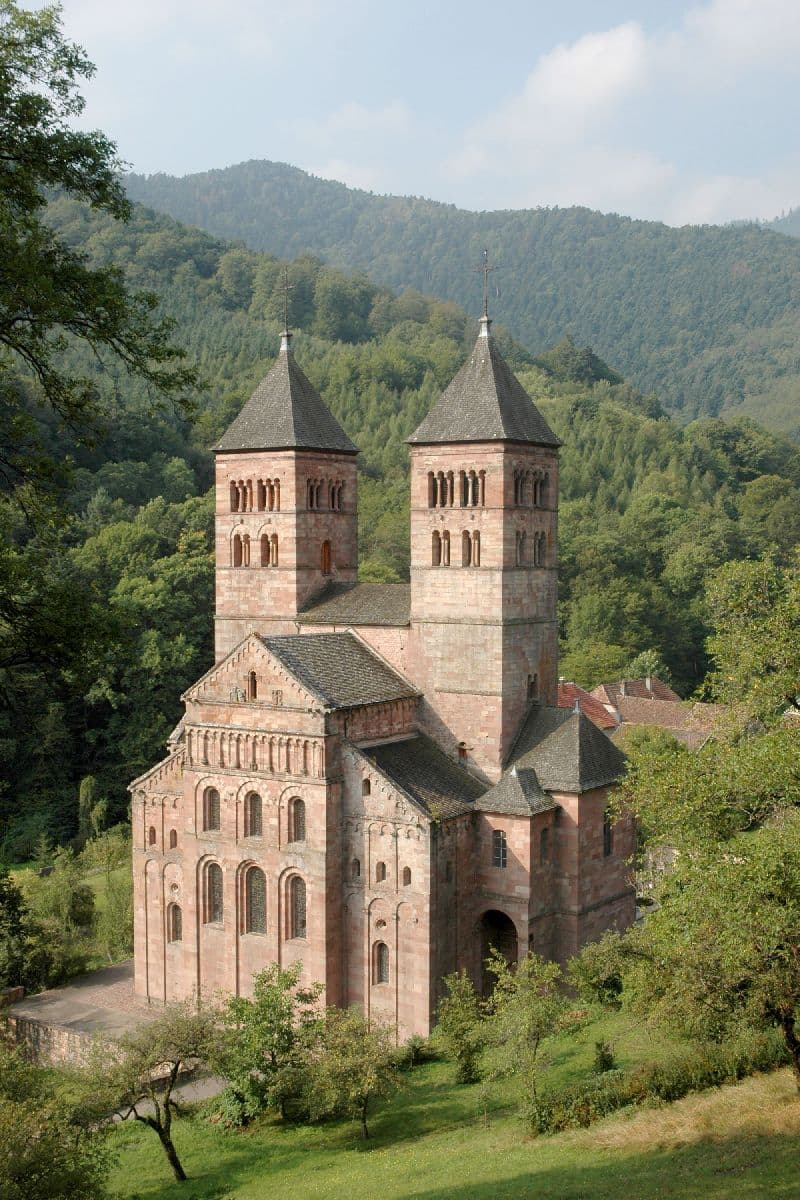
Murbach Abbey
Murbach Abbey was a significant Benedictine monastery founded in 727 by Count Eberhard of Alsace and established by Saint Pirmin. It became an important political and intellectual center, with a notable library that preserved classical texts. The abbey's territory was extensive, and it held imperial immediacy for a period. The monastery was dissolved and its buildings largely destroyed during the French Revolution.
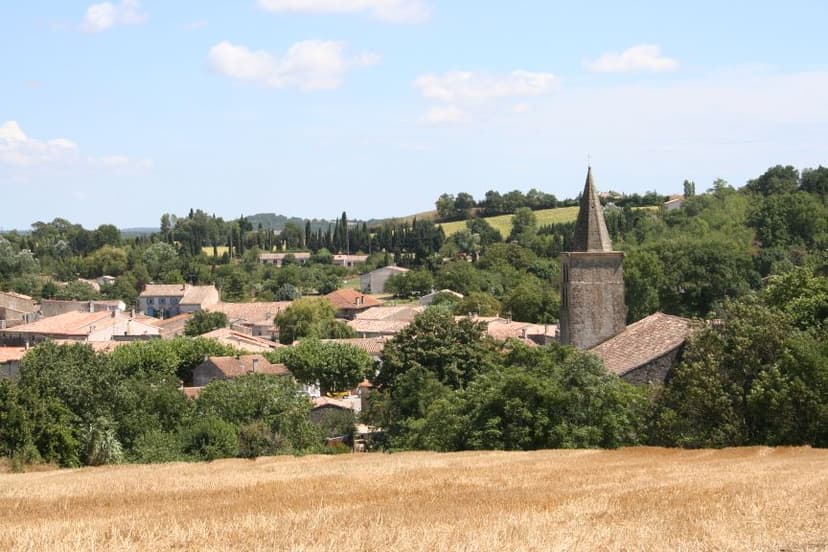
Saint-Papoul
Saint-Papoul is a commune in the Aude department of southern France, with its origins tracing back to the 8th century with the founding of an abbey dedicated to Saint Papulus. The town later gained ecclesiastical importance with the creation of the diocese of Saint-Papoul in the 14th century, centered around its cathedral. While the abbey's initial establishment marks its founding, the town's history also includes a brief mention in notable ghost story literature.