
Rouen
Rouen is a historic city in northwestern France, situated on the River Seine. It was a significant center of power in medieval Europe, serving as a capital for Anglo-Norman and Angevin dynasties and experiencing economic growth through textiles and river trade. The city is renowned for its rich architectural heritage, including its cathedral, and is a vibrant cultural capital, occasionally hosting large maritime events like L'Armada.
Key Facts
- ›Founded by the Gaulish tribe of the Veliocasses, originally named Ratumacos; Romans called it Rotomagus.
- ›Served as the capital of the Duchy of Normandy from 912 until the ducal residence moved to Caen.
- ›Received its founding charter for self-government in 1150.
- ›Experienced a significant economic boom from the 13th century due to textile factories and river trade.
- ›Joan of Arc was tried and burned at the stake in Rouen on May 30, 1431.
- ›Heavily damaged by bombing in 1944 but regained economic dynamism post-war, becoming part of HAROPA Port.

Gothic, Half-Timbered
Rouen Cathedral, Gros Horloge, Tour Jeanne D'Arc, Palais De Justice, Museum of Fine Arts, Le Secq Des Tournelles Museum, Jardin Des Plantes De Rouen, Church of St Joan of Arc, Half-Timbered Buildings
Ratumacos, Rotomagus
Claude Monet, Joan of Arc, Henry V of England, Charles Vii of France, Alain Blanchard, Robert De Livet
- Foundation By the Veliocasses
- Roman Period As Rotomagus
- Capital of Normandy From 912
- Received Founding Charter In 1150
- Annexation To French Kingdom In 1204
- Urban Strife and Revolts In 13th and 14th Centuries
- Expulsion of Jewish Community In 1306
- Siege and Surrender To Henry V In 1419
- Burning of Joan of Arc In 1431
- Recapture By Charles Vii In 1449
- Siege During French Wars of Religion
- First Competitive Motor Race From Paris To Rouen In 1894
- Heavy Damage During World War Ii Bombing
- Merger of Port With Le Havre and Paris To Form Haropa Port In 2021
About Rouen
Rouen: A Historic French Metropolis on the Seine
Rouen is a historically significant city located on the River Seine in northwestern France. Originally founded by the Gaulish tribe of the Veliocasses as Ratumacos, it was later known to the Romans as Rotomagus and became a prominent center in Roman Gaul. The city rose to prominence in the Middle Ages, serving as the capital of the Duchy of Normandy from 912 and later becoming a crucial seat for the Anglo-Norman and Angevin dynasties that ruled both England and parts of France.
From the 13th century onwards, Rouen experienced substantial economic growth, driven by its flourishing textile industry and its strategic position for river trade along the Seine. This period of prosperity was punctuated by significant historical events, including periods of urban strife and its role as a contested city during the Hundred Years' War. Most notably, Rouen is remembered as the site where Joan of Arc was tried and burned at the stake on May 30, 1431. Despite suffering severe damage from bombings in 1944 during World War II, Rouen has since regained its economic vitality, bolstered by its industrial sites and its large seaport, which is now part of the HAROPA Port conglomerate.
Architectural and Cultural Heritage
Rouen is celebrated for its enduring architectural heritage, with many historical monuments still standing. The city is home to the magnificent Rouen Cathedral, famous for its Gothic facade and its 'Tour de Beurre' (butter tower). Other key landmarks include the Gros Horloge, a 14th-century astronomical clock, and the tour Jeanne d'Arc, the keep of Rouen Castle where Joan of Arc was interrogated. The city also features notable churches like the Church of Saint Ouen and the Gothic Church of St Maclou, as well as the Palais de Justice. Rouen is also characterized by its well-preserved half-timbered buildings, offering a glimpse into its medieval past. Beyond its historical structures, Rouen is a vibrant cultural capital with numerous museums, including the Museum of Fine Arts and the Musée Le Secq des Tournelles, and is known for hosting the grand maritime event 'L'Armada' every few years, which draws international attention.
Source: Wikipedia ↗
Frequently Asked Questions
What is Rouen famous for historically?
Rouen was a major city in medieval Europe, a capital of the Anglo-Norman and Angevin dynasties, and a center for textile production and river trade. It is also infamously known as the place where Joan of Arc was tried and burned at the stake in 1431.
What are the main architectural attractions in Rouen?
Rouen boasts a rich architectural heritage, with notable structures including Rouen Cathedral, the astronomical clock known as the Gros Horloge, Rouen Castle (with the keep known as the tour Jeanne d'Arc), the Church of Saint Ouen, the Palais de Justice, and the Gothic Church of St Maclou. The city is also recognized for its surviving half-timbered buildings.
Was Rouen involved in the Hundred Years' War?
Yes, Rouen was claimed by both the French and the English during the Hundred Years' War. It surrendered to Henry V of England in 1419 and was recaptured by Charles VII of France in 1449.
What is L'Armada event?
L'Armada is a large gathering of sailing ships that Rouen hosts every four to six years. This event transforms the city into an occasional capital of the maritime world.
What role did Rouen play in Roman times?
In Roman times, Rouen was known as Rotomagus and was considered the second city of Gallia Lugdunensis. It reached its peak development under Diocletian, featuring an amphitheatre and thermae.
Related Monasteries
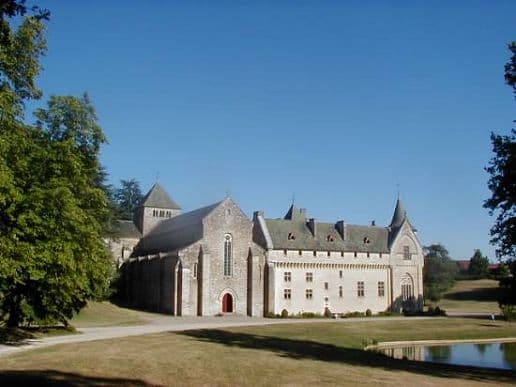
Abbey of Loc-Dieu
Abbey of Loc-Dieu is a Cistercian abbey situated in Aveyron, France, founded in 1123 on a site historically known as "devil's place" before being renamed "place of God" by its monastic inhabitants. Despite facing destruction and rebuilding, it became a significant Gothic architectural site and, during World War II, served as a safe haven for artworks from the Louvre, including the Mona Lisa. Today, the abbey and its park are open to the public.

Auxerre
Auxerre is a historic city in the Burgundy region of France, with a history dating back to Roman times. It served as a significant Gallo-Roman center and later became the seat of a bishopric and a provincial capital of the Roman Empire. The city is renowned for its religious architecture, including the Cathedral of St. Étienne and the Abbey of Saint-Germain, which houses some of the oldest mural paintings in France. Auxerre is also a commercial and industrial hub, known for its food production, woodworking, and proximity to Burgundy wine regions.

Fécamp Abbey
Fécamp Abbey, officially the Abbey of the Holy Trinity at Fécamp, is a Benedictine monastery located in Fécamp, France. Originally founded as a nunnery in the 7th century, it was destroyed and later refounded in the late 10th century. The abbey played a significant role in Norman history, particularly in the Norman Conquest of England, and is historically known as the first producer of the herbal liqueur Bénédictine.