
Auxerre
Auxerre is a historic city in the Burgundy region of France, with a history dating back to Roman times. It served as a significant Gallo-Roman center and later became the seat of a bishopric and a provincial capital of the Roman Empire. The city is renowned for its religious architecture, including the Cathedral of St. Étienne and the Abbey of Saint-Germain, which houses some of the oldest mural paintings in France. Auxerre is also a commercial and industrial hub, known for its food production, woodworking, and proximity to Burgundy wine regions.
Key Facts
- ›Founded as a Gallo-Roman center named Autissiodorum, with evidence of a significant Roman cemetery and villa complex.
- ›Became the seat of a bishop in the 3rd century and received a cathedral in the 5th century.
- ›Features significant religious sites like the Cathedral of St. Étienne (11th–16th centuries) and the Abbey of Saint-Germain (existing from the 6th century).
- ›The Abbey of Saint-Germain contains some of the oldest mural paintings in France.
- ›Suffered damage during historical conflicts such as the Hundred Years' War and the Wars of Religion.
- ›Named a "Town of Art and History" in 1995.

Gothic, Romanesque
Cathedral of St. éTienne, Abbey of Saint-Germain, Clock Tower, Church of St. Pierre En ValléE, Church of St. EusèBe, Roman Cemetery, Roman Villa Complex
Autissiodorum
Germanus of Auxerre, Saint Helladius, William of Auxerre, Jean Baptiste Joseph Fourier, Paul Bert, Marie NoëL
- Became Seat of A Bishop
- Received A Cathedral
- Included Within New Walls Built By Feudal Counts
- Suffered During the Hundred Years' War
- Captured By Huguenots and Catholic Edifices Damaged
- Medieval Ramparts Demolished
- Heavy Infrastructures Built, New Quarters Developed
About Auxerre
Auxerre, known in Roman times as Autissiodorum, is a historic city situated on the Yonne River in the Burgundy region of France. Its origins trace back to the Gallo-Roman era, where it served as a significant center along the Via Agrippa. By the 3rd century AD, Auxerre had become the seat of a bishop and a provincial capital within the Roman Empire, and it received its first cathedral in the 5th century. This deep historical foundation is evident in its surviving architectural marvels and archaeological discoveries.
Religious and Architectural Heritage
The city is particularly distinguished by its religious architecture. The Cathedral of St. Étienne, predominantly Gothic in style with elements from the 11th to 16th centuries, is a prominent landmark, featuring intricate doorways, bas-reliefs, and notable stained-glass windows. Beneath it lies an 11th-century crypt that preserves remnants of the earlier Romanesque cathedral. Another key site is the Abbey of Saint-Germain, with a history stretching back to the 6th century. Its crypt is celebrated for housing some of the oldest mural paintings found in France and contains the tombs of various bishops. Other significant religious structures include the Church of St. Pierre en Vallée and the Church of St. Eusèbe, each with their own historical layers and architectural characteristics.
Historical Context and Development
Throughout its history, Auxerre experienced periods of growth and conflict. The late 11th and early 12th centuries saw the construction of new defensive walls by the feudal counts. By the 12th century, alongside traditional agriculture and viticulture, bourgeois activities began to flourish, leading to the development of a commune and the construction of its town hall. The city endured hardships during the Hundred Years' War and the Wars of Religion, notably being captured by Huguenots in 1567, which resulted in damage to Catholic edifices. The medieval ramparts were eventually demolished in the 18th century, and the 19th century brought substantial infrastructural development, including the construction of a railway station and new urban quarters.
Archaeological Significance and Modern Identity
Recent archaeological investigations have further illuminated Auxerre's Roman past. Discoveries include a large Roman cemetery and the Sainte-Nitasse villa complex, recognized as one of the most extensive Roman villas found in Gaul. Today, Auxerre functions as a prefecture and a commercial and industrial hub, known for industries such as food production and woodworking. It also benefits from its location near renowned Burgundy wine-producing areas, such as Chablis. In recognition of its rich artistic and historical heritage, Auxerre was designated a "Town of Art and History" in 1995.
Source: Wikipedia ↗
Frequently Asked Questions
What is the historical significance of Auxerre?
Auxerre has a long history, originating as a Gallo-Roman center called Autissiodorum. It became an important ecclesiastical and administrative center, serving as the seat of a bishop in the 3rd century and receiving its first cathedral in the 5th century.
What are the main religious landmarks in Auxerre?
The city is most notable for its religious architecture, including the Gothic Cathedral of St. Étienne, which features impressive stained-glass windows and an 11th-century crypt. The Abbey of Saint-Germain, dating back to the 6th century, is also a major site, known for its ancient mural paintings.
When was Auxerre founded?
While the exact founding date is not specified, Auxerre existed as a flourishing Gallo-Roman center named Autissiodorum. Evidence suggests significant development from the 1st century AD onwards, with the presence of the Via Agrippa.
What is Auxerre known for today?
Today, Auxerre is a commercial and industrial center in the Burgundy region, with industries like food production and woodworking. It is also recognized for its proximity to Burgundy wine production and was designated a 'Town of Art and History' in 1995.
Are there any significant archaeological discoveries in Auxerre?
Yes, in recent years, significant archaeological finds have been announced, including a large Roman cemetery with over 250 burials and a vast Roman villa complex, Sainte-Nitasse, recognized as one of the largest Roman villas in Gaul.
Related Monasteries

Basel
Basel, a significant city in northwestern Switzerland, boasts a rich history dating back to Roman times. It rose to prominence as the seat of a Prince-Bishopric and later joined the Swiss Confederacy in 1501. Renowned as a cultural and intellectual hub, Basel is celebrated for its early public art collection, oldest university in Switzerland, and as a historical sanctuary for scholars, becoming a vital center for humanism, commerce, and later, the chemical and pharmaceutical industries.
Abbey of Loc-Dieu
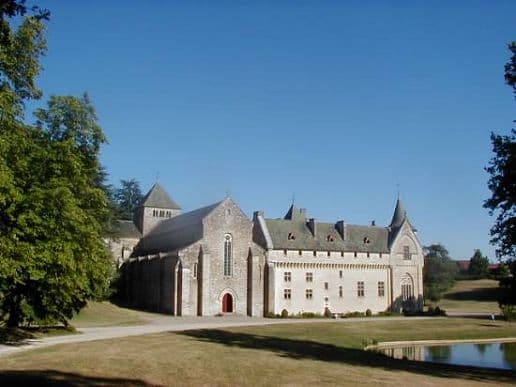
Abbey of Loc-Dieu is a Cistercian abbey situated in Aveyron, France, founded in 1123 on a site historically known as "devil's place" before being renamed "place of God" by its monastic inhabitants. Despite facing destruction and rebuilding, it became a significant Gothic architectural site and, during World War II, served as a safe haven for artworks from the Louvre, including the Mona Lisa. Today, the abbey and its park are open to the public.

Fécamp Abbey
Fécamp Abbey, officially the Abbey of the Holy Trinity at Fécamp, is a Benedictine monastery located in Fécamp, France. Originally founded as a nunnery in the 7th century, it was destroyed and later refounded in the late 10th century. The abbey played a significant role in Norman history, particularly in the Norman Conquest of England, and is historically known as the first producer of the herbal liqueur Bénédictine.