
Fécamp Abbey
Fécamp Abbey, officially the Abbey of the Holy Trinity at Fécamp, is a Benedictine monastery located in Fécamp, France. Originally founded as a nunnery in the 7th century, it was destroyed and later refounded in the late 10th century. The abbey played a significant role in Norman history, particularly in the Norman Conquest of England, and is historically known as the first producer of the herbal liqueur Bénédictine.
Key Facts
- ›Founded originally as a nunnery around 658 by Count Waningus.
- ›Destroyed by Vikings in the early 9th century.
- ›Refounded in the late 10th century under Richard I of Normandy and later revived under the Cluniac Benedictine rules by William of Volpiano.
- ›The abbey church was constructed between 1175 and 1220.
- ›Played a key role in the Norman Conquest of England by providing support and land grants.
- ›Historically recognized as the first producer of Bénédictine liqueur.

Gothic
- Scriptorium That Produced Illuminated Manuscripts
- Historical Production of BéNéDictine Liqueur
Abbey of the Holy Trinity At FéCamp
Waningus, Richard I of Normandy, Richard Ii of Normandy, William of Volpiano, John of FéCamp, Edward the Confessor, Aelfwine, Bishop of Winchester, Pope Clement Ii, William the Conqueror, Cnut, Emma of Normandy, Aethelred, Godwin, Earl of Wessex, Harold, Cuthman of Steyning, Remigius De FéCamp
- First Foundation and Destruction By Vikings
- Second Foundation and Revival Under Benedictine Rules
- Grant of Steyning By Edward the Confessor
- Expulsion From Steyning By Godwin, Earl of Wessex
- Confirmation of Grants and Return of Steyning By William the Conqueror
- Construction of the Abbey Church
- Production of Illuminated Manuscripts By the Scriptorium
- Dna Analysis of Remains of Richard I and Richard Ii
About Fécamp Abbey
The Abbey of the Holy Trinity at Fécamp, commonly known as Fécamp Abbey, is a significant Benedictine monastery located in the town of Fécamp in Upper Normandy, France. Its history is marked by multiple foundations and destructions, with its origins tracing back to a nunnery established around 658 by Count Waningus. This initial foundation was tragically destroyed by Viking raids in the early 9th century.
Second Foundation and Norman Influence
The abbey was refounded in the late 10th century, with Richard I of Normandy initiating rebuilding efforts, intending it as his burial place. The monastery's spiritual and structural revival was significantly advanced in 1001 when Richard II invited William of Volpiano to re-establish it under the Cluniac Benedictine rules, a move that bolstered Norman monasticism. Fécamp Abbey's influence extended beyond its religious role; it was crucial in the Norman Conquest of England, receiving significant land grants from English royalty, including Steyning, which remained under its jurisdiction for centuries. Figures like John of Fécamp, William of Volpiano's successor, were also instrumental in the abbey's development.
Architecture and Legacy
The current abbey church, dedicated to the Holy Trinity, was constructed between 1175 and 1220, primarily in the Gothic style. During the Plantagenet era, the scriptorium at Fécamp was a hub for producing numerous illuminated manuscripts. Historically, Fécamp Abbey is also recognized as the first producer of Bénédictine, a well-known herbal liqueur based on brandy, cementing its unique place in both religious and cultural history.
Source: Wikipedia ↗
Frequently Asked Questions
When was Fécamp Abbey first founded?
Fécamp Abbey's origins trace back to around 658 when it was founded as a nunnery. However, this early foundation was destroyed by Vikings in the early 9th century.
Who was instrumental in the second foundation of Fécamp Abbey?
Richard I of Normandy began rebuilding the monastery in the 990s. His successor, Richard II, invited William of Volpiano in 1001 to re-establish the abbey under Cluniac Benedictine rules.
What historical significance does Fécamp Abbey hold regarding the Norman Conquest of England?
Fécamp Abbey was critical to the Norman Conquest. Edward the Confessor granted the royal minster church in Steyning to the abbey, and later William the Conqueror confirmed these grants and returned Steyning to the abbey after his victory.
What is Fécamp Abbey known for producing?
Fécamp Abbey is historically known as the first producer of Bénédictine, a herbal liqueur based on brandy.
What is the architectural style of the abbey church?
The abbey church, dedicated to the Holy Trinity, was built between 1175 and 1220, primarily in the Gothic style, using the cream-coloured stone of Caen.
What happened to the remains of Richard I and Richard II of Normandy at Fécamp Abbey?
Richard I and Richard II were originally buried within the abbey church and their remains were moved several times. In 2016, lead boxes containing remains were opened for DNA analysis, but radiocarbon dating indicated the skeletons were from much earlier periods, predating Richard I and II.
Related Monasteries
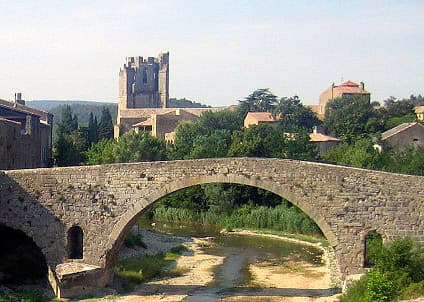
Lagrasse Abbey
The Abbey of St. Mary of Lagrasse, originally founded in the 7th century, is a significant Romanesque abbey located in southern France. It transitioned from a Benedictine monastery to its current status as home to a community of canons regular in 2004. The abbey boasts a rich architectural history, incorporating Romanesque, classical, and medieval elements, and has undergone extensive restoration.

Fleury Abbey
Fleury Abbey, located in Saint-Benoît-sur-Loire, France, is a historically significant Benedictine monastery founded around 640 AD. It is renowned for housing the relics of Saint Benedict of Nursia, a claim that is disputed by the monks of Monte Cassino. The abbey played a vital role in Western European monasticism, boasting a renowned library and attracting scholars during its medieval heyday.

Évron Abbey
Évron Abbey was a Benedictine monastery located in Évron, France, with its foundation traditionally attributed to the 7th century. Dissolved during the French Revolution in 1791, its monastic church remains as the Basilica of Notre-Dame de l'Épine. Today, the site serves as the home of the Community of Saint Martin, an association of priests and deacons.