
Rouen Cathedral
Rouen Cathedral, officially Cathédrale primatiale Notre-Dame de l'Assomption de Rouen, is a significant Catholic church in Rouen, Normandy, France, serving as the seat of the Archbishop of Rouen. Renowned for its three distinct towers, the cathedral showcases a rich architectural history, evolving from Early Gothic to Flamboyant and Renaissance styles over more than eight centuries. It holds notable importance in art history as the subject of Claude Monet's impressionist series and in architectural history, having been the world's tallest building from 1876 to 1880.
Key Facts
- ›The cathedral's construction and rebuilding spanned over 800 years, incorporating styles from Early Gothic to Renaissance.
- ›It was the tallest building in the world from 1876 to 1880 due to its 151-meter iron and copper spire.
- ›Rouen Cathedral was famously depicted in a series of impressionist paintings by Claude Monet.
- ›The structure has endured significant damage from fires, Viking raids, wars of religion, and Allied bombing.
- ›Its three towers—Saint-Romain, Butter Tower, and the central lantern tower with its spire—each feature distinct architectural styles.

Three Distinct Towers, Claude Monet's Impressionist Painting Series, Tallest Building In the World, West Front With Elaborate Sculpture, Joan of Arc Bell
Jean D'Andeli, Guillaume Pontifs, Jacques Le Roux, Rouilland Le Roux, Robert Becquet, Jean-Antoine Alavoine
About Rouen Cathedral
Rouen Cathedral, officially known as Cathédrale primatiale Notre-Dame de l'Assomption de Rouen, stands as a preeminent Catholic church in Rouen, Normandy, France. It holds the distinction of being the ecclesiastical seat of the Archbishop of Rouen, who also bears the title Primate of Normandy. The cathedral is widely recognized for its striking trio of towers, each a testament to different architectural periods and styles, and for its significant place in art history as the muse for Claude Monet's celebrated series of Impressionist paintings. Furthermore, its architectural legacy includes a period of prominence as the world's tallest building between 1876 and 1880.
History and Construction
The history of Rouen Cathedral is one of continuous evolution, with its foundations tracing back to the establishment of Christianity in Rouen around 260 AD by Saint Mellonius. The site has hosted churches and basilicas for centuries, with significant rebuilding and expansion occurring throughout various eras. A Romanesque cathedral was consecrated in 1063, featuring a new choir, crypt, and transept, and was attended by William, Duke of Normandy.
The transition to the Gothic style began in the 12th century under Archbishop Hugues of Amiens, with the construction of the Saint-Romain tower. A comprehensive reconstruction in the Gothic style was initiated by his successor, Gautier the Magnificent, commencing in 1185. This ambitious project faced a major setback with a fire on Easter Eve 1200, which necessitated extensive repairs and a revision of the plans by master mason Jean d'Andeli. The nave was sufficiently complete by 1204 to host King Philip II of France. Over subsequent centuries, additions included chapels, ornate portals, and decorative elements, particularly to the west front.
The 16th century marked a significant blend of Gothic and Renaissance influences, notably under Cardinal-Archbishop Georges d'Amboise. This period saw the construction of the Butter Tower and extensive renovation of the west front with lavish Flamboyant decoration. The cathedral has also weathered periods of destruction and restoration, including damage during the French Wars of Religion, fires from lightning strikes, and wartime bombing during World War II. A notable feature is the 19th-century iron and copper spire, which, at 151 meters, made it the world's tallest building for a brief period. Restoration efforts have continued into the 21st century, with a major project concluding in 2016 and ongoing repairs following incidents like the 2024 spire fire.
Source: Wikipedia ↗
Frequently Asked Questions
What is Rouen Cathedral famous for?
Rouen Cathedral is famous for its three towers, each in a different architectural style, and for being the subject of Claude Monet's impressionist paintings. It also held the title of the world's tallest building for a period in the late 19th century.
When was Rouen Cathedral built?
The construction and rebuilding of Rouen Cathedral occurred over a period of more than eight hundred years, beginning with early churches and evolving through various architectural phases.
What architectural styles can be found at Rouen Cathedral?
Rouen Cathedral displays a mix of architectural styles, including Early Gothic, late Flamboyant, and Renaissance features, reflecting its long construction history.
Has Rouen Cathedral been damaged throughout its history?
Yes, Rouen Cathedral has suffered damage from various events, including Viking raids beginning in 841, fires in 1200 and 1822, pillaging during the Wars of Religion in 1562, and Allied bombing in 1944. More recently, high winds caused a turret to fall in 1999, and a fire damaged the spire in 2024.
What is the significance of the Butter Tower?
The Butter Tower, constructed between 1488 and 1506, is a notable example of late Gothic Flamboyant style. It earned its name because donors contributing to its construction were granted dispensations to consume butter and milk during Lent.
Related Cathedrals

Évreux Cathedral
Évreux Cathedral, officially the Cathedral of Our Lady of Évreux, is a significant Catholic church in Évreux, Normandy, France. It serves as the seat of the Bishop of Évreux and is recognized as a national monument, showcasing a blend of Romanesque and Gothic architectural styles from its 10th-century origins through extensive rebuilding and restoration.
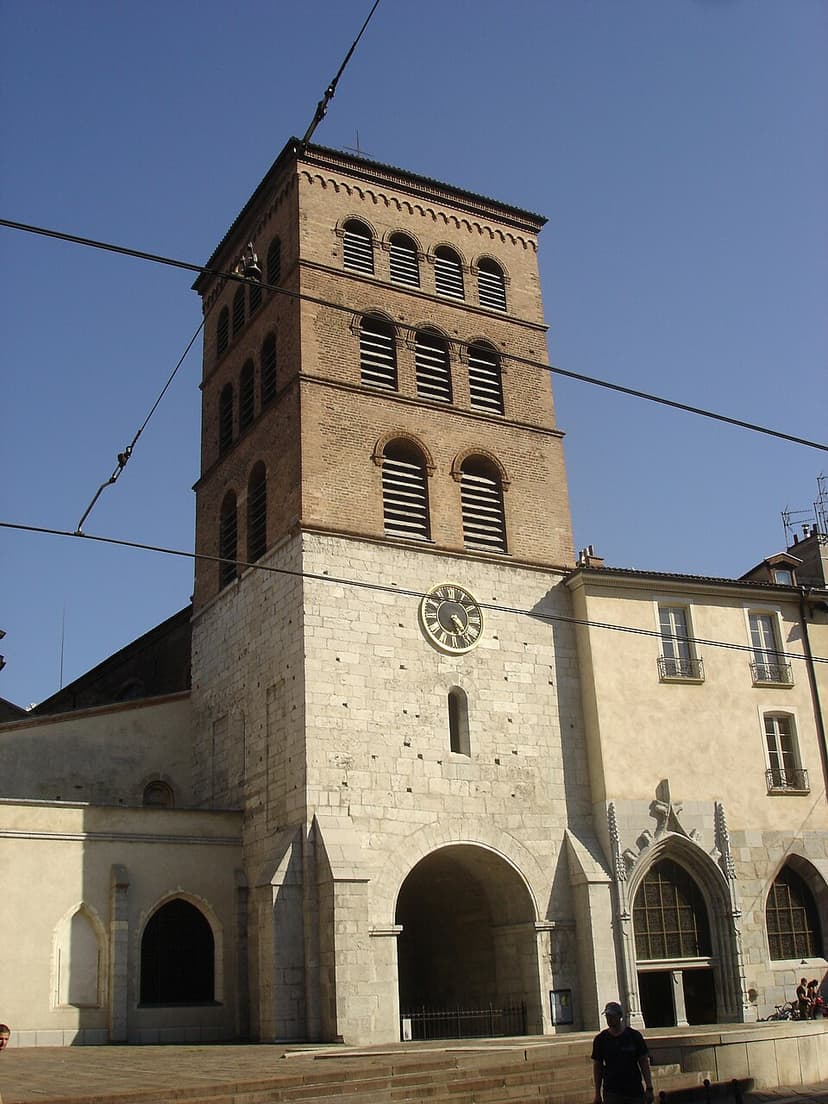
Grenoble Cathedral
Grenoble Cathedral, officially known as Cathédrale Notre-Dame de Grenoble, is a significant Roman Catholic church in Grenoble, France. It serves as the episcopal seat for the Bishop of Grenoble–Vienne and is recognized as a national monument of France.
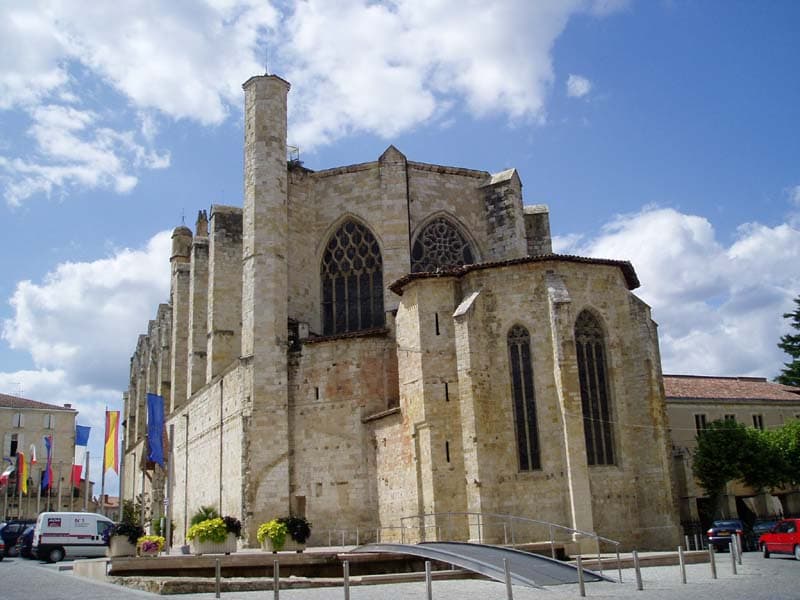
Condom Cathedral
Condom Cathedral, officially the Cathédrale Saint-Pierre de Condom, is a Catholic church situated in Condom, Gers, France. Originally the seat of the Bishops of Condom, it is a significant example of Southern French Gothic architecture, with its reconstruction beginning in the early 16th century.