
Évreux Cathedral
Évreux Cathedral, officially the Cathedral of Our Lady of Évreux, is a significant Catholic church in Évreux, Normandy, France. It serves as the seat of the Bishop of Évreux and is recognized as a national monument, showcasing a blend of Romanesque and Gothic architectural styles from its 10th-century origins through extensive rebuilding and restoration.
Key Facts
- ›The cathedral's origins date back to the 10th century, with Romanesque elements still present in the nave.
- ›A major fire in 1119 necessitated extensive rebuilding, with various Gothic styles incorporated over subsequent centuries.
- ›The west façade, featuring two towers, was largely completed in the late 16th century.
- ›Notable features include the elaborate north transept and portal in the flamboyant Gothic style and the octagonal central tower with a spire built by Bishop Jean Balue.
- ›The cathedral houses finely preserved stained glass windows, many of which were restored after being destroyed in World War II.
- ›The spire, known as "Clocher D’Argent," was reconstructed to a height of 78m after wartime damage.

Romanesque, Gothic, Flamboyant Gothic, Post-Medieval
- Romanesque Nave Arcades
- Gothic Choir
- Flamboyant Gothic North Transept and Portal
- Octagonal Central Tower With Spire
- Lady Chapel With Finely Preserved Stained Glass
- Rose Windows In Transepts
- Carved Wooden Screens of Side Chapels
- "Clocher D’Argent" Spire
Gautier De Varinfroy
About Évreux Cathedral
Évreux Cathedral, officially known as the Cathedral of Our Lady of Évreux (Cathédrale Notre-Dame d'Évreux), stands as a significant religious and architectural landmark in Évreux, Normandy, France. It is the principal church and seat of the Bishop of Évreux and is recognized as a national monument.
History and Architecture
The history of Évreux Cathedral stretches back to its initial construction in the 10th century. The nave still retains elements from the Romanesque period, including semi-circular arcades, with parts of its lower sections dating from the 11th century. A devastating fire in 1119 necessitated extensive rebuilding, leading to the incorporation of various architectural styles over the ensuing centuries. The west façade, characterized by its two towers, is largely a product of the late 16th century. The north tower specifically served as the bell tower, with its foundation reportedly laid in 1392 and completion in 1417.
Different periods of architectural development are evident throughout the cathedral. The north transept and its portal are notable examples of the late Gothic flamboyant style. In contrast, the choir, considered the most exquisite part of the interior, displays an earlier Gothic architectural style. Bishop Jean Balue, who held the see of Évreux in the latter half of the 15th century, was instrumental in the construction of the octagonal central tower, crowned with an elegant spire. King Louis XI provided crucial financial support in 1465, enabling Bishop Balue to resume restoration work on the cathedral that had begun under Charles VII but had stalled due to lack of funds. Bishop Balue is also credited with the creation of the Lady chapel, which is distinguished by its remarkably well-preserved stained glass.
Masterpieces of 16th-century workmanship are also found in the two rose windows located in the transepts and the intricately carved wooden screens that delineate the side chapels. These windows depict important figures of the era, including the Virgin Mary, patron saints, influential Norman personalities, and royal figures. The stained glass exhibits two distinct styles: one, more elegant and perfectly modeled, reflects contemporary Parisian paintings, while the other, flatter, more decorative, and detailed, draws inspiration from 14th-century Norman glass painting traditions.
Adjacent to the south side of the cathedral is the bishop's palace, a 15th-century structure. A comprehensive restoration of the cathedral was concluded in 1896. The stained glass windows, which were tragically destroyed during World War II, were meticulously restored by Jean-Jacques Grüber in 1953. The spire, known as "Clocher d’Argent," was reconstructed to a height of 78 meters following its damage from bombing in the Second World War. A wooden octagonal belfry and spire that once surmounted the south-west tower were not restored and are now absent.
Organ
The cathedral's organ was rebuilt in 2006 by the Atelier Quoirin of Saint-Didier. This instrument comprises approximately 4000 pipes and was inaugurated with concerts by renowned organists such as Thierry Escaich, Pierre Pincemaille, and André Isoir. The organ is situated at the west end of the nave, extending from the triforium level to the vault.
Design
Évreux Cathedral features a seven-bay aisled nave facing west with twin towers in a post-medieval style. Its plan adheres to a cross-shaped layout, with a northern transept arm characterized by a Gothic style and vaulted spaces at each end, one to the west and one to the south. Adjacent to the transept arm is a trapezoidal area, followed by three protruding bays that incorporate aisles and chapels. The interior has a single entrance. Inside, semi-circular arches in the Norman style are present, with the exception of the moldings. Oak screens divide the chapels within the cathedral. The Virgin Chapel is the largest among the chapels, with dimensions comparable to other significant chapels in France at the time.
The nave is structured in three stories, each with distinct design elements. The main level features columns separating the bays, and this level is topped with a rib-vaulted ceiling. The second level consists of a triforium with interlaced arches. Some bays on this floor incorporate cusped arches, designed by Gauthier de Varinfroy. Clerestory windows with what is described as "Parisian" tracery are visible on this level, above which are rib vaults. These rib vaults later presented structural challenges, leading to their reconstruction under the supervision of Louis XI.
Source: Wikipedia ↗
Frequently Asked Questions
What is the history of Évreux Cathedral?
Évreux Cathedral was initially built in the 10th century, with Romanesque elements remaining from that period. A fire in 1119 destroyed much of the original structure, leading to subsequent rebuilding and the incorporation of various architectural styles, primarily Gothic, over many centuries.
What are the main architectural styles found in Évreux Cathedral?
The cathedral exhibits a mix of styles. The nave retains semi-circular arcades from the Romanesque period. The choir is in an earlier Gothic style, while the north transept and portal are in the late Gothic flamboyant style. The west façade is largely from the late 16th century.
What notable features can be found inside Évreux Cathedral?
Inside, visitors can see the finely preserved stained glass windows, including rose windows in the transepts, and carved wooden screens of the side chapels which are masterpieces of 16th-century workmanship. The octagonal central tower with its elegant spire and the Lady chapel are also significant interior elements.
Has Évreux Cathedral undergone significant restoration?
Yes, the cathedral has undergone significant restoration throughout its history. A thorough restoration was completed in 1896. The stained glass windows, destroyed during World War II, were notably restored by Jean-Jacques Grüber in 1953.
What is the height of the spire at Évreux Cathedral?
The spire, known as "Clocher d’Argent," rises to a height of 78 meters. This height was achieved after its reconstruction following damage during the Second World War.
Related Cathedrals

Rouen Cathedral
Rouen Cathedral, officially Cathédrale primatiale Notre-Dame de l'Assomption de Rouen, is a significant Catholic church in Rouen, Normandy, France, serving as the seat of the Archbishop of Rouen. Renowned for its three distinct towers, the cathedral showcases a rich architectural history, evolving from Early Gothic to Flamboyant and Renaissance styles over more than eight centuries. It holds notable importance in art history as the subject of Claude Monet's impressionist series and in architectural history, having been the world's tallest building from 1876 to 1880.
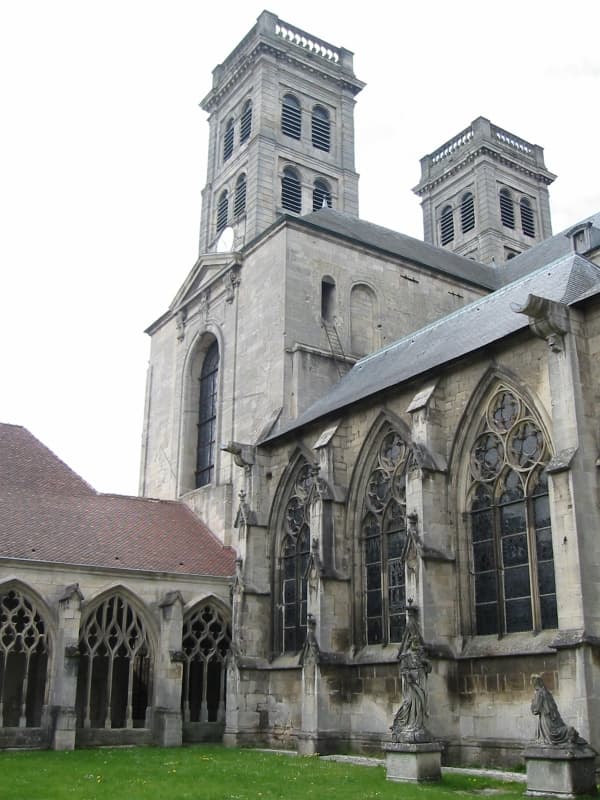
Verdun Cathedral
Verdun Cathedral, officially Cathédrale Notre-Dame de Verdun, is a Roman Catholic cathedral in Verdun, France. It is notable for its historical depth, tracing its origins to the 3rd century, and for its architectural blend of Romanesque, Gothic, and Neo-Classical styles. The cathedral holds significant historical importance, having been a focal point during World War I.
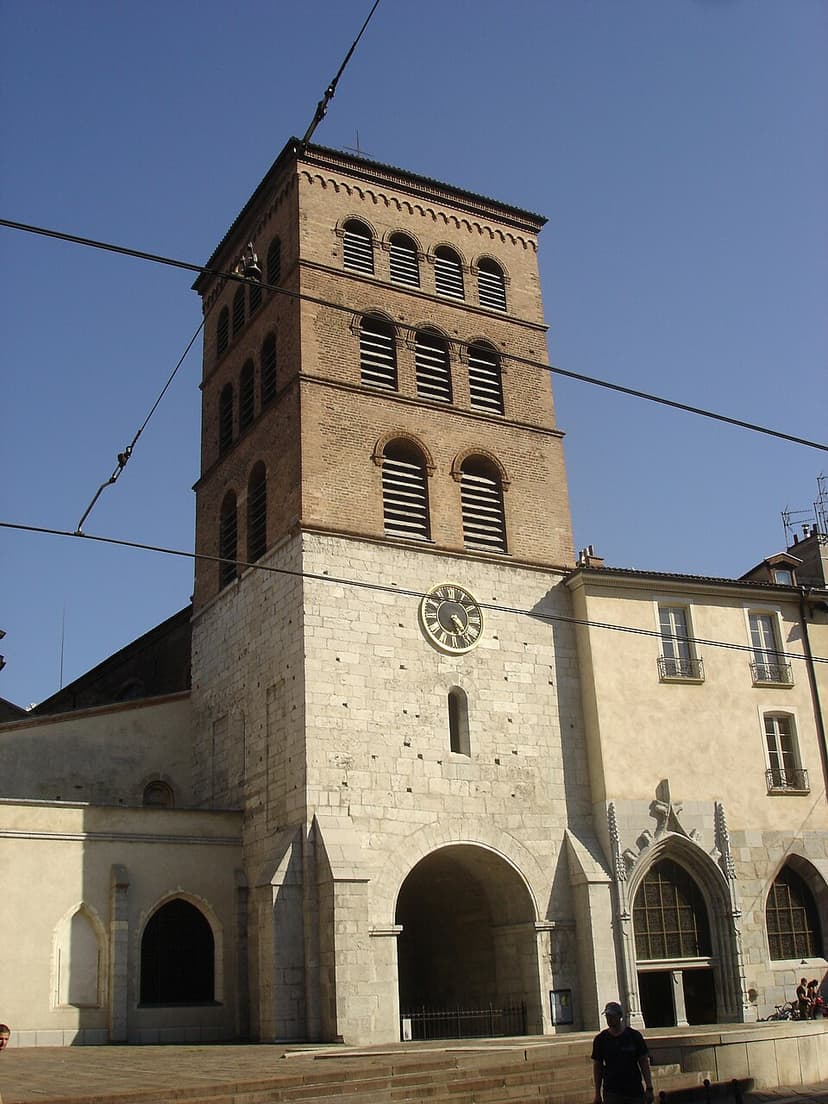
Grenoble Cathedral
Grenoble Cathedral, officially known as Cathédrale Notre-Dame de Grenoble, is a significant Roman Catholic church in Grenoble, France. It serves as the episcopal seat for the Bishop of Grenoble–Vienne and is recognized as a national monument of France.