
Grenoble Cathedral
Grenoble–Vienne·Roman Catholic·France
Grenoble Cathedral, officially known as Cathédrale Notre-Dame de Grenoble, is a significant Roman Catholic church in Grenoble, France. It serves as the episcopal seat for the Bishop of Grenoble–Vienne and is recognized as a national monument of France.
Key Facts
- ›First documented mention of the cathedral dates back to 902.
- ›The cathedral and the Church of St. Hugh were rebuilt in the MID-13th century.
- ›Features notable Renaissance art, including a 15th-century ciborium in the flamboyant Gothic style.
- ›The ciborium was damaged in 1562 during the Wars of Religion.
- ›Underwent extensive remodeling in the 19th century by diocesan architect Alfred Berruyer.
- ›Original Roman facade was revealed after the removal of 19th-century concrete facing in 1990.
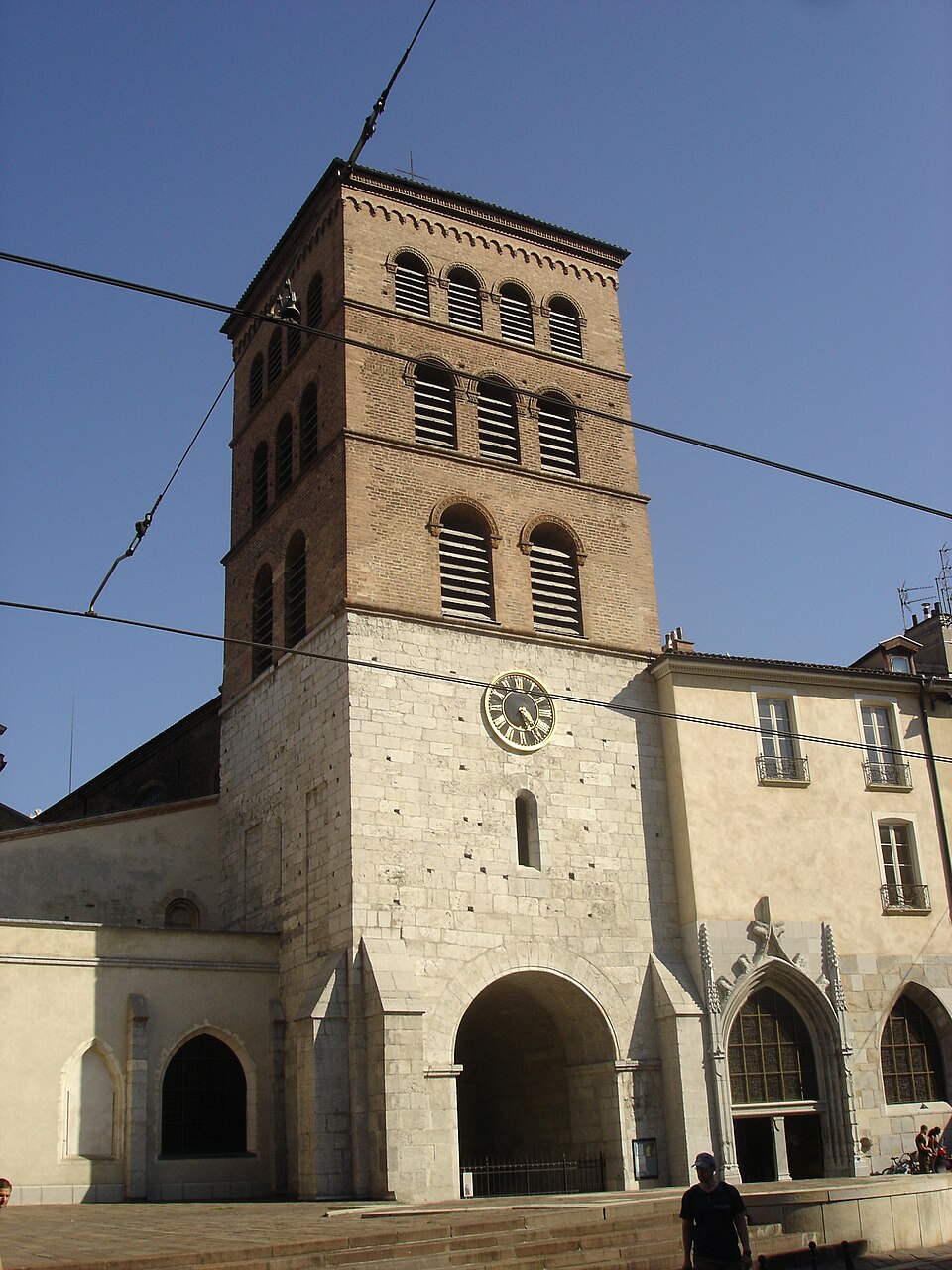
15th Ciborium In Flamboyant Gothic Style, Original Roman Facade
Alfred Berruyer
About Grenoble Cathedral
Grenoble Cathedral, officially known as Cathédrale Notre-Dame de Grenoble, stands as a significant Roman Catholic church located in the heart of Grenoble, France. Recognized as a national monument, it holds the distinguished role of being the episcopal seat for the Bishop of Grenoble, and since 2006, the Bishop of Grenoble–Vienne. The history of the cathedral is extensive, with its first mention appearing in records from 902 during the episcopate of Isaak. The structure and its companion, the Church of St. Hugh, were rebuilt in the mid-13th century, marking a substantial phase in its architectural development.
Architectural Heritage and Transformations
The cathedral is noted for its artistic treasures, particularly examples of Renaissance art. Among these is a remarkable 15th-century ciborium, executed in the flamboyant Gothic style. This exquisite piece unfortunately suffered damage in 1562 at the hands of baron des Adrets during the tumultuous Wars of Religion. Later, in the 19th century, the cathedral underwent a significant remodeling by the diocesan architect Alfred Berruyer. His work included the addition of an innovative concrete facing, which remained a feature until 1990. In that year, this modern addition was removed, successfully revealing and restoring the cathedral's original Roman facade, reconnecting the structure to its earlier historical layers.
Source: Wikipedia ↗
Frequently Asked Questions
When was Grenoble Cathedral first mentioned?
The first recorded mention of Grenoble Cathedral dates back to the year 902, during the episcopate of Bishop Isaak.
What significant events affected the cathedral's art?
Remarkable examples of Renaissance art are present, including a 15th-century ciborium. This ciborium suffered damage in 1562 during the Wars of Religion.
What renovations took place in the 19th century?
The cathedral was entirely remodeled in the 19th century by the diocesan architect Alfred Berruyer. He added an innovative concrete facing.
What was revealed in 1990?
In 1990, the concrete facing added by Alfred Berruyer in the 19th century was removed. This action revealed the cathedral's original Roman facade.
Related Cathedrals

Rouen Cathedral
Rouen Cathedral, officially Cathédrale primatiale Notre-Dame de l'Assomption de Rouen, is a significant Catholic church in Rouen, Normandy, France, serving as the seat of the Archbishop of Rouen. Renowned for its three distinct towers, the cathedral showcases a rich architectural history, evolving from Early Gothic to Flamboyant and Renaissance styles over more than eight centuries. It holds notable importance in art history as the subject of Claude Monet's impressionist series and in architectural history, having been the world's tallest building from 1876 to 1880.

Évreux Cathedral
Évreux Cathedral, officially the Cathedral of Our Lady of Évreux, is a significant Catholic church in Évreux, Normandy, France. It serves as the seat of the Bishop of Évreux and is recognized as a national monument, showcasing a blend of Romanesque and Gothic architectural styles from its 10th-century origins through extensive rebuilding and restoration.

Limoges Cathedral
Limoges Cathedral, officially the Cathédrale Saint-Étienne de Limoges, is a significant Roman Catholic cathedral in Limoges, France. Its construction spanned centuries, beginning in 1273 and concluding in 1888, resulting in a blend of architectural styles including Romanesque, Gothic, and Renaissance. It serves as the seat of the Bishop of Limoges and is a notable national monument.