
Verdun Cathedral
Verdun Cathedral, officially Cathédrale Notre-Dame de Verdun, is a Roman Catholic cathedral in Verdun, France. It is notable for its historical depth, tracing its origins to the 3rd century, and for its architectural blend of Romanesque, Gothic, and Neo-Classical styles. The cathedral holds significant historical importance, having been a focal point during World War I.
Key Facts
- ›The cathedral's origins are believed to date back to 330 AD with the evangelization of Verdun by Saint Saintin.
- ›It has been rebuilt and modified multiple times throughout history, incorporating Romanesque, Gothic, and Neo-Classical architectural elements.
- ›The unfinished cathedral and cloister were consecrated by Pope Eugene III in 1147.
- ›Verdun Cathedral was heavily damaged during World War I, with the first German bombardment hitting it on February 21, 1916, marking the start of the Battle of Verdun.
- ›Extensive restorations between 1920 and 1935 aimed to return the western choir to its 12th-century appearance.
- ›It was elevated to the status of a minor basilica by Pope Pius XII in 1947.
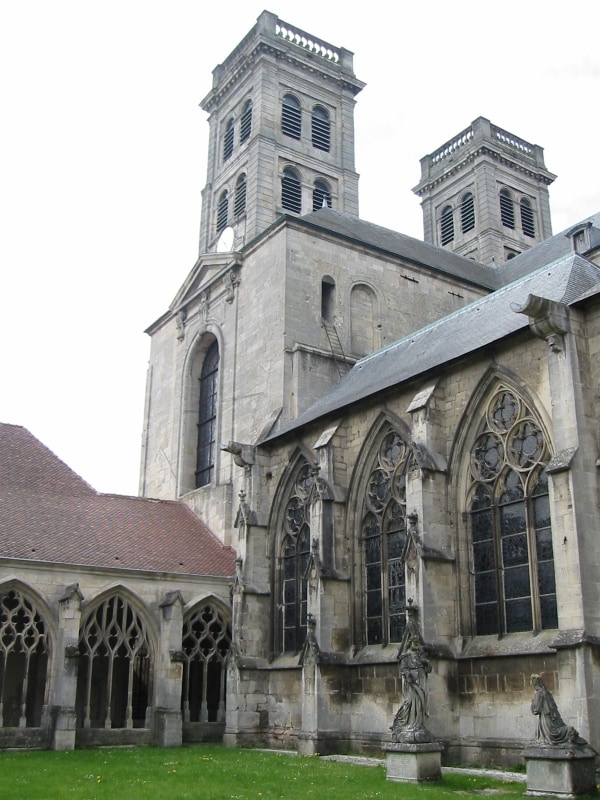
Double Apses, Crypts, Rayonnant Gothic Cloister, 14th-Century Frescoes, Baldacchino With Twisted Columns, Organ Rebuilt In 1935, Chapel of the Rosary, Relic of the Veil of the Virgin
Nicolas Masson
About Verdun Cathedral
Verdun Cathedral, officially known as Cathédrale Notre-Dame de Verdun, stands as a significant religious and historical landmark in the town of Verdun, Lorraine, France. Its origins are exceptionally ancient, tracing back to the 3rd century, making it the oldest cathedral in the Lorraine region. The cathedral is the seat of the Bishops of Verdun and is recognized for its complex architectural history, showcasing a blend of Romanesque, Gothic, and Neo-Classical styles.
History and Significance
The foundations of Verdun Cathedral are linked to Saint Saintin, who evangelized the city and became its first bishop, establishing an initial church dedicated to Saints Peter and Paul around 330 AD. Over centuries, the site endured invasions, fires, and sackings, necessitating repeated rebuilding and renovations. A new Romanesque cathedral was ordered in 990, with significant consecration occurring in 1147 under Pope Eugene III. From the 14th century onward, Gothic elements were introduced, including ribbed vaults and enlarged windows. Subsequent 18th-century overhauls in Neo-Classical and Rococo styles reshaped its appearance.
Verdun Cathedral's historical importance is amplified by its role during World War I. It served as a garrison and observation post, and on February 21, 1916, the first German bombardment of the Battle of Verdun struck the cathedral, marking a critical moment in the conflict. The war left the eastern block and cloister destroyed, necessitating extensive restoration work between 1920 and 1935.
Architecture
The cathedral's architectural narrative is a testament to its long history. Its fundamental layout adheres to a traditional Romanesque plan, characterized by a nave, double transepts, and opposing apses, with a notable emphasis on horizontal expanse. The cloister, however, was rebuilt in the Rayonnant Gothic style. Later modifications introduced Gothic features like ribbed vaults and enlarged windows, while the 18th-century renovations added Neo-Classical and Rococo elements, particularly in the rebuilding of towers and the refurbishment of the nave.
Interior highlights include 14th-century frescoes, a baldacchino with twisted columns over the main altar completed in 1760, and an organ rebuilt in 1935. The Chapel of the Rosary, built in the Flamboyant Gothic style between 1505 and 1515, features a Baroque altar and a distinctive 19th-century wrought-iron gate. The cathedral also houses a relic taken from the Veil of the Virgin, a treasure originally from Chartres Cathedral.
Recognition and Modern Role
Verdun Cathedral was declared a monument historique on October 30, 1906. In recognition of its historical and spiritual significance, Pope Pius XII elevated it to the status of a minor basilica in September 1947. Today, it remains an active place of worship and a focal point for historical reflection and tourism in Verdun.
Source: Wikipedia ↗
Frequently Asked Questions
What is the history of Verdun Cathedral?
The origins of Verdun Cathedral are traced to the 3rd century, with its first bishop, Saint Saintin, founding a church in 330 AD. It has undergone numerous destructions and rebuildings, evolving through Romanesque, Gothic, and Neo-Classical periods. Its history is deeply intertwined with the town of Verdun, including significant damage during World War I.
What are the main architectural styles found at Verdun Cathedral?
Verdun Cathedral exhibits a notable mix of architectural styles. Its layout is influenced by Romanesque design, while later additions and reconstructions incorporated Gothic elements, particularly the Flamboyant Gothic style in the cloister and side chapels. The 18th-century renovations introduced Neo-Classical and Rococo features.
Why is Verdun Cathedral historically significant?
Verdun Cathedral is historically significant for its ancient origins, being the oldest cathedral in Lorraine. Crucially, it played a role in World War I; the first German bombardment of the Battle of Verdun struck the cathedral, highlighting its status as a military target and its suffering during the conflict.
When was Verdun Cathedral consecrated?
The unfinished cathedral and cloister of Verdun Cathedral were consecrated on November 11, 1147, by Pope Eugene III. Later, in 1947, Pope Pius XII raised the cathedral to the status of a minor basilica, marking the 9th centenary of its dedication.
What are some notable features of Verdun Cathedral?
Notable features include its Romanesque plan with double apses and crypts, a cloister in Rayonnant Gothic style, 14th-century frescoes, a 1760 baldacchino over the main altar, and a rebuilt organ from 1935. The Chapel of the Rosary, built in Flamboyant Gothic style, also contains a Baroque altar and a 19th-century wrought-iron gate.
Related Cathedrals

Toulouse Cathedral
Toulouse Cathedral, officially the Cathedral of Saint Stephen of Toulouse, is a Roman Catholic church and the seat of the Archbishop of Toulouse in France. It is a significant national monument, notable for its unique architectural blend resulting from centuries of construction and stylistic evolution, particularly the juxtaposition of southern French Gothic and northern French Gothic elements.

Orléans Cathedral
Orléans Cathedral, officially the Basilique Cathédrale Sainte-Croix d'Orléans, is a significant Roman Catholic cathedral in Orléans, France. It holds historical importance, having been visited by Joan of Arc during the Siege of Orléans, and stands as one of the largest and last Gothic cathedrals constructed in France. The cathedral has undergone multiple reconstructions and renovations throughout its history.

Salerno Cathedral
Salerno Cathedral, also known as the Duomo, is the principal church of Salerno, Italy, and a significant tourist destination. Dedicated to Saint Matthew, whose relics are housed in its crypt, the cathedral was founded in the late 11th century and has undergone various renovations, most notably in the Baroque period and a restoration in the 1930s to recall its original appearance. It holds historical importance as the burial site of Pope Gregory VII and is a symbol of the Italian Renaissance.