
Orléans Cathedral
Orléans Cathedral, officially the Basilique Cathédrale Sainte-Croix d'Orléans, is a significant Roman Catholic cathedral in Orléans, France. It holds historical importance, having been visited by Joan of Arc during the Siege of Orléans, and stands as one of the largest and last Gothic cathedrals constructed in France. The cathedral has undergone multiple reconstructions and renovations throughout its history.
Key Facts
- ›The site of Orléans Cathedral may have been occupied by a Roman pagan temple dating to the 1st century AD.
- ›The first known cathedral on the site was consecrated in 330 AD to Saint Euverte of Orléans.
- ›The cathedral was rebuilt in the Romanesque style and completed in 1000 AD, later becoming one of the largest in France.
- ›The current Gothic structure's foundation stone was laid in 1288, with reconstruction in Rayonnant Gothic style.
- ›Orléans Cathedral was severely damaged by Huguenots in 1568 and extensively rebuilt starting in 1601.
- ›Joan of Arc visited and prayed in the cathedral during the Siege of Orléans in 1429.

- Visited By Joan of Arc
- One of the Largest and Last Gothic Cathedrals In France
- Two Cavaillé-Coll Organs
- West FaçAde With Three Intricately Sculpted Portals and Rose Windows
- Broad Five-Aisled Nave
- Double Ambulatory Around the Choir
- 19th-Century Stained Glass Windows Depicting Joan of Arc
- Rose Windows Depicting the Sun King Louis Xiv
Jacques Gabriel, Jules Degoullons
About Orléans Cathedral
Orléans Cathedral, officially known as the Basilique Cathédrale Sainte-Croix d'Orléans, is a significant Roman Catholic cathedral situated in the city of Orléans, France. It serves as the seat of the Bishop of Orléans and stands as a prominent example of French Gothic architecture, recognized for its scale and historical importance.
History and Construction
The history of Orléans Cathedral is marked by numerous constructions and destructions. Archaeological evidence suggests the site may have hosted a Roman pagan temple as early as the 1st century AD. The first known Christian cathedral, dedicated to Saint Euverte of Orléans, was built around 330 AD.
Following its destruction by fire in 989, a new Romanesque cathedral was completed in 1000 AD, becoming one of the largest in France. By the late 13th century, structural issues necessitated a complete reconstruction. The foundation stone for the current Gothic cathedral was laid in 1288, with work proceeding in the Rayonnant Gothic style. During the Siege of Orléans in 1429, Joan of Arc visited and prayed within the cathedral.
Despite its completion in 1530, the cathedral suffered severe damage in 1568 during the Wars of Religion when Huguenots destroyed its steeple and arches. A major rebuilding project commenced in 1601, incorporating new architectural elements. The Romanesque towers were replaced in the late 18th century, and a Gothic Revival steeple was added. The cathedral was finally consecrated in 1829, nearly 600 years after the initial construction of the Gothic structure began.
Architecture and Design
Orléans Cathedral is characterized by its broad, five-aisled nave, a departure from the typical design of other major French cathedrals, creating a sense of expansive space. The west façade features three intricately sculpted portals, rose windows, and two symmetrical towers, with the highest belltower reaching 114 meters. The interior showcases traditional Gothic elements such as pointed arches and ribbed vaulting.
The choir and stalls, designed in the 18th century by Jacques Gabriel and Jules Degoullons, are encircled by a double ambulatory providing access to radiating chapels. While much of the cathedral's original stained glass was lost due to damage, the 19th-century replacements include windows that retrace the story of Joan of Arc. The transepts are adorned with large rose windows, one depicting the sun at its height and the other the setting sun, both created to represent Louis XIV.
Significance
Orléans Cathedral is noted as one of the largest and last Gothic cathedrals built in France. It has been listed as a national historic monument since 1862. Despite functioning as a cathedral, it was also designated as a basilica by Pope Pius IX. The cathedral sustained damage during World War II but has undergone extensive restoration efforts that continue to the present day.
Source: Wikipedia ↗
Frequently Asked Questions
What is the history of Orléans Cathedral?
The site of Orléans Cathedral may have been a Roman pagan temple before the first Christian church was built around 330 AD. It was rebuilt in Romanesque style in 1000 AD, then underwent a major reconstruction in Gothic style beginning in 1288. The cathedral was damaged multiple times, notably by Huguenots in 1568, and was extensively rebuilt from 1601 onwards.
When was Orléans Cathedral built?
Construction of the current Gothic structure began in 1288. It was largely completed by 1530, but significant rebuilding and modifications continued until its consecration in 1829. The initial Romanesque cathedral was completed in 1000 AD.
What is the architectural style of Orléans Cathedral?
The cathedral exhibits a blend of architectural styles, primarily Rayonnant Gothic and Flamboyant Gothic. Later additions incorporated Italian Gothic and Classical elements, with some Gothic Revival features in the 19th century.
Is Joan of Arc associated with Orléans Cathedral?
Yes, Joan of Arc visited and prayed in Orléans Cathedral during the Siege of Orléans in 1429, a pivotal moment in French history. Her story is depicted in some of the cathedral's 19th-century stained glass windows.
What are the notable features of Orléans Cathedral?
Notable features include its broad five-aisled nave, elaborate west façade with three sculpted portals and rose windows, imposing bell towers, and a slender Gothic Revival steeple. The choir and ambulatory were designed by Jacques Gabriel and Jules Degoullons, and the cathedral houses two classified national monument organs.
What happened to Orléans Cathedral during religious wars?
During the Wars of Religion, the cathedral was looted in 1562 and severely damaged by Protestant Huguenots in 1568, who destroyed its medieval steeple and arches. It was subsequently rebuilt starting in 1601.
Related Cathedrals

Orvieto Cathedral
Orvieto Cathedral, officially the Cattedrale di Santa Maria Assunta, is a magnificent 14th-century Roman Catholic cathedral located in Orvieto, Umbria, Italy. It was commissioned by Pope Urban IV to house the relic of the Corporal of Bolsena, a significant artifact from a Eucharistic miracle. The cathedral is renowned for its stunning façade, a blend of Romanesque and Gothic styles adorned with mosaics and sculptures, and its interior, which features two richly frescoed chapels showcasing dramatic depictions of the Last Judgment.
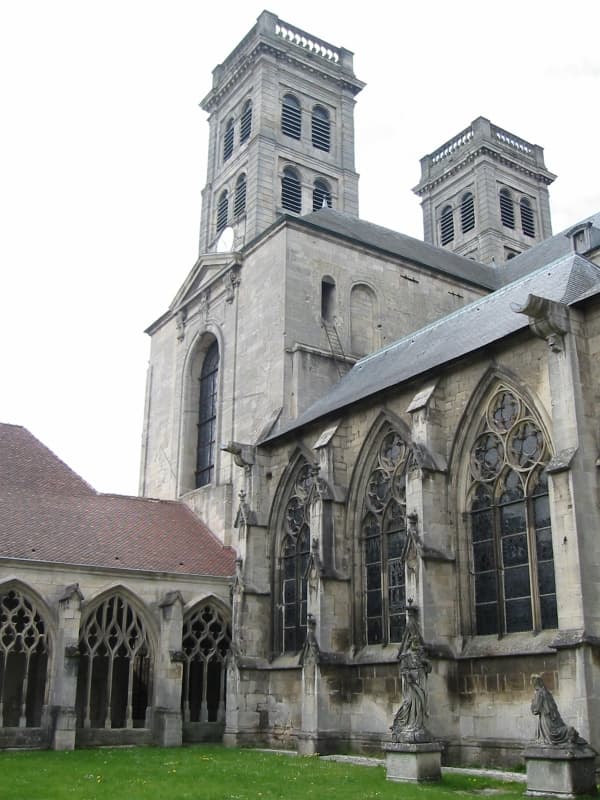
Verdun Cathedral
Verdun Cathedral, officially Cathédrale Notre-Dame de Verdun, is a Roman Catholic cathedral in Verdun, France. It is notable for its historical depth, tracing its origins to the 3rd century, and for its architectural blend of Romanesque, Gothic, and Neo-Classical styles. The cathedral holds significant historical importance, having been a focal point during World War I.

Meaux Cathedral
Meaux Cathedral, officially Cathédrale Saint-Étienne de Meaux, is a Roman Catholic cathedral in Meaux, France, serving as the seat of the Bishop of Meaux. Its construction spanned several centuries, resulting in a blend of Gothic architectural styles, and it holds historical significance as a monument of France.