
Meaux Cathedral
Meaux Cathedral, officially Cathédrale Saint-Étienne de Meaux, is a Roman Catholic cathedral in Meaux, France, serving as the seat of the Bishop of Meaux. Its construction spanned several centuries, resulting in a blend of Gothic architectural styles, and it holds historical significance as a monument of France.
Key Facts
- ›Construction began around 1175, replacing an earlier Romanesque church.
- ›The current Rayonnant Gothic structure was erected between 1253 and 1278.
- ›Construction faced numerous interruptions due to funding issues, wars, and damage.
- ›The cathedral was significantly restored throughout the 19th century.
- ›It was classified as a historic monument of France in 1840.
- ›The cathedral houses a famous organ built in the 17th century.

Famous Organ Built In the 17th Century, Facade Reminiscent of Notre-Dame De Paris
Gautier De Varinfroy
About Meaux Cathedral
Meaux Cathedral, officially known as Cathédrale Saint-Étienne de Meaux, is a prominent Roman Catholic cathedral located in the town of Meaux, in the Seine-et-Marne department of France. It serves as the seat of the Bishop of Meaux and is recognized as a historical monument of France.
History and Construction
The construction of the current cathedral began around 1175, intended to replace an earlier Romanesque church dedicated to Saint Stephen. The initial phase of work was completed by 1235, but structural issues, particularly with the choir's stability, emerged rapidly. This led to a significant rebuilding effort between 1253 and 1278, overseen by architect Gautier de Varinfroy, who implemented techniques to resolve the choir's sinking, such as removing the gallery level.
The cathedral's construction history is marked by numerous interruptions caused by a lack of funding, political instability like the Jacquerie and the Hundred Years' War, and periods of foreign occupation. These factors resulted in an incomplete nave and only one of the planned two bell towers being constructed. The prevailing Flamboyant Gothic style influenced the later stages of construction, with the north portal and north tower being finished before 1506 and 1540, respectively, marking the overall completion of the church.
Architecture and Restoration
Due to its extended construction period, Meaux Cathedral displays a blend of Gothic architectural styles, including Rayonnant and Flamboyant Gothic. The interior is noted for its smooth ornamentation and luminosity, with choir vaults reaching a height of 33 meters and the cathedral's overall height being 48 meters.
Throughout its history, the cathedral suffered damage, including the destruction of its archives during the French Revolution and vandalism by Protestant Huguenots in the late 16th century. By the late 19th century, it had fallen into disrepair and was at risk of collapse. Extensive restoration efforts took place from 1839 to 1894, led by architects like Jean-Charles Danjoy, which included rebuilding the choir perimeter, nave flying buttresses, and incorporating Neo-Gothic elements. In recognition of its historical importance, Meaux Cathedral was classified as a historic monument in 1840.
Source: Wikipedia ↗
Frequently Asked Questions
When was Meaux Cathedral first built?
Construction of the current Meaux Cathedral began around 1175. However, the initial phase of building was rushed and led to structural issues, necessitating a complete rebuild.
What architectural style is Meaux Cathedral?
Meaux Cathedral exhibits several periods of Gothic architecture due to its long construction timeline. The primary rebuild between 1253 and 1278 was in the Rayonnant Gothic style, with later additions in the Flamboyant Gothic style.
Why was Meaux Cathedral rebuilt so soon after its initial construction?
The initial structure, completed around 1235, suffered from structural instability. The choir, in particular, began to sink into the ground due to heavy galleries and poor construction, prompting a complete demolition and rebuilding starting in 1253.
What significant events affected Meaux Cathedral's construction?
Construction was repeatedly halted due to a lapse in funding, the Jacquerie uprising, the Hundred Years' War, and the English occupation of the city. Later, Protestant Huguenots damaged carvings in the late 16th century.
Has Meaux Cathedral always been an active place of worship?
Meaux Cathedral is the seat of the Bishop of Meaux and continues to serve as an active Roman Catholic church. Despite periods of disrepair and restoration, its function as a place of worship has persisted.
Related Cathedrals

Orléans Cathedral
Orléans Cathedral, officially the Basilique Cathédrale Sainte-Croix d'Orléans, is a significant Roman Catholic cathedral in Orléans, France. It holds historical importance, having been visited by Joan of Arc during the Siege of Orléans, and stands as one of the largest and last Gothic cathedrals constructed in France. The cathedral has undergone multiple reconstructions and renovations throughout its history.

Rodez Cathedral
Rodez Cathedral, officially Cathédrale Notre-Dame de Rodez, is a Roman Catholic cathedral in Rodez, Aveyron, Southern France. It is a national monument and the seat of the Bishopric of Rodez, notable for its military-style west front, its impressive Flamboyant Gothic and Renaissance tower, and its significant influence on other European Gothic cathedrals.
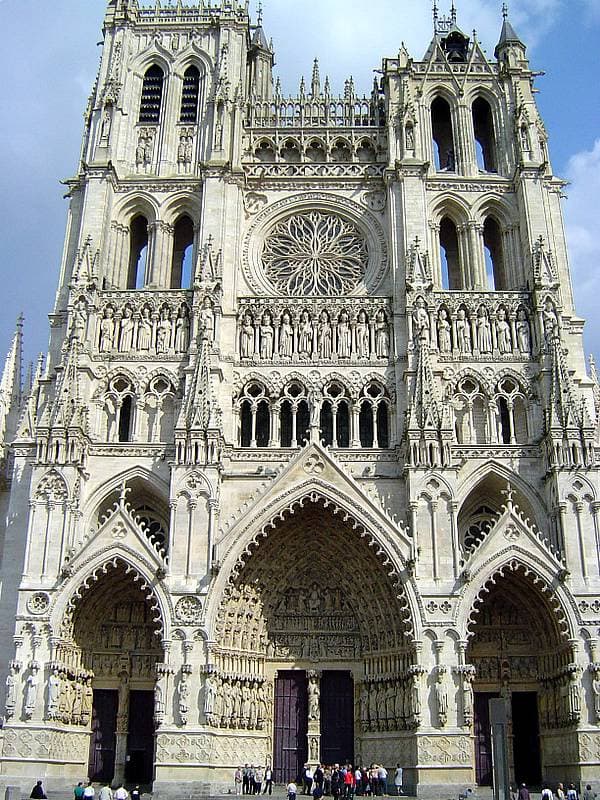
Amiens Cathedral
Amiens Cathedral, officially the Cathedral of Our Lady of Amiens, is a preeminent example of Gothic architecture and a significant religious site in France. It is renowned for its immense scale, being the largest cathedral by volume in France, and for its remarkably unified High Gothic and Rayonnant style, achieved through a swift construction period. The cathedral is also celebrated for its extensive collection of early Gothic sculpture, particularly on its west facade, and holds a UNESCO World Heritage designation.