
Amiens Cathedral
Amiens Cathedral, officially the Cathedral of Our Lady of Amiens, is a preeminent example of Gothic architecture and a significant religious site in France. It is renowned for its immense scale, being the largest cathedral by volume in France, and for its remarkably unified High Gothic and Rayonnant style, achieved through a swift construction period. The cathedral is also celebrated for its extensive collection of early Gothic sculpture, particularly on its west facade, and holds a UNESCO World Heritage designation.
Key Facts
- ›Constructed almost entirely between 1220 and C. 1270, resulting in exceptional stylistic unity.
- ›It is the largest cathedral by volume in France, measuring 200,000 cubic meters.
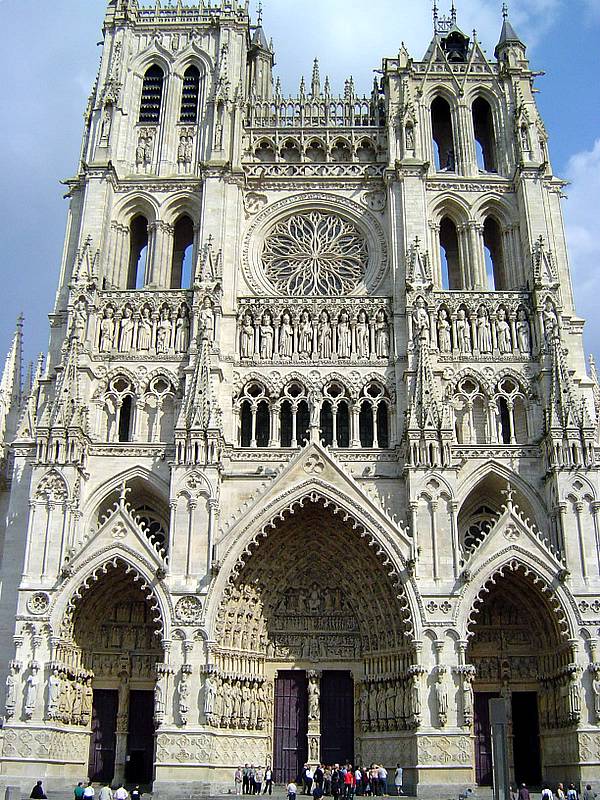
- ›The west facade features three deep porches with elaborate tympanums filled with sculpture, depicting the Last Judgment, Saint Firmin, and the Virgin Mary.
- ›Amiens Cathedral is a UNESCO World Heritage Site, recognized since 1981.
- ›The cathedral is celebrated for its high-quality early 13th-century Gothic sculpture, especially on the west façade and south transept portal.
- ›The flèche, or spire, over the transept crossing reaches a height of 112.70 meters.
High Gothic, Rayonnant Gothic, Flamboyant Gothic
- Largest By Volume In France
- Remarkable Unity of High Gothic and Rayonnant Style
- Extensive Early 13th-Century Gothic Sculpture On West Facade and South Transept Portal
- Gallery of Kings
- Beau Pilier
- FlèChe
- Polychrome Sculpture
- 16th-Century Choir Stalls With Over 4,000 Carved Figures
13th Century, 14th Century, 15th Century, 16th Century
Robert De Luzarches, Thomas De Cormont, Renaud De Cormont, EugèNe Viollet-Le-Duc
About Amiens Cathedral
Amiens Cathedral: A Masterpiece of Gothic Architecture
Amiens Cathedral, officially the Cathedral of Our Lady of Amiens, stands as a monumental achievement of Gothic architecture and a significant religious and cultural landmark in France. Situated on a ridge overlooking the River Somme in Amiens, it is the seat of the Bishop of Amiens and a testament to the height of architectural ambition during the Middle Ages. Its sheer scale, being the largest cathedral by volume in France, and its stylistic coherence are particularly noteworthy.
History and Construction
The history of cathedrals on this site stretches back to early Christian times, with traditions linking its founding to martyrs Firmin the Martyr and Firmin the Confessor. After an earlier Romanesque cathedral was destroyed by fire in 1218, a new Gothic cathedral was planned and begun in 1220 under Bishop Evrard de Fouilloy and master-builder Robert de Luzarches. Unusually for a Gothic structure, Amiens Cathedral was built almost entirely within a remarkably short period, between 1220 and approximately 1270. This rapid construction contributed to its unusual unity of style, showcasing the High Gothic and Rayonnant periods. Later centuries saw further additions and modifications, including the strengthening of its flying buttresses in the 15th century and stylistic adjustments in the 18th century. The cathedral endured damage during the French Revolution but has undergone extensive restoration, notably under Eugène Viollet-le-Duc in the 19th century and continuing into the 21st century.
Architectural Significance and Features
Amiens Cathedral is celebrated for its pursuit of height and light, with nave walls reaching 42 meters. It exemplifies the High Gothic period, incorporating the Rayonnant style that introduced more extensive use of glass in the triforium and clerestory. The west facade is a masterpiece of sculptural art, featuring three deep porches with intricately carved tympanums. The central portal depicts the Last Judgment, while the left is dedicated to Saint Firmin and the right to the Virgin Mary. The cathedral also boasts impressive bell towers, a striking flèche (spire) reaching over 112 meters, and robust flying buttresses that support its soaring walls.
Artistic Treasures and Legacy
Beyond its architectural grandeur, Amiens Cathedral is renowned for its artistic treasures. The quality and quantity of its early 13th-century Gothic sculpture, particularly on the west facade and south transept portal, are exceptional. Inside, the cathedral houses exquisite 16th-century choir stalls, featuring over 4,000 carved figures depicting biblical scenes, secular life, and mythical creatures. The ambulatory is adorned with polychrome sculptures illustrating the lives of Saint Fermin and John the Baptist. Recognized for its outstanding universal value, Amiens Cathedral was designated a UNESCO World Heritage Site in 1981, cementing its status as a globally significant monument.
Source: Wikipedia ↗
Frequently Asked Questions
When was Amiens Cathedral built?
The Gothic cathedral was constructed remarkably quickly, primarily between 1220 and approximately 1270. Earlier structures on the site include a Romanesque cathedral built between 1137 and 1152, which was destroyed by fire in 1218.
What are the main architectural styles of Amiens Cathedral?
Amiens Cathedral is a prime example of High Gothic architecture. It also prominently features the Rayonnant style, particularly evident in its triforium, clerestory, and enlarged high windows of the choir, which were added in the mid-13th century.
What is significant about the sculpture at Amiens Cathedral?
Amiens Cathedral is renowned for the quality and quantity of its early 13th-century Gothic sculpture, especially adorning the main west facade and the south transept portal. Inside, there is also a substantial collection of polychrome sculpture from later periods.
Is Amiens Cathedral a UNESCO World Heritage Site?
Yes, Amiens Cathedral has been listed as a UNESCO World Heritage Site since 1981. This designation recognizes its outstanding universal value as a masterpiece of Gothic art and architecture.
What is the volume of Amiens Cathedral?
Amiens Cathedral is the largest cathedral in France by volume, measuring approximately 200,000 cubic meters. This impressive scale was a deliberate architectural goal to maximize internal dimensions and light.
What relics were important to Amiens Cathedral?
In 1206, Amiens received the reputed head of John the Baptist, which made the city a major pilgrimage destination. The cathedral also has strong connections to Saint Firmin, considered the first bishop of Amiens and a local martyr.
Related Cathedrals

Bordeaux Cathedral
Bordeaux Cathedral, officially the Primatial Cathedral of St Andrew of Bordeaux, is a Roman Catholic cathedral in Bordeaux, France, serving as the seat of the Archbishop of Bordeaux. It is a significant landmark included in the UNESCO World Heritage Site of the Routes of Santiago de Compostela in France. The cathedral showcases a rich architectural history, evolving from Romanesque to Gothic styles and incorporating Renaissance elements, making it a vital historical and religious site.

Albi Cathedral
The Cathedral of Saint Cecilia of Albi, also known as Albi Cathedral, is the seat of the Catholic Archbishop of Albi. It is a remarkable example of Southern French Gothic architecture, renowned for its imposing brick exterior resembling a fortress and its lavishly decorated interior. Designated a UNESCO World Heritage Site, it stands as a testament to the historical and artistic achievements of the region.

Agen Cathedral
Agen Cathedral, dedicated to Saint Caprasius, is a Roman Catholic cathedral located in Agen, France. Originally built as a collegiate church in the 12th century, it was later elevated to the status of a cathedral and is recognized as a UNESCO World Heritage Site as part of the Routes of Santiago de Compostela in France.