
Condom Cathedral
Condom Cathedral, officially the Cathédrale Saint-Pierre de Condom, is a Catholic church situated in Condom, Gers, France. Originally the seat of the Bishops of Condom, it is a significant example of Southern French Gothic architecture, with its reconstruction beginning in the early 16th century.
Key Facts
- ›The cathedral's origins trace back to a church consecrated by Pope Leo III in the early 9th century.
- ›It was elevated to a cathedral in 1317 by Pope John XXII.
- ›The current structure was largely designed and erected between 1506 and 1531 in a Flamboyant Gothic style.
- ›The cathedral suffered damage during the Wars of Religion and the French Revolution, necessitating significant 19th-century restorations.
- ›It is listed as a monument historique in France since 1840.
- ›The cloister, dating from the 16th century, now serves as a public passageway.

- 40-Meter Square Tower
- South Nave Door With 24 Small Statues In Archivolt Niches
- Rib-Vaulted Nave
- Original Pulpit With Stone Baldaquin
- 16th-Century Cloister
About Condom Cathedral
Condom Cathedral: A Gothic Landmark in Gascony
Condom Cathedral, officially known as the Cathédrale Saint-Pierre de Condom, stands as a significant religious and architectural monument in the town of Condom, located in the Gers department of southwestern France. While its origins extend to the early 9th century, the current structure largely represents the architectural achievements of the early 16th century, making it one of the last major buildings in the Gers region to be constructed in the Southern French Gothic style.
History and Evolution
The history of Condom Cathedral is marked by periods of construction, destruction, and reconstruction. A church was first consecrated on a hilltop overlooking Condom by Pope Leo III in the early 9th century. Following destruction by Norman raids, it was restored and transformed into a Benedictine abbey dedicated to Saint Peter in 1011. By the early 14th century, the abbey had evolved into the seat of the Bishopric of Condom, officially elevated to cathedral status in 1317 by Pope John XXII. The abbey church was demolished in 1368 due to its poor condition, with reconstruction continuing until 1400 in a Gothic style. However, a bell tower hastily installed on the western facade collapsed in 1506, prompting a new phase of construction.
The new cathedral, designed with Auch Cathedral as a model, was erected from 1506 to 1531 in a Flamboyant Gothic style. The main portion, including the rib-vaulted nave and stained glass windows, was completed and consecrated in 1531, followed by the cloister and chapter house. Despite its grandeur, the cathedral endured periodic vandalism during the Wars of Religion and suffered extensive damage during the French Revolution, which saw its interior completely destroyed. Following the Concordat of 1801, the Diocese of Condom was abolished, and the church was demoted to parish church status, though it continued to host services. Significant restorations in the 19th century focused on repairing damages, reinforcing the Gothic structure, and rebuilding the choir in a Neo-Gothic style inspired by Albi Cathedral. The cathedral's classification as a historic monument in 1840 recognized its enduring architectural and historical value.
Architectural Features
Condom Cathedral commands the skyline of Condom, situated on a hill above the Baïse River. Its architecture is characterized by robust buttresses and a prominent 40-meter square tower over the west front. The west front door features the symbols of the Four Evangelists in its tympanum, while the south nave door showcases the Flamboyant Gothic style with 24 small statues adorning the archivolt niches.
The interior is organized around a wide nave, a hallmark of Gothic architecture, illuminated by clerestory windows with grisaille glass. The nave, consisting of seven bays, is supported by ribbed pillars adorned with friezes. A neo-Gothic openwork screen from 1844 separates the chancel from the ambulatory. The stained glass in the choir dates from the 19th century. The cathedral was historically known for its 16th-century liturgy and for its reconstructed organ at the west end, a detail commemorated in the choir vault bosses with figures of angel musicians. The original pulpit, featuring a delicately carved stone baldaquin, remains in place.
The 16th-century cloister, once an integral part of the cathedral complex, now serves as a public passageway, with its exterior illuminated at night. Unlike many other cathedrals in France, Condom Cathedral was spared from damage during both World War I and World War II, preserving its historical fabric for future generations.
Source: Wikipedia ↗
Frequently Asked Questions
When was Condom Cathedral built?
The current structure of Condom Cathedral was erected from 1506 to 1531. However, its origins date back to the early 9th century with an initial church construction.
What is the architectural style of Condom Cathedral?
Condom Cathedral is primarily built in the Southern French Gothic style, specifically the Flamboyant Gothic style for its reconstruction starting in 1506. The choir was rebuilt in a Neo-Gothic style in the 19th century.
What is the history of Condom Cathedral's status?
Initially a church, it evolved into a Benedictine abbey and then became the seat of the Bishopric of Condom in 1317. After the Diocese of Condom was abolished in 1801, it became a parish church, though it remains a significant historical site.
Has Condom Cathedral been damaged over time?
Yes, the cathedral endured destruction from Norman raids in the 9th century, and later suffered damage during the Wars of Religion and the French Revolution. Significant restorations were undertaken in the 19th century.
What are some notable features of Condom Cathedral?
Notable features include its wide nave, rib vaults, clerestory windows, a 40-meter square tower over the west front, and a 16th-century cloister. The original pulpit with its stone baldaquin is also still in place.
Related Cathedrals

Toulouse Cathedral
Toulouse Cathedral, officially the Cathedral of Saint Stephen of Toulouse, is a Roman Catholic church and the seat of the Archbishop of Toulouse in France. It is a significant national monument, notable for its unique architectural blend resulting from centuries of construction and stylistic evolution, particularly the juxtaposition of southern French Gothic and northern French Gothic elements.
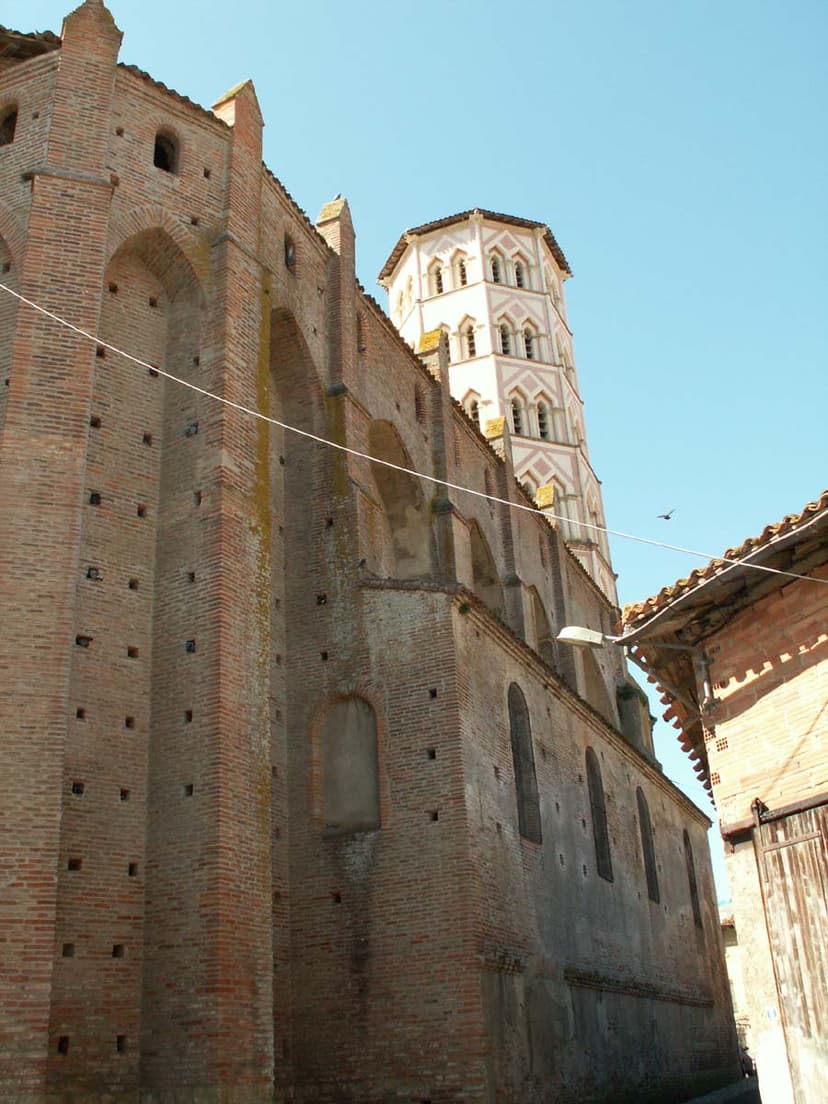
Lombez Cathedral
Lombez Cathedral, formerly the seat of the Diocese of Lombez, is a 14th-century brick church located in Lombez, France. Notable for its ornate octagonal bell tower and a 12th-century baptistry, it holds historical significance, including a visit from the poet Petrarch.

Albi Cathedral
The Cathedral of Saint Cecilia of Albi, also known as Albi Cathedral, is the seat of the Catholic Archbishop of Albi. It is a remarkable example of Southern French Gothic architecture, renowned for its imposing brick exterior resembling a fortress and its lavishly decorated interior. Designated a UNESCO World Heritage Site, it stands as a testament to the historical and artistic achievements of the region.