
Lombez Cathedral
Lombez (former)·Roman Catholic·France
Lombez Cathedral, formerly the seat of the Diocese of Lombez, is a 14th-century brick church located in Lombez, France. Notable for its ornate octagonal bell tower and a 12th-century baptistry, it holds historical significance, including a visit from the poet Petrarch.
Key Facts
- ›Constructed primarily in the 14th century, it is built of brick with a distinctive pink-and-white octagonal bell tower.
- ›Features a 12th-century baptistry with a lead font decorated with 13th-century figures and secular scenes.
- ›The church was visited by the Italian poet Petrarch in 1330, who was made an honorary canon.
- ›The interior includes 17th-century walnut choir stalls, a 1753 Carrara marble altar, and an 18th-century organ.
- ›Contains 15th-16th-century stained glass in the chevet by followers of Arnaud de Moles, depicting scenes from the Life of Christ.
- ›It was the cathedral for the former Diocese of Lombez until its suppression in 1801.
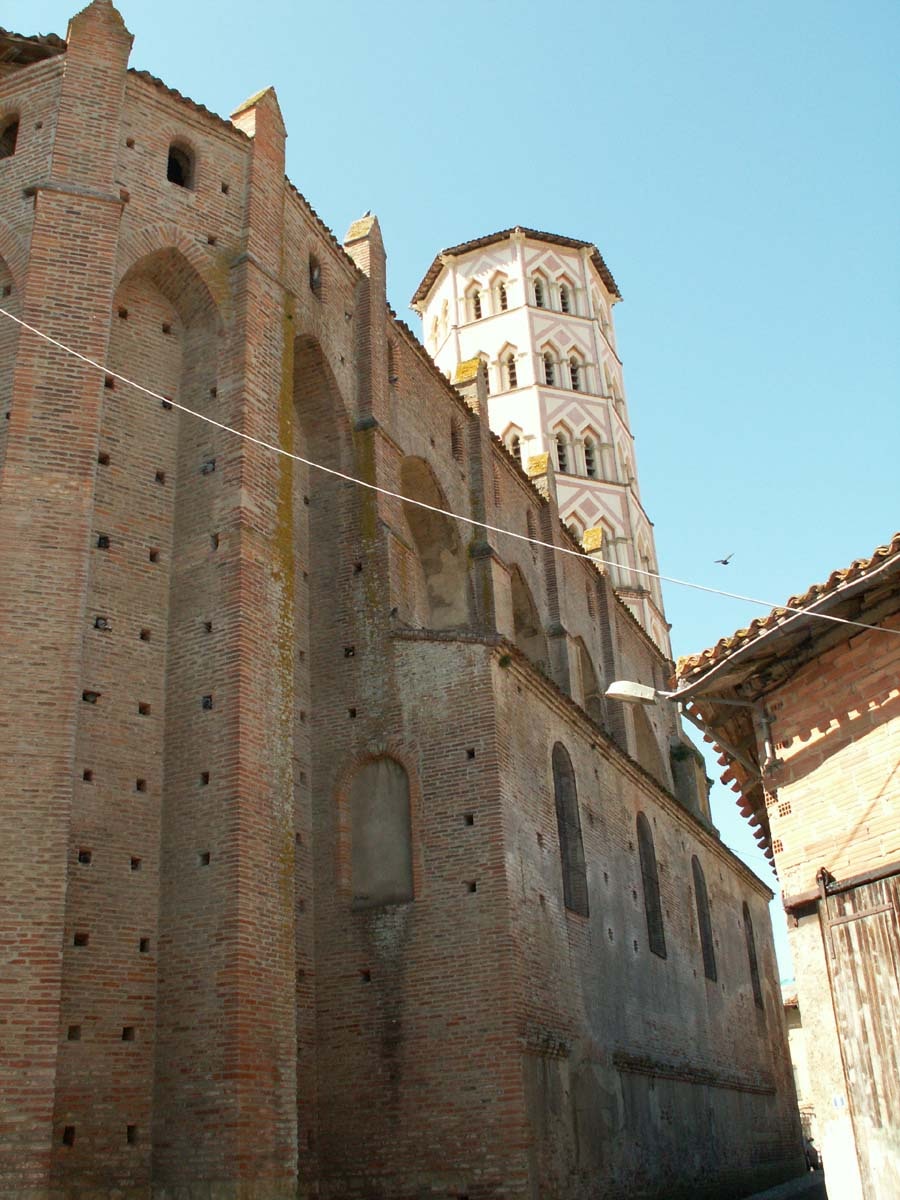
Octagonal Bell Tower, 12th-Century Baptistry, Lead Baptismal Font, 17th-Century Choir Stalls, 15th-16th-Century Stained Glass
About Lombez Cathedral
Lombez Cathedral, officially Cathédrale Sainte-Marie de Lombez, is a Roman Catholic church located in the town of Lombez, France. It formerly served as the seat of the Diocese of Lombez before the diocese was suppressed in 1801. The building has been recognized as a monument historique since 1846, highlighting its architectural and historical importance.
Building History and Architecture
The cathedral is predominantly a 14th-century brick structure, characteristic of the Southern French Gothic style prevalent in the Toulouse region. It is distinguished by its ornate five-tiered octagonal bell tower, constructed around 1346, and a plain west façade typical of the region, marked only by a small roundel and a Flamboyant stone entrance. The exterior is noted for its severe appearance, accentuated by tall buttresses surrounding the chevet.
Internally, the cathedral houses a remarkable 12th-century baptistry, which was part of an earlier church on the site. This baptistry contains a lead baptismal font, made of two sections. The lower part is decorated with religious figures in medallions in a 13th-century style, while the upper part features a frieze of secular scenes with an antique design. The font's stopper suggests it was used for total immersion, a practice that continued until the 9th century.
Other significant interior features include 17th-century walnut choir stalls, an altar made of Carrara marble consecrated in 1753, and an 18th-century organ situated at the west end. The chevet boasts three panels of vibrantly colored 15th–16th-century stained glass, created by artists influenced by Arnaud de Moles. These panels illustrate scenes from the Life of Christ and the Passion and were restored in the 19th century; the remaining stained glass is from the 19th century.
Historical Connections
A plaque near the west entrance commemorates the visit of the renowned Italian poet Petrarch in 1330. This visit was facilitated by Bishop Jacques Colonna, who was also of Italian origin and served as bishop from 1328 to 1341. Colonna further honored Petrarch by making him an honorary canon in 1335, embedding a significant literary figure within the cathedral's history.
Source: Wikipedia ↗
Frequently Asked Questions
What is Lombez Cathedral's architectural style?
Lombez Cathedral is primarily a 14th-century brick church in the Southern French Gothic style, characteristic of the Toulouse region. The exterior is severe, featuring tall buttresses, while the west façade is plain except for a roundel and a Flamboyant entrance.
When was Lombez Cathedral built?
The main construction of Lombez Cathedral dates to the 14th century. The ornate five-tiered octagonal bell tower was constructed around 1346. A 12th-century baptistry from an earlier church is also a significant feature.
What is the significance of the baptistry at Lombez Cathedral?
The 12th-century baptistry is a remarkable feature within the cathedral, predating the main structure. It contains a lead baptismal font with lower sections adorned with religious figures from the 13th century and an upper section with secular scenes.
Who was Jacques Colonna and what is his connection to Lombez Cathedral?
Jacques Colonna served as the bishop of Lombez from 1328 to 1341. He arranged for the visit of the Italian poet Petrarch in 1330 and made him an honorary canon in 1335, linking the bishop to significant cultural figures of the era.
What notable artworks can be found inside Lombez Cathedral?
Inside Lombez Cathedral, visitors can see 17th-century walnut choir stalls, a Carrara marble altar consecrated in 1753, and an 18th-century organ. Additionally, there are 15th-16th-century stained glass panels in the chevet depicting scenes from the Life of Christ.
Related Cathedrals

Toulouse Cathedral
Toulouse Cathedral, officially the Cathedral of Saint Stephen of Toulouse, is a Roman Catholic church and the seat of the Archbishop of Toulouse in France. It is a significant national monument, notable for its unique architectural blend resulting from centuries of construction and stylistic evolution, particularly the juxtaposition of southern French Gothic and northern French Gothic elements.
Condom Cathedral
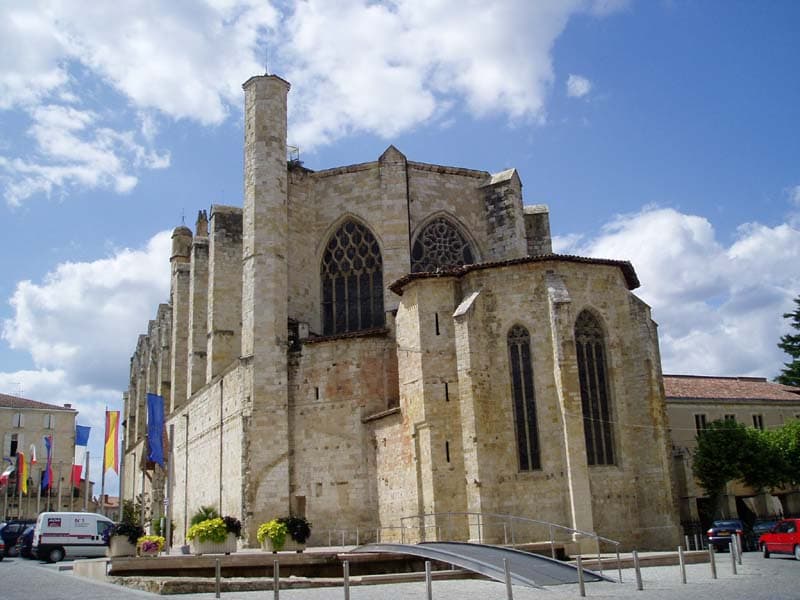
Condom Cathedral, officially the Cathédrale Saint-Pierre de Condom, is a Catholic church situated in Condom, Gers, France. Originally the seat of the Bishops of Condom, it is a significant example of Southern French Gothic architecture, with its reconstruction beginning in the early 16th century.

Pamiers Cathedral
Pamiers Cathedral, officially Cathédrale Saint-Antonin de Pamiers, is a Roman Catholic church in Pamiers, France, serving as the seat of the Bishopric of Pamiers. It is a national monument notable for its Southern French Gothic architecture, constructed primarily from Toulouse brick.