
Poleteins Charterhouse
Christian·France·Ruins/Site Occupied·13th century
Poleteins Charterhouse was a community of Carthusian nuns located in Mionnay, France, founded in the 1230s. It was known for its notable prioress Marguerite d'Oingt and faced significant challenges, including the Black Death and an invasion by Huguenots. The charterhouse was eventually incorporated into other Carthusian communities and its buildings demolished after the French Revolution, with the site now occupied by a 19th-century château.
Key Facts
- ›Founded in Mionnay, in the ancient province of Bresse, France.
- ›Established between 1230 and 1238.
- ›Notable prioress Marguerite D'Oingt was a poetess, mystic, and scholar.
- ›Suffered from an epidemic of the Black Death in 1457, with twelve nuns succumbing.
- ›Nuns took refuge in Montluel in 1562 due to invasion by Huguenots.
- ›Buildings were demolished after the French Revolution; the last surviving chapel was torn down in 1873.

- Church Where Marguerite De Baugé Was Buried.
- Site Now Occupied By ChâTeau De Polleteins and Haras De Polletins.
Chartreuse De Poleteins, Poletains Charterhouse, Poletins Charterhouse
Marguerite De Baugé, Humbert V De Beaujeu, Jeanne De Beaujeu, Marguerite D'Oingt
- Founded In the 1230s.
- Epidemic of the Black Death In 1457.
- Invasion By Huguenots In 1562.
- Incorporation Into Salettes Charterhouse and Administration By Lyon Charterhouse In 1605.
- Premises Sold Into Private Ownership During the French Revolution.
- Last Surviving Building Demolished In 1873.
About Poleteins Charterhouse
Poleteins Charterhouse, also known by its French name Chartreuse de Poleteins and sometimes referred to as Poletains or Poletins, was a monastic community of Carthusian nuns situated in Mionnay, within the department of Ain, France. The charterhouse was established in the ancient province of Bresse in the 1230s, with the founding gift made by Marguerite de Baugé, the wife of Humbert V de Beaujeu. Their daughter, Jeanne de Beaujeu, later served as the first or possibly second prioress of the community.
History and Significance
The charterhouse held particular renown for its fourth prioress, Marguerite d'Oingt, who served from 1286 to 1310. Marguerite d'Oingt was a distinguished figure, recognized as a poetess, mystic, and scholar, contributing to the intellectual and spiritual life of the community.
Poleteins Charterhouse endured significant challenges throughout its history. In 1457, the community faced a severe crisis in the form of an epidemic of the Black Death, which tragically claimed the lives of twelve nuns. A further significant disruption occurred in 1562 when the nunnery was invaded by Huguenots, compelling the nuns to seek refuge in the nearby town of Montluel.
With the restoration of peace following the Edict of Nantes, the community's structure evolved. In 1605, the remaining members of the reduced community were incorporated into the community of Salettes Charterhouse. Concurrently, the premises and assets of Poleteins were transferred to the administration of Lyon Charterhouse, which subsequently gained outright control of its revenues in 1639.
Following the French Revolution, the charterhouse premises were sold into private ownership. The physical remnants of the monastery gradually disappeared, with the last surviving building, a chapel, being demolished in 1873. Today, the site of the former charterhouse is occupied by a 19th-century château known as the Château de Polleteins, with adjacent buildings belonging to the Haras de Polletins (Polletins Stud Farm).
Source: Wikipedia ↗
Frequently Asked Questions
When was Poleteins Charterhouse founded?
Poleteins Charterhouse was founded in the 1230s, specifically in 1230 or 1238. It was established in Mionnay in the ancient province of Bresse.
Who founded Poleteins Charterhouse?
The charterhouse was founded by the gift of Marguerite de Baugé, wife of Humbert V de Beaujeu. Their daughter, Jeanne de Beaujeu, was the first or second prioress.
What significant events affected Poleteins Charterhouse?
The community faced a major crisis in 1457 due to the Black Death, which killed twelve nuns. In 1562, the nunnery was invaded by Huguenots, forcing the nuns to seek refuge elsewhere.
What is the current status of Poleteins Charterhouse?
The buildings of Poleteins Charterhouse were demolished after the French Revolution, with the last surviving chapel being torn down in 1873. The site is now occupied by a 19th-century château.
Was Poleteins Charterhouse associated with any famous figures?
Yes, Poleteins Charterhouse was particularly known for its fourth prioress, Marguerite d'Oingt (1286-1310), who was a poetess, mystic, and scholar.
Related Monasteries

Abbaye-aux-Bois
The Abbaye-aux-Bois, originally founded in 1202 as Notre-Dame-aux-Bois in Ognolles, was a Bernardine (Cistercian) convent that relocated to Paris in 1654. Renowned for educating daughters of aristocratic families and later hosting a significant literary salon, its buildings underwent numerous transformations after being expropriated in 1792. The abbey was ultimately destroyed in 1907 to facilitate urban expansion, with its site later occupied by a theater.
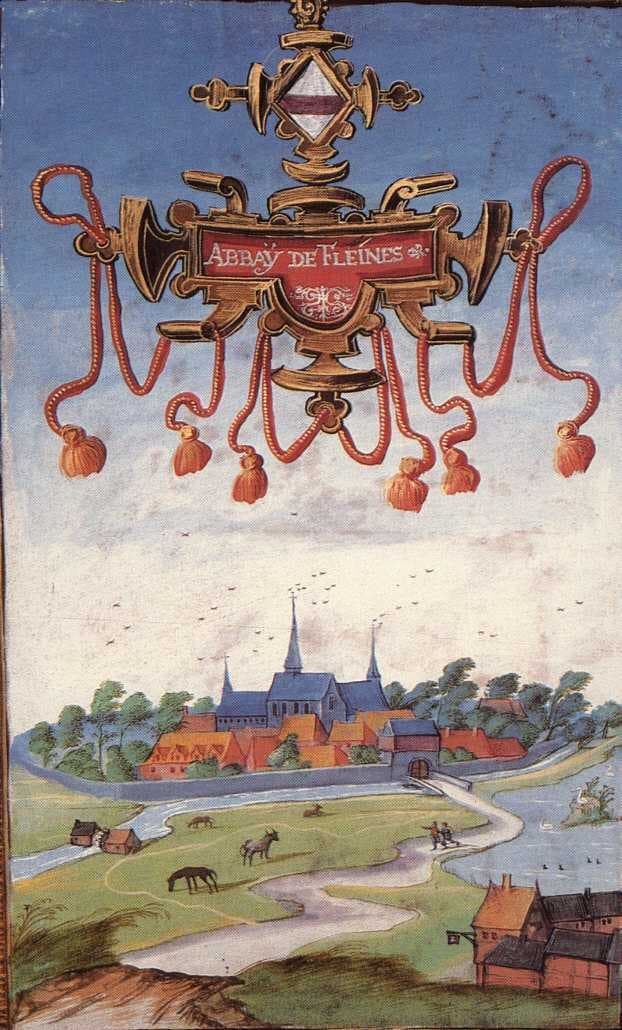
Flines Abbey
Flines Abbey was a Cistercian nunnery founded around 1234 by Countess Margaret of Flanders. It served as a significant burial site for the Counts of Flanders, including Margaret herself and her son Guy. The abbey experienced periods of destruction and extensive rebuilding, particularly in the 14th and subsequent centuries, before its dissolution during the French Revolution.

Fontenelles Abbey
Fontenelles Abbey was an Augustinian monastery founded in 1210 by local landowners in Vendée, France. Originally Benedictine, it transitioned to Augustinian in the early 13th century and was dedicated in 1248. The abbey suffered significant damage during the Hundred Years' War and the Wars of Religion, leading to its eventual suppression during the French Revolution and subsequent abandonment and agricultural use. Today, the site remains private property with the truncated church as its most intact structure.