
Abbaye-aux-Bois
The Abbaye-aux-Bois, originally founded in 1202 as Notre-Dame-aux-Bois in Ognolles, was a Bernardine (Cistercian) convent that relocated to Paris in 1654. Renowned for educating daughters of aristocratic families and later hosting a significant literary salon, its buildings underwent numerous transformations after being expropriated in 1792. The abbey was ultimately destroyed in 1907 to facilitate urban expansion, with its site later occupied by a theater.
Key Facts
- ›Founded in 1202 as Notre-Dame-aux-Bois in Ognolles, Diocese of Noyon.
- ›Relocated to Paris in 1654.
- ›Served as a center for educating aristocratic daughters.
- ›Buildings expropriated in 1792, repurposed as a prison and later sold.
- ›Site of a prominent literary salon hosted by Juliette Récamier and François-René de Chateaubriand.
- ›Destroyed in 1907 during the expansion of rue de Sèvres.

- Site of A Literary Salon Hosted By Juliette RéCamier and FrançOis-René De Chateaubriand
- Buildings Formerly Tenanted By the Sisters of the Annunciation of Mary
- Church Rebuilt Under the Invocation of Notre-Dame and Saint Anthony
Notre-Dame-Aux-Bois, Abbey of the Woods
Jean Ii, Lord of Nesle, Anne of Austria, Marc-Antoine Charpentier, Juliette RéCamier, FrançOis-René De Chateaubriand, Alphonse De Lamartine, Charles Augustin Sainte-Beuve, Honoré De Balzac, Antoinette Henriette CléMence Robert, Joris-Karl Huysmans, Jean Vilar, Renaud-Barrault Company
Founding of the Abbey In Ognolles, Relocation To Paris, Expropriation of Buildings, Use As A Prison During the Reign of Terror, Establishment of Juliette RéCamier's Salon, Destruction of Buildings
About Abbaye-aux-Bois
The Abbaye-aux-Bois, known in its early history as Notre-Dame-aux-Bois, was a significant Bernardine (Cistercian) convent that ultimately met its end in Paris. Founded in 1202 in Ognolles by Jean II, Lord of Nesle, the abbey initially flourished with the support of French nobility and bourgeoisie. Its history is marked by several relocations, notably a move to Paris in 1654, where it was established on rue de Sèvres and rue de la Chaise.
History and Significance
For centuries, the convent was a center for the education of daughters from wealthy and aristocratic families, with some paying substantial sums for their daughters' tutelage. The abbey's church was rebuilt in 1718 under the invocation of Notre-Dame and Saint Anthony. The celebrated composer Marc-Antoine Charpentier composed his "Leçons de ténèbres" for the nuns in 1680.
Following the French Revolution, the convent's buildings were expropriated in 1792. They were repurposed as a prison during the Reign of Terror and later sold for private residences. While the church was preserved and annexed to the parish of Saint Thomas Aquinas, the rest of the complex underwent significant changes.
In the 19th century, one wing was converted into a nursing home. It was here that the renowned socialite and writer Juliette Récamier resided for the last thirty years of her life, from 1819 to 1849. From her apartment, Récamier, along with her friend François-René de Chateaubriand, hosted a literary salon that became a vital hub for European literature, fostering the recognition of young writers such as Alphonse de Lamartine, Charles Augustin Sainte-Beuve, and Honoré de Balzac.
Demise of the Abbey
The Abbaye-aux-Bois ceased to function as a religious institution due to legislation in 1904 that outlawed religious education. The remaining structures were demolished in 1907 during the expansion of the rue de Sèvres. The site has since been redeveloped, with parts becoming streets and public squares, and the former chapel location eventually hosting the Théâtre Récamier.
Source: Wikipedia ↗
Frequently Asked Questions
When was the Abbaye-aux-Bois founded?
The abbey was founded in 1202 in Ognolles, initially named Notre-Dame-aux-Bois. It was likely a Cistercian foundation from its inception.
Why did the abbey move to Paris?
The convent relocated to Paris in 1654 due to shifts in the Hundred Years' War and subsequent threats to its original location. Anne of Austria facilitated their move to new buildings in Paris.
What was the significance of the Abbaye-aux-Bois in the 19th century?
After being expropriated and sold, parts of the abbey were used by the Chanoinesses de Saint-Augustin and became the residence of socialite Juliette Récamier. Récamier hosted a renowned literary salon there, attracting prominent writers.
What led to the destruction of the Abbaye-aux-Bois?
The abbey's buildings were destroyed in 1907 as part of the expansion of the rue de Sèvres. This demolition followed legislation in 1904 that outlawed religious education as conducted at abbeys.
What occupies the site of the Abbaye-aux-Bois today?
Parts of the former abbey site were converted into streets like rue Récamier. The site of the nursing home became Roger Stéphane Square, and the chapel's location was eventually occupied by the Théâtre Récamier.
Related Monasteries

Ascension Convent
Ascension Convent, formerly known as the Starodevichy Convent or Old Maidens' Convent, was a significant Russian Orthodox nunnery located within the Moscow Kremlin. It served as the burial site for royal princesses, tsarinas, and noble ladies of the Muscovite court. The convent, a notable monument of conservative architecture, was ultimately destroyed in 1929 on the orders of Joseph Stalin.
Flines Abbey
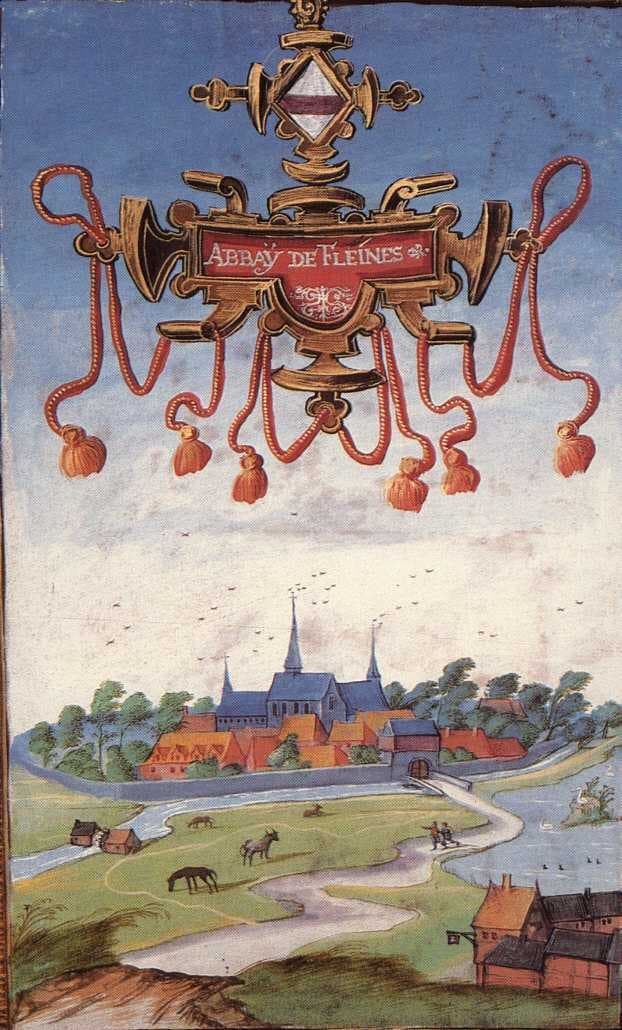
Flines Abbey was a Cistercian nunnery founded around 1234 by Countess Margaret of Flanders. It served as a significant burial site for the Counts of Flanders, including Margaret herself and her son Guy. The abbey experienced periods of destruction and extensive rebuilding, particularly in the 14th and subsequent centuries, before its dissolution during the French Revolution.

Fontenelles Abbey
Fontenelles Abbey was an Augustinian monastery founded in 1210 by local landowners in Vendée, France. Originally Benedictine, it transitioned to Augustinian in the early 13th century and was dedicated in 1248. The abbey suffered significant damage during the Hundred Years' War and the Wars of Religion, leading to its eventual suppression during the French Revolution and subsequent abandonment and agricultural use. Today, the site remains private property with the truncated church as its most intact structure.