
Moulins
Moulins is a historic commune in central France, serving as the capital of the Allier department. Its name originates from the mills that once operated along the Allier River. The town rose to prominence in the 14th century when it became the seat of the Dukes of Bourbon and later the provincial capital, and it is also known for the significant Edict of Moulins in 1566.
Key Facts
- ›The name 'Moulins' derives from the French word for 'mills', referring to historical mills on the Allier River.
- ›It was the capital of the province of Bourbonnais and the seat of the Dukes of Bourbon before the French Revolution.
- ›Moulins achieved greater importance in 1327 when Louis I de Clermont was elevated to Duke of Bourbon.
- ›The town is the namesake of the Edict of Moulins, issued in February 1566, which addressed legal and administrative matters.
- ›It is the birthplace of operatic baritone Jean-Baptiste Faure and a former school location for fashion designer Coco Chanel.

- Maison Mantin
- Anne De Beaujeu Museum
- the National Center of Costume and Scenography
Molins
Jean-Baptiste Faure, Coco Chanel, Charles Iv, Louis I De Clermont, Archambaud Viii, Sire De Bourbon, Peter Ii, Duke of Bourbon and of Auvergne
- Granting of A Franchise To Inhabitants By Archambaud Viii In 1232
- Elevation of Louis I De Clermont To Duke of Bourbon In 1327
- Issuance of the Edict of Moulins In February 1566
About Moulins
Moulins: A Historic French Commune
Moulins is a commune located in central France, serving as the capital of the Allier department. Its name, derived from the French word for 'mills,' reflects its historical connection to the Allier River, where mills once operated. The town has a documented history stretching back to at least the year 990.
Historical Significance
The commune achieved significant administrative importance before the French Revolution, acting as the capital of the province of Bourbonnais and the seat of the powerful Dukes of Bourbon. Its prominence increased in 1327 when Louis I de Clermont was elevated to Duke of Bourbon, and the provincial capital was moved to Moulins. A key historical event associated with the town is the Edict of Moulins, issued in February 1566. This royal ordinance was a comprehensive legal document addressing various aspects of justice, feudal privileges, and ecclesiastical matters.
Notable Associations
Moulins is recognized as the birthplace of Jean-Baptiste Faure, a renowned 19th-century operatic baritone and art collector. Additionally, the iconic fashion designer Coco Chanel spent part of her childhood in Moulins as an orphan before moving to Paris to begin her influential career.
Source: Wikipedia ↗
Frequently Asked Questions
What is the origin of the name Moulins?
The name 'Moulins' literally translates to 'mills' in French. This name refers to the historical presence of mills that operated along the Allier River.
When did Moulins become an important administrative center?
Moulins' importance grew significantly in 1327 when Charles IV elevated Louis I de Clermont to Duke of Bourbon. The town subsequently became the capital of the province of Bourbonnais, moving from Bourbon-l'Archambault.
What was the significance of the Edict of Moulins?
Issued in February 1566, the Edict of Moulins was an important royal ordinance. It dealt with various aspects of justice administration, feudal privileges, and ecclesiastical matters, including limitations on the appanages of French princes.
Are there any famous individuals associated with Moulins?
Yes, Moulins is noted as the birthplace of the 19th-century operatic baritone and art collector Jean-Baptiste Faure. Fashion designer Coco Chanel also attended school in Moulins as an orphan before her move to Paris.
What is Moulins' geographical location?
Moulins is situated in central France on the banks of the river Allier. It is the capital of the Allier department.
Related Monasteries

Frigolet Abbey
Frigolet Abbey is a significant Premonstratensian monastery complex located in Southern France, originally founded around 960. Over its history, it has been occupied by Benedictine monks, canons regular, and various Augustinian orders before being restored and canonically erected as an abbey by the Premonstratensians in the 19th century. The abbey has faced periods of suppression and expulsion, notably during the French Revolution and subsequent anti-clerical laws, but has persevered and continues to operate today.

Ganagobie Abbey
Ganagobie Abbey, originally founded as a Cluniac priory in the 9th or 10th century, is a Benedictine monastery located in Ganagobie, France. Despite suppression during the French Revolution and subsequent demolition of parts of its structures, the site was gifted to the Benedictines of Solesmes in 1891. Following extensive restoration and the discovery of medieval mosaics, the community eventually relocated to Ganagobie in 1992, making it an active Benedictine abbey.
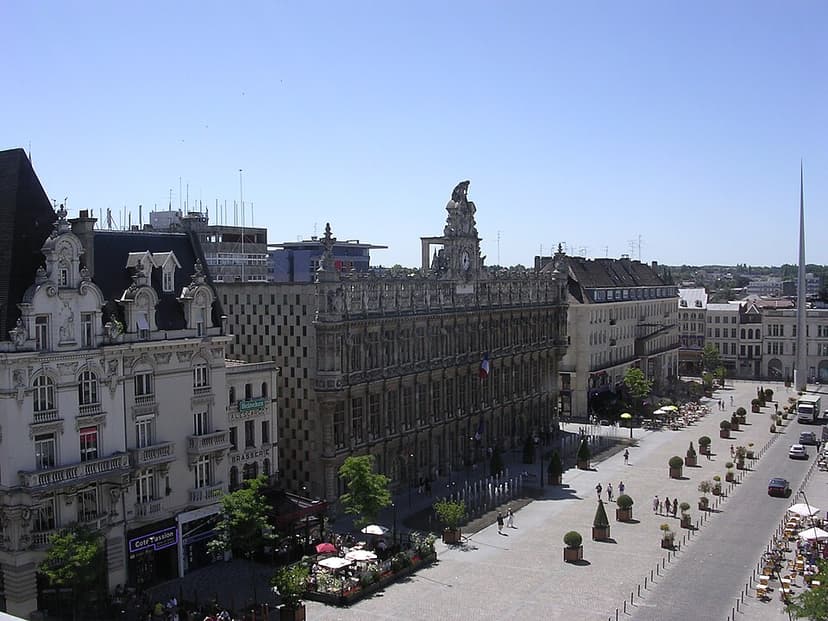
Valenciennes
Valenciennes is a historic commune in northern France, situated on the Scheldt River. It played a significant role in religious and military history, notably hosting a pivotal Dominican Order chapter in 1259 and enduring numerous sieges throughout the centuries. While much of the city was rebuilt after extensive destruction in both World Wars, remnants of its past, such as the Hôtel de Ville façade and the Basilica of Notre-Dame du Saint-Cordon, endure.