
Valenciennes
Valenciennes is a historic commune in northern France, situated on the Scheldt River. It played a significant role in religious and military history, notably hosting a pivotal Dominican Order chapter in 1259 and enduring numerous sieges throughout the centuries. While much of the city was rebuilt after extensive destruction in both World Wars, remnants of its past, such as the Hôtel de Ville façade and the Basilica of Notre-Dame du Saint-Cordon, endure.
Key Facts
- ›Hosted a General Chapter of the Dominican Order in 1259, where Thomas Aquinas participated in establishing a new study program.
- ›Became an early center of Calvinism around 1560 and witnessed an act of resistance against Protestant persecution in 1562.
- ›Captured by French forces in 1677 and officially ceded to France by the Treaty of Nijmegen in 1678.
- ›Occupied by German forces in World War I and liberated by British forces after the Battle of Valenciennes in 1918.
- ›Largely destroyed in World War II and subsequently rebuilt, primarily in concrete.
- ›Historically renowned for its lace production, with steel and textiles being major industries until the 1970s.
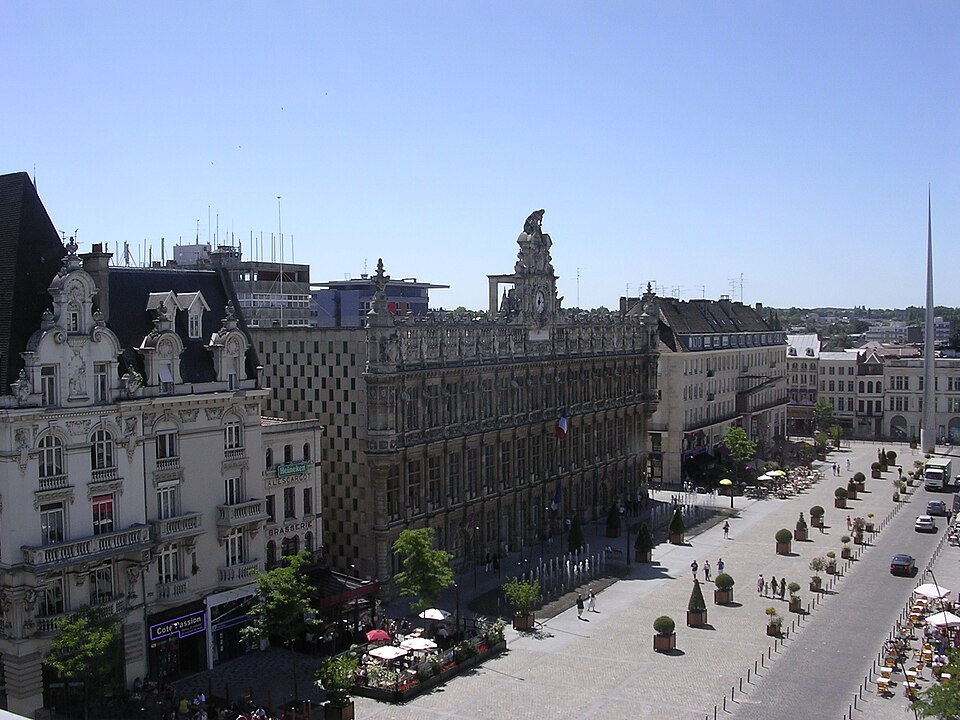
Concrete
- Basilica of Notre-Dame Du Saint-Cordon
- HôTel De Ville FaçAde
- La Maison Espagnole
- Dodenne Tower
- ThéâTre Le Phenix
- Beffroi Monument
- University of Valenciennes and Hainaut-CambréSis
Valencijn, Valincyinnes, Valinciennes, Valentianae
Thomas Aquinas, Guido De Bres, Louis of Nassau, Duke of Alba, Albert De Merode, Vauban, Louis Xiv, Marguerite Porete
- General Chapter of the Dominican Order
- Early Center of Calvinism
- First Act of Resistance Against Protestant Persecution
- Siege and Fall of the City
- Invasion By the Army of Louis of Nassau
- Recapture By the Duke of Alba
- Siege By the French Army
- Capture By Louis Xiv's Armies
- Ceded To France By the Treaty of Nijmegen
- Siege By the First Coalition
- German Occupation During World War I
- Battle of Valenciennes
- Extensive Destruction During World War Ii
About Valenciennes
Valenciennes is a commune situated in the Nord department of the Hauts-de-France region in northern France, nestled on the banks of the Scheldt (Escaut) river. The city's history is marked by its strategic importance, religious developments, and periods of significant conflict and rebuilding.
Early History and Religious Significance
Following its passage to the Duchy of Lower Lotharingia in 923, Valenciennes began its development. A pivotal moment in its religious history occurred in 1259 when it hosted a General Chapter of the Dominican Order. At this gathering, Thomas Aquinas, alongside other masters, played a key role in establishing a novel program of studies (ratio studiorum) for the Order. This innovation notably incorporated the study of philosophy, which was a significant new element for those not yet fully trained in theology, thus initiating the tradition of Dominican scholastic philosophy.
Periods of Conflict and Political Shift
By the mid-16th century, Valenciennes had become an early center of Calvinism and, in 1562, was the scene of the first resistance against the persecution of Protestants in the Spanish Netherlands. This period was followed by intense conflict, including an iconoclastic attack in 1566 and a subsequent siege and repression in 1567. The city was later occupied by the army of Louis of Nassau in 1572 but was recaptured by the Duke of Alba. Throughout the 17th century, Valenciennes endured further sieges, including one in 1656, and was eventually captured by the armies of Louis XIV in 1677. The Treaty of Nijmegen in 1678 formally placed Valenciennes and the surrounding southern part of Hainault under French control.
Modern History and Reconstruction
In 1793, the city faced a siege by the First Coalition against Revolutionary France. The 20th century brought further devastation, with the German army occupying Valenciennes during World War I, leading to the Battle of Valenciennes in 1918. The city suffered almost complete destruction during World War II and has since been largely rebuilt, notably in concrete.
Notable Surviving Structures and Economic Identity
Despite the extensive destruction, several historical monuments have survived, including the façade of the Hôtel de Ville (City Hall), the Basilica of Notre-Dame du Saint-Cordon, and La Maison Espagnole, a remnant of the Spanish occupation. The Dodenne Tower also stands as a testament to its medieval fortifications. Historically, Valenciennes was renowned for its lace production, and until the 1970s, steel and textiles were dominant industries. Today, the region's economy has diversified, with a focus on automobile production, and it serves as the headquarters for the European Railway Agency.
Source: Wikipedia ↗
Frequently Asked Questions
What is the historical significance of Valenciennes for the Dominican Order?
In 1259, Valenciennes hosted a General Chapter of the Dominican Order. During this chapter, Thomas Aquinas and other masters established a new program of studies, or ratio studiorum, which innovatively included the study of philosophy for those not yet fully trained in theology. This initiative fostered the tradition of Dominican scholastic philosophy.
When did Valenciennes become a center of Protestantism and face persecution?
Around 1560, Valenciennes emerged as an early center of Calvinism. In 1562, it was the site of the first act of resistance against the persecution of Protestants in the Spanish Netherlands, known as the 'Journée des Mals Brûlés' (Bad Burnings Day). The city later faced repression after a siege in 1567.
What role did Valenciennes play in military conflicts?
Valenciennes has been the site of numerous sieges throughout its history. Notable events include a French siege in 1656, its capture by Louis XIV's armies in 1677, and its occupation by German forces in World War I, followed by its liberation by British forces in 1918.
What surviving monuments can be seen in Valenciennes?
Despite extensive destruction, several monuments have survived. These include the façade of the Hôtel de Ville (City Hall), the Basilica of Notre-Dame du Saint-Cordon, and La Maison Espagnole, which dates from the Spanish occupation ending in 1678. The Dodenne Tower, a remnant of medieval fortifications, also remains.
What is Valenciennes historically known for economically?
Valenciennes has a historical reputation for its lace production. Until the 1970s, steel and textiles were its primary industries. More recently, the economy has shifted towards automobile production, with major assembly lines located nearby.
Related Monasteries
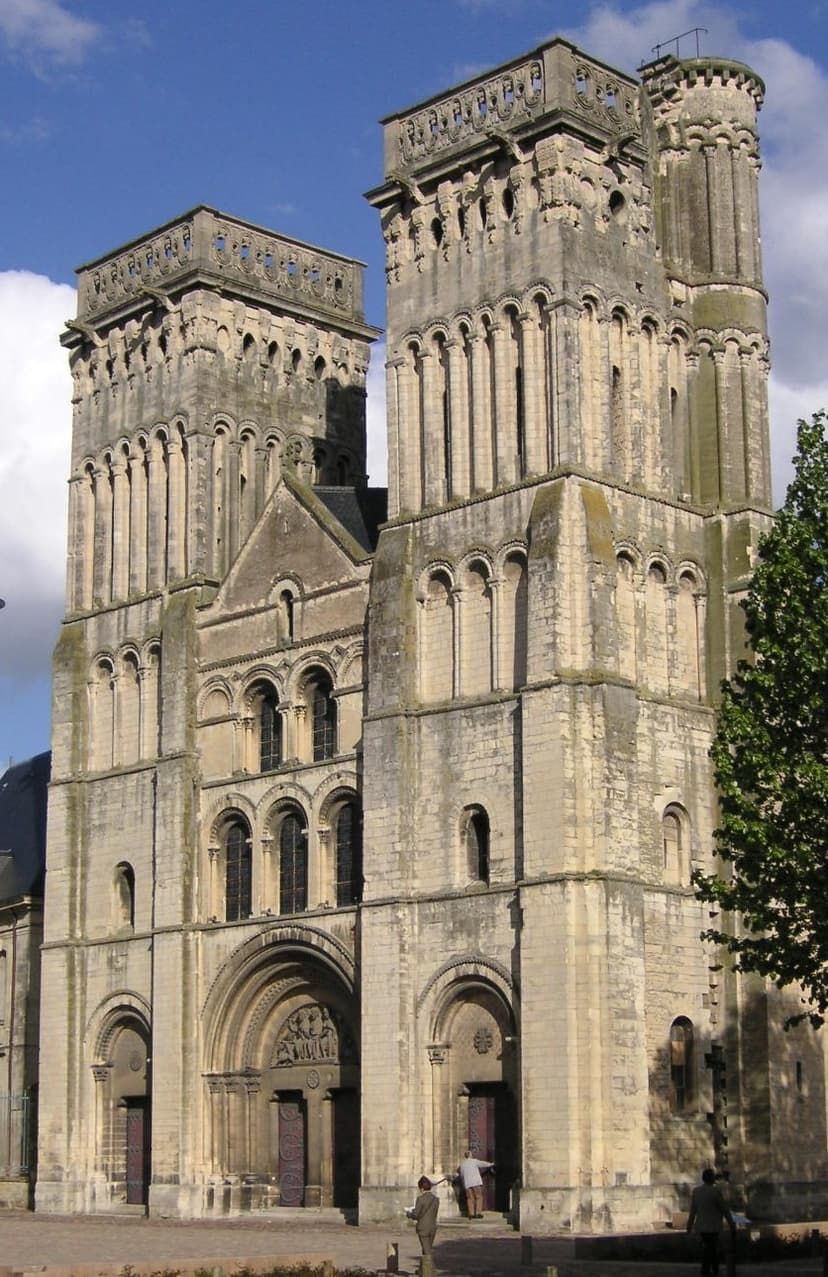
Caen
Caen is a historic city in Normandy, known for its significant role during the reign of William the Conqueror, who was buried there, and for the devastating Battle for Caen in 1944. It boasts impressive medieval architecture, including the Château de Caen and two significant abbeys, Sainte-Trinité and Saint-Étienne. Despite extensive destruction during World War II, Caen has been rebuilt and now serves as a modern urban center with a memorial dedicated to peace.

Meschede
Meschede is a town in North Rhine-Westphalia, Germany, and the capital of the Hochsauerland district. Founded in the 10th century around a convent, it later became a member of the Hanseatic League. The town experienced significant destruction during World War II due to its strategic railway station but was rebuilt afterwards. Today, Meschede is known for its educational institutions, industrial companies, and tourism, with Abbey Königsmünster as a notable sight.

Mönchengladbach
Mönchengladbach, originally known as Gladbach, is a city in North Rhine-Westphalia, Germany, founded around Gladbach Abbey in 974. The abbey and its associated villages developed into a town in the 14th century. The city's name has evolved over time to distinguish it from other places named Gladbach and to avoid confusion with Munich. Historically significant for its abbey and later its textile industry, Mönchengladbach is now a diverse economic center.