
Ganagobie Abbey
Ganagobie Abbey, originally founded as a Cluniac priory in the 9th or 10th century, is a Benedictine monastery located in Ganagobie, France. Despite suppression during the French Revolution and subsequent demolition of parts of its structures, the site was gifted to the Benedictines of Solesmes in 1891. Following extensive restoration and the discovery of medieval mosaics, the community eventually relocated to Ganagobie in 1992, making it an active Benedictine abbey.
Key Facts
- ›The monastery's origins trace back to the 9th or 10th century.
- ›It was initially established as a Cluniac priory.
- ›Important medieval mosaics were discovered on the site in 1898 during restoration.
- ›The monastery was suppressed in 1789 and sold in 1791.
- ›It is currently part of the Solesmes Congregation of the Benedictine Confederation.
- ›The community relocated to Ganagobie in 1992 after decades of restoration.

Medieval Mosaics
Abbaye Notre-Dame De Ganagobie
Dom Prosper GuéRanger
- Suppression During the Ancien RéGime
- Sale and Demolition of Parts of Buildings During the French Revolution
- Discovery of Medieval Mosaics
- Community Relocation From Marseilles To Hautecombe Abbey
- Community Relocation To Ganagobie
About Ganagobie Abbey
Ganagobie Abbey, officially Abbaye Notre-Dame de Ganagobie, is a Benedictine monastery located in the commune of Ganagobie in the Alpes-de-Haute-Provence department of France. It is a member of the Solesmes Congregation, an order known for its dedication to Gregorian chant, and forms part of the broader Benedictine Confederation.
History
The history of monastic life at Ganagobie begins with its earliest foundation, which is believed to date back to the 9th or 10th century on this remote, mountainous site. By 939, its existence was confirmed in a papal bull from Pope Stephen VIII that listed Ganagobie among the possessions of Cluny Abbey, indicating its early affiliation as a Cluniac priory. The monastery faced significant disruption at the end of the 18th century; it was suppressed in 1789 under the Ancien Régime and subsequently sold off in 1791 during the French Revolution. This period led to the demolition of substantial portions of its original structures.
The revival of monastic presence at Ganagobie began in 1891 when the Comte de Malijay, who owned the priory site, gifted it to the Priory of St. Madeleine in Marseilles. This priory had been founded in 1865 by the Benedictines of Solesmes, led by Dom Prosper Guéranger. A significant discovery occurred in 1898 during restoration efforts on the Ganagobie property, when important medieval mosaics were unearthed, adding a rich artistic dimension to the site's history.
However, the community at Marseilles was forced to leave France in 1901 due to the Association Laws. They sought refuge in Italy and did not return to France until 1922, at which point they took up residence at Hautecombe Abbey. From this time until 1992, Ganagobie functioned as a priory of Hautecombe Abbey, typically maintained by only one or two monks.
Modern Era
Following decades of dedicated restoration work, the entire community of Hautecombe Abbey made the decision to relocate to Ganagobie. This move was completed in 1992, re-establishing Ganagobie Abbey as a vibrant center for Benedictine life and Gregorian chant.
Source: Wikipedia ↗
Frequently Asked Questions
When was Ganagobie Abbey first founded?
The first monastic foundation at Ganagobie appears to date from the 9th or 10th century. Documentary records confirm its existence as a monastery by 939.
What religious order is Ganagobie Abbey associated with?
Ganagobie Abbey is a Benedictine monastery. It is part of the Solesmes Congregation of the Benedictine Confederation.
What significant discoveries were made at Ganagobie Abbey?
During repair and restoration work in 1898, important medieval mosaics were discovered on the priory site. These mosaics are a notable feature of the restored monastery.
What happened to Ganagobie Abbey during the French Revolution?
The monastery was suppressed in 1789 under the Ancien Régime and sold in 1791 during the French Revolution. Following its sale, large parts of the monastic buildings were demolished.
When did the current monastic community move to Ganagobie?
The entire community of Hautecombe Abbey decided to move to Ganagobie in 1987, completing the relocation in 1992 after decades of restoration work.
Related Monasteries
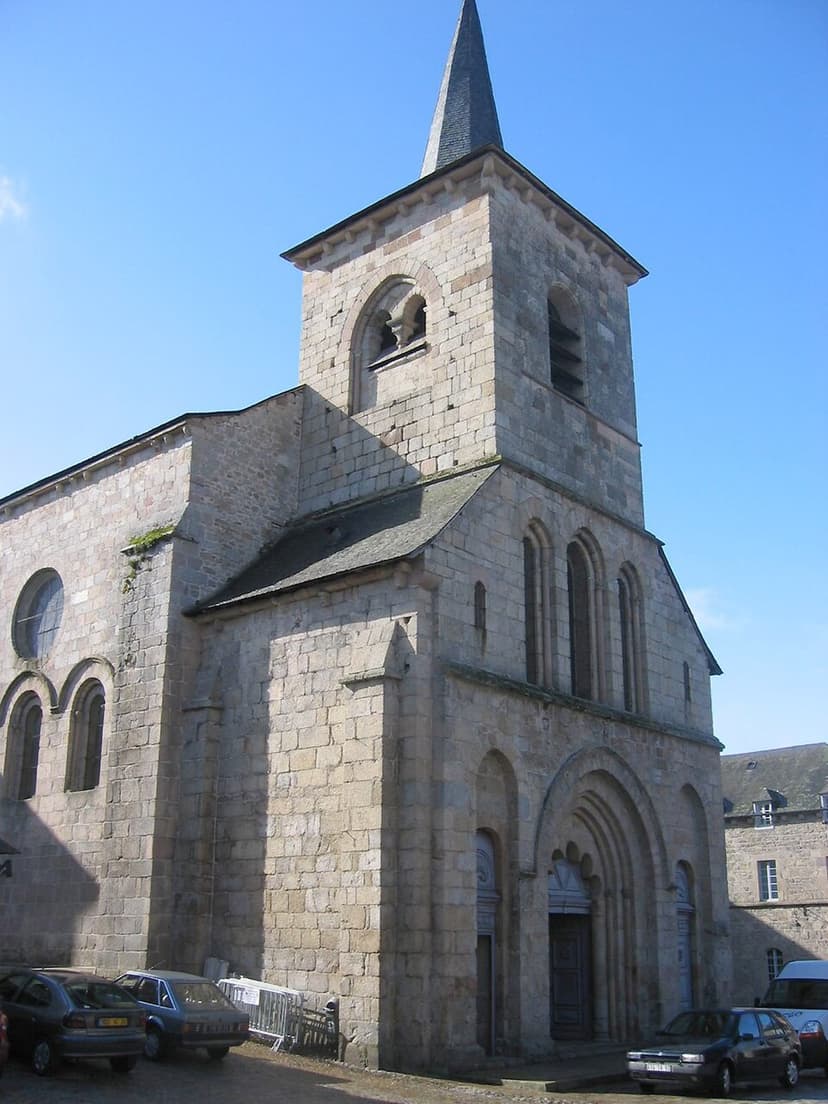
Meymac Abbey
Meymac Abbey, officially known as Abbaye Saint-André de Meymac, is a 13th-century Benedictine abbey situated in Meymac, France. Its origins trace back to a 10th-century monastery founded by Vicomte de Comborn, with significant construction commencing in the 12th century and concluding in the 13th century. The abbey church, also referred to as Saint-André and Saint-Léger, was designated a historical monument in 1840.

Brogne Abbey
Brogne Abbey, also known as the Abbey of Saint-Gerard of Brogne, was a Benedictine monastery founded in the early 10th century by Gerard of Brogne. Situated in Wallonia, Belgium, it became a significant religious site, particularly known for housing important relics, including a fragment of the True Cross. The abbey was suppressed in 1796 and its former buildings now serve various community and cultural purposes.

Gembloux Abbey
Gembloux Abbey was a significant Benedictine monastery founded around 945 by Saint Guibert near Gembloux, Belgium. It flourished as a center of learning and scholarship, particularly during the time of the chronicler Sigebert of Gembloux. Despite periods of decline and destruction by fire and conflict, its buildings have been preserved and now house the Gembloux Agro-Bio Tech campus of the University of Liège since 1860.