
Frigolet Abbey
Frigolet Abbey is a significant Premonstratensian monastery complex located in Southern France, originally founded around 960. Over its history, it has been occupied by Benedictine monks, canons regular, and various Augustinian orders before being restored and canonically erected as an abbey by the Premonstratensians in the 19th century. The abbey has faced periods of suppression and expulsion, notably during the French Revolution and subsequent anti-clerical laws, but has persevered and continues to operate today.
Key Facts
- ›Founded around 960 by Conrad I of Burgundy.
- ›Initially occupied by Benedictine monks from Montmajour Abbey.
- ›The chapel of our Lady of Good Remedy dates back to the 12th century.
- ›Restored and re-established as a Premonstratensian abbey in the 19th century.
- ›Suffered suppression and expulsion, particularly during the French Revolution and anti-clerical laws.
- ›Received pontifical approbations from Pope Pius IX and Pope John Paul II.

Baroque
- Chapel of Our Lady of Good Remedy
- Chapter House
- Reconstructed Chapel With Baroque Ornamentation
- Chapel Dedicated To Saint Joseph
- Minor Basilica
Abbey Saint-Michel De Frigolet, Abadiá De Frigolet
Conrad I of Burgundy, Edmund Boulbon, Paul-Armand De Cardon De Garsignies, Georges-Claude-Louis-Pie Chalandon, Paulinus Boniface, Denis Bonnefoy, Godfrey Madelaine, P. Norbert Calmels
- Founded In 960.
- Suppressed and Abandoned In 1480.
- Restored By the Order of Saint Jerome In 1647.
- Replaced By Discalced Augustinians In 1661.
- Suppressed and Sold During the French Revolution.
- Restored and Canonically Erected As A Premonstratensian Abbey In the 19th Century.
- Seized and Monks Expelled Under French Anti-Clerical Laws In 1880 and 1903.
- Reoccupied By Premonstratensians In 1923.
About Frigolet Abbey
Frigolet Abbey, officially known as Abbaye Saint-Michel de Frigolet, is a significant Premonstratensian monastery complex situated in the Montagnette region of Southern France, near Tarascon. Its founding dates back to approximately 960, when Conrad I of Burgundy established it on a hill between Tarascon and Avignon. Initially, the abbey housed Benedictine monks from Montmajour Abbey.
Historical Trajectory
Over the centuries, Frigolet Abbey has seen a succession of religious communities. By the 12th century, it was home to a community of canons regular, with the chapel of Our Lady of Good Remedy originating from this period. This canonical Augustinian community lasted until 1480, when the monastery was abandoned. The site later saw restoration efforts by the Order of Saint Jerome in 1647, followed by the Discalced Augustinians in 1661. The abbey's history is marked by periods of suppression and upheaval, notably during the French Revolution when it was confiscated and sold by the First Republic.
Premonstratensian Revival
In the 19th century, the abbey was acquired by a priest, Edmund Boulbon, who embarked on its restoration with the aim of reviving the Order of Norbert of Xanten. With ecclesiastical consent, Boulbon re-established community life at Frigolet, erecting a new church consecrated in 1866. The monastery was officially recognized as a priory in 1868 and elevated to the status of an abbey in 1869, with Boulbon serving as its first abbot. Despite facing renewed suppression and expulsions under French anti-clerical laws in the late 19th and early 20th centuries, the Premonstratensian community persevered. The abbey was reoccupied in 1923 and continues to operate as an active monastic community today.
Notable Features and Approbations
The abbey is dedicated to Saint Michael and features notable structures such as the 12th-century chapel of Our Lady of Good Remedy, which was later embellished with Baroque ornamentation. A chapel dedicated to Saint Joseph also houses a venerated image. Frigolet Abbey has received significant pontifical recognition, including approbations from Pope Pius IX which raised its status to a priory and then an abbey, and a canonical coronation for the image of Our Lady of Good Remedy. Pope John Paul II further honored the site by raising one of its structures to the status of a minor basilica in 1984.
Source: Wikipedia ↗
Frequently Asked Questions
When was Frigolet Abbey founded?
Frigolet Abbey was founded around 960 by Conrad I of Burgundy. It was initially occupied by Benedictine monks.
What religious orders have occupied Frigolet Abbey?
The abbey has a complex history of occupancy. It was initially Benedictine, then home to canons regular, followed by the Order of Saint Jerome, Discalced Augustinians, and finally re-established by the Premonstratensians.
Has Frigolet Abbey faced any periods of closure or suppression?
Yes, Frigolet Abbey has been suppressed and abandoned on several occasions. This includes its abandonment in 1480 after the canons petitioned the Holy See, and suppression during the French Revolution. The monks were also expelled under French anti-clerical laws in 1880 and again in 1903.
What is the significance of the chapel of Our Lady of Good Remedy?
The chapel of Our Lady of Good Remedy dates back to the 12th century and remained a popular pilgrimage site even when the monastery was abandoned. Its original Marian image was reconstructed with Baroque ornamentation and received a canonical coronation.
When did Frigolet Abbey become a Premonstratensian monastery?
The Premonstratensian Order began its association with Frigolet in the 19th century through the efforts of Edmund Boulbon. The monastery was canonically erected as a priory in 1868 and as an abbey in 1869, with Boulbon as its first abbot.
Is Frigolet Abbey still active today?
Yes, Frigolet Abbey was reoccupied by the Premonstratensians in 1923 and remains in operation. It continues to house an active community.
Related Monasteries
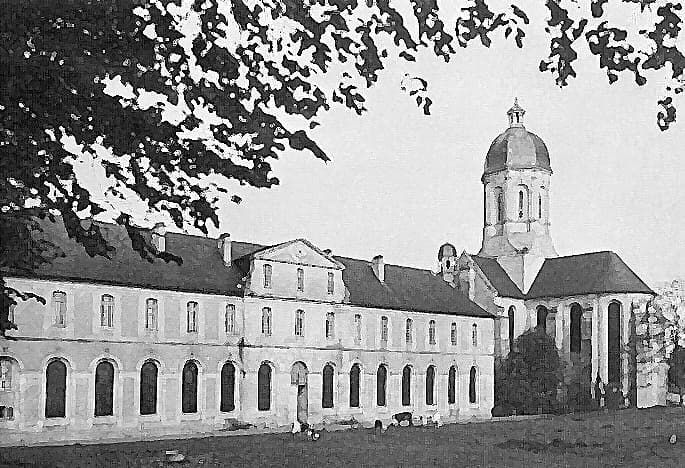
Mondaye Abbey
Mondaye Abbey is a French Premonstratensian abbey founded in 1200, located in Juaye-Mondaye, Calvados. It is the only active Premonstratensian house in Normandy, maintaining two dependent priories. Throughout its history, Mondaye Abbey has experienced periods of flourishing and destruction, including damage during the Hundred Years' War and the French Wars of Religion, as well as significant rebuilding in the 18th century.

Averbode Abbey
Averbode Abbey is a Premonstratensian monastery in Belgium with a history dating back to its founding around 1134. Throughout its existence, it has experienced periods of growth, suppression, and reestablishment, notably serving as a leading children's publisher in Belgium during the 20th century. The abbey church is a distinct blend of Baroque and Gothic architectural styles, constructed with local sandstone.

Geras Abbey
Geras Abbey is a Premonstratensian monastery located in Geras, Lower Austria. Founded in 1153 as a daughter house of Seelau Abbey, it has continuously operated to the present day, having survived the monastic reforms and closures of Emperor Joseph II in 1783. The abbey is known for its Romanesque basilica, which was significantly reworked in the Baroque style and later designated a minor basilica.