
Llanarthney
Llanarthney is a village and community located in Carmarthenshire, south-west Wales, situated between the towns of Carmarthen and Llandeilo. The community is notable for being the location of the National Botanic Garden of Wales, which has been established there since 2000. Its population has seen a slight increase between the 2001 and 2011 censuses.
Key Facts

National Botanic Garden of Wales, Llanarthney Village Hall
Llanarthne
About Llanarthney
Llanarthney is a village and community found in Carmarthenshire, a region in south-west Wales. Its geographical position places it on the B4300 road, situated between the larger towns of Carmarthen, located approximately 12 kilometers (7.5 miles) to the east, and Llandeilo, about 10 kilometers (6 miles) to the west. The community is known for its significant cultural and natural attraction, the National Botanic Garden of Wales, which has been established within its bounds since the year 2000.
Population and Demographics
The community of Llanarthney has experienced some demographic shifts over the past two decades. According to census data from 2001, the population stood at 738 individuals. A subsequent census in 2011 recorded a slight increase, with the population growing to 765. A notable characteristic of the community, as recorded in the 2001 census, is the prevalence of the Welsh language, with 61 percent of its residents identifying as Welsh-speaking.
Local Amenities and Surroundings
Beyond its role as the home of the National Botanic Garden of Wales, Llanarthney also features a Village Hall, serving as a local community hub. The village is bordered by several other Carmarthenshire communities, including Llanegwad, Llangathen, Llanfihangel Aberbythych, Gorslas, Llanddarog, Llangunnor, and Abergwili, indicating its position within a network of rural Welsh settlements.
Source: Wikipedia ↗
Frequently Asked Questions
Where is Llanarthney located?
Llanarthney is a village and community in Carmarthenshire, located in south-west Wales. It lies to the east of Carmarthen and west of Llandeilo.
What is Llanarthney known for?
Llanarthney is particularly known as the location of the National Botanic Garden of Wales. This significant garden has been based in the community since the year 2000.
What was the population of Llanarthney?
According to the 2001 census, the community had a population of 738. By the 2011 census, this number had increased slightly to 765 residents.
Is Llanarthney a predominantly Welsh-speaking area?
In the 2001 census, it was recorded that 61 percent of the population of Llanarthney were Welsh-speaking, indicating a significant Welsh-speaking presence.
Related Monasteries

Bromley-by-Bow Priory
Bromley-by-Bow is a district in East London with a history stretching back to at least the year 1000, when it was a manor belonging to St Paul's Cathedral. It was historically known as Bromley and later Bromley-by-Bow to distinguish it from other places named Bromley. The area was once home to St Leonard's Priory, a Benedictine nunnery, and later saw the construction of royal palaces and significant industrial development. Despite losing many historic buildings, it remains a vibrant community with ongoing redevelopment and a notable connection to Mahatma Gandhi's 1931 visit.
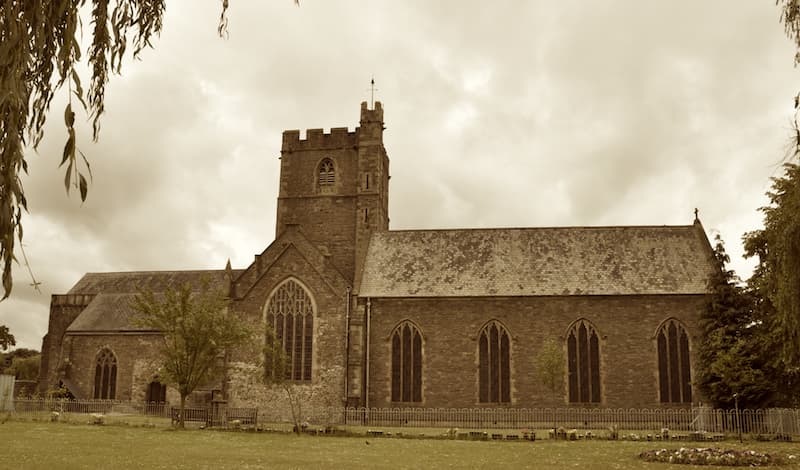
Abergavenny Priory
The Priory Church of St Mary, Abergavenny, is a significant parish church in Monmouthshire, Wales, often referred to as "the Westminster Abbey of Wales" due to its size and collection of high-status tombs. Originally established as a Benedictine priory in the late 11th century, it became a parish church after the Dissolution of the Monasteries. The church is renowned for its numerous medieval effigies and notable architectural features, including 15th-century choir stalls and a unique 15th-century wooden carving known as "The Jesse."

Bangor Monastery
Bangor Cathedral, dedicated to its founder Saint Deiniol, stands on a site of Christian worship since the sixth century. Originally established as St Deiniol's Monastery, it has a long and tumultuous history marked by destruction and rebuilding, evolving from its Norman origins to its current Gothic Revival appearance. The cathedral is a significant religious and historical landmark in Gwynedd, Wales, known for its architectural evolution and notable features.