
Llandeilo
Christianity·Wales·Town and community (historic ecclesiastical centre)·6th century
Llandeilo is a historic town in Carmarthenshire, Wales, named after the 6th-century Celtic saint, Saint Teilo. Founded as an early Christian settlement and later a significant ecclesiastical center, it evolved into an important medieval market town. Today, Llandeilo is recognized for its sophisticated shopping, local arts and crafts, and its adjacency to the Brecon Beacons National Park.
Key Facts
- ›Named after Saint Teilo, a prominent 6th-century Celtic saint.
- ›Established as an early Christian settlement and a bishop-abbot's seat.
- ›Served as an important ecclesiastical centre and 'mother church' for the surrounding district.
- ›Suffered damage during Owain Glyndŵr's march in 1403.
- ›The town is situated where the River Towy is crossed by a 19th-century stone bridge and a notable lattice truss railway bridge.
- ›Recognized as one of the top places to live in Wales.

Roman, Medieval, 19th-Century Engineering
- Foundations of Roman Fortresses On Dinefwr Estate
- Parish Church of Llandeilo Fawr Dedicated To Saint Teilo
- Dinefwr Castle
- Carreg Cennen Castle
- Talley Abbey
- Dolaucothi Gold Mines
- 19th-Century Stone Bridge Over the River Towy
- Early Lattice Truss Railway Bridge Over the River Towy
- Hengwrt - Former Shire Hall
- Penlan Park
- Parc Le Conquet
Llandilo
Saint Teilo, Saint David, Owain GlyndŵR, Edward I of England, Sir Henry Vaughan, John Bartholomew, Gruffydd Ap Rhys, John Vaughan, 1st Earl of Carbery, William Vaughan, George Rice, John Vaughan, David Jones, David Pugh, Thomas Thomas, Helen Prothero-Lewis, Rachel Barrett, Carey Morris, Myfanwy Pryce, Group Captain Hubert Jones, Ann Pettitt, Roger Hallam, Iwan Lewis, Ffion Morgan, Owen James
- Roman Activity In the Area
- Establishment of A Clas By Saint Teilo
- Attainment of Bishop-Abbot Status
- Norman Conquest of England
- Claimed By Bishops of Llandaff and St David's
- Patronage By Bishopric of St David's
- Authorization of St. Teilo's Fair By Edward I
- Town Burned During Owain GlyndŵR's March
- Siege and Partial Demolition of Carreg Cennen Castle
- Reformation
- Royalist Skirmish In the Town
- Completion of Llandeilo Bridge
- Opening of Railway Bridge
- Great Storm of 1987, Leading To Train Derailment and Deaths On Glanrhyd Bridge
- Hosting of National Eisteddfod of Wales
About Llandeilo
Llandeilo is a historic town and community located in Carmarthenshire, Wales. Its origins trace back to the 6th century with the establishment of a monastic settlement by Saint Teilo, after whom the town is named. The Welsh word 'llan' signifying a church or monastery underscores its early religious importance. The settlement grew to become a significant ecclesiastical center, even attaining the status of a bishop-abbot's seat by the early 9th century, and was known for its illuminated manuscripts.
History and Development
The area around Llandeilo also saw Roman military presence, with evidence of two castra foundations near the Dinefwr estate. Following the Roman withdrawal, the early Christian settlement associated with Saint Teilo prospered, developing into a 'mother church' for the region. In the medieval period, Llandeilo became an important market center under the patronage of the Bishopric of St David's. The town experienced conflict, notably being put to the torch during Owain Glyndŵr's campaign in 1403. Engineering advancements are visible in its 19th-century stone bridge and a rare early lattice truss railway bridge over the River Towy, though the latter was the site of a tragic accident during the Great Storm of 1987.
Modern Significance
Today, Llandeilo is recognized not only for its historical depth but also as a vibrant contemporary town. It has been lauded as one of the top places to live in Wales, praised as a sophisticated shopping destination and a showcase for local arts and crafts. The town is situated near the western edge of the Brecon Beacons National Park, offering scenic beauty and recreational opportunities. Llandeilo also hosts various cultural events, including a classical music festival and a festival of senses, contributing to its lively community spirit.
Source: Wikipedia ↗
Frequently Asked Questions
What is the origin of the name Llandeilo?
Llandeilo is named after Saint Teilo, a significant Celtic saint of the 6th century. The Welsh word 'llan' signifies a monastery or church, so the name essentially refers to Saint Teilo's church or monastery.
What was the historical significance of Llandeilo as an ecclesiastical center?
By the early 9th century, Llandeilo had attained considerable ecclesiastical status as the seat of a Bishop-Abbot. The Church of St Teilo became a 'mother church' with an extensive estate and possessed a renowned manuscript, the Gospel Book of Saint Teilo.
What historical events impacted Llandeilo?
The town was burned during Owain Glyndŵr's march through the Tywi Valley in July 1403. Later, in April 1648, a royalist skirmish took place in the town, resulting in a defeat for elements of the New Model Army.
What is notable about the bridges in Llandeilo?
Llandeilo features engineering interest in its bridges over the River Towy. The single-arched Llandeilo Bridge, completed in 1848, is Grade II* listed. The railway bridge, opened in 1852, is a rare surviving example of an early lattice truss bridge.
When was Llandeilo's name spelling officially changed?
The official spelling of the name of the urban district was 'Llandilo' until 1957. It was then changed to 'Llandeilo' to better reflect modern Welsh orthography.
What are some of Llandeilo's cultural contributions?
Llandeilo has hosted the National Eisteddfod of Wales and is the birthplace of the Tomos Watkin brewery. It also produced its own 'Llandeilo Style' banknotes and has an annual classical music festival.
Related Monasteries
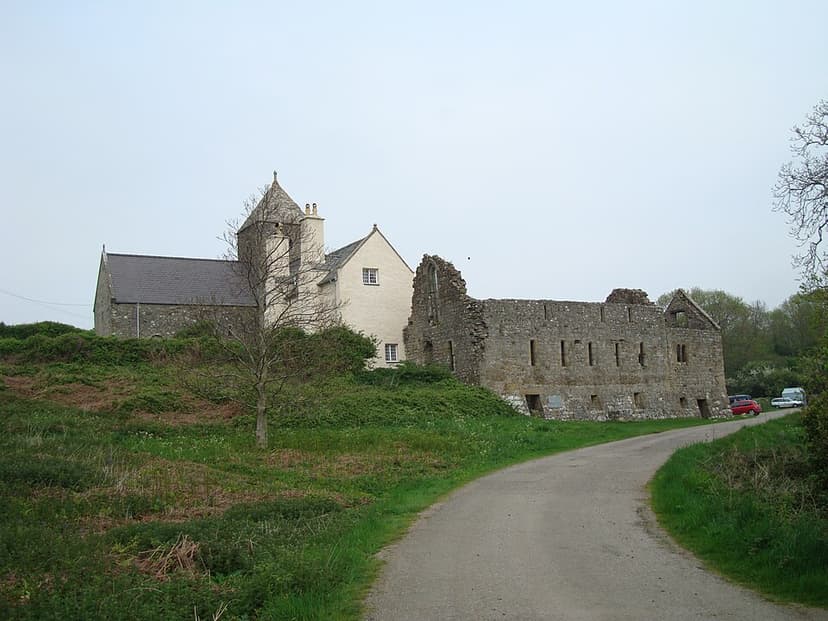
Penmon Priory
Penmon Priory is a historic monastic site located on the eastern tip of the Isle of Anglesey in Wales. Traditionally founded in the early 6th century by Saint Seiriol, it evolved from a clas into an Augustinian priory before its dissolution in 1538. The site is notable for its surviving medieval buildings, including the Priory Church of St Seiriol, two ancient crosses, and a well, with parts of the complex potentially dating back to the earliest Christian structures in Wales.

Bangor Monastery
Bangor Cathedral, dedicated to its founder Saint Deiniol, stands on a site of Christian worship since the sixth century. Originally established as St Deiniol's Monastery, it has a long and tumultuous history marked by destruction and rebuilding, evolving from its Norman origins to its current Gothic Revival appearance. The cathedral is a significant religious and historical landmark in Gwynedd, Wales, known for its architectural evolution and notable features.
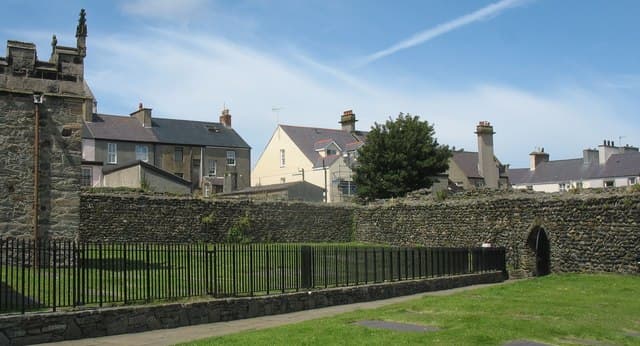
Caergybi Monastery
Caergybi Monastery, also known as the Church of St Cybi, is a historical religious site in Holyhead, Wales, with origins tracing back to a Roman fortlet. It was refounded as a monastery in the 6th century by Saint Cybi, and the church on the site today preserves elements of its long history, including its Roman foundations and a chapel reputedly over the saint's grave.