
Penmon Priory
Christianity·Wales·active church and historic site·6th century
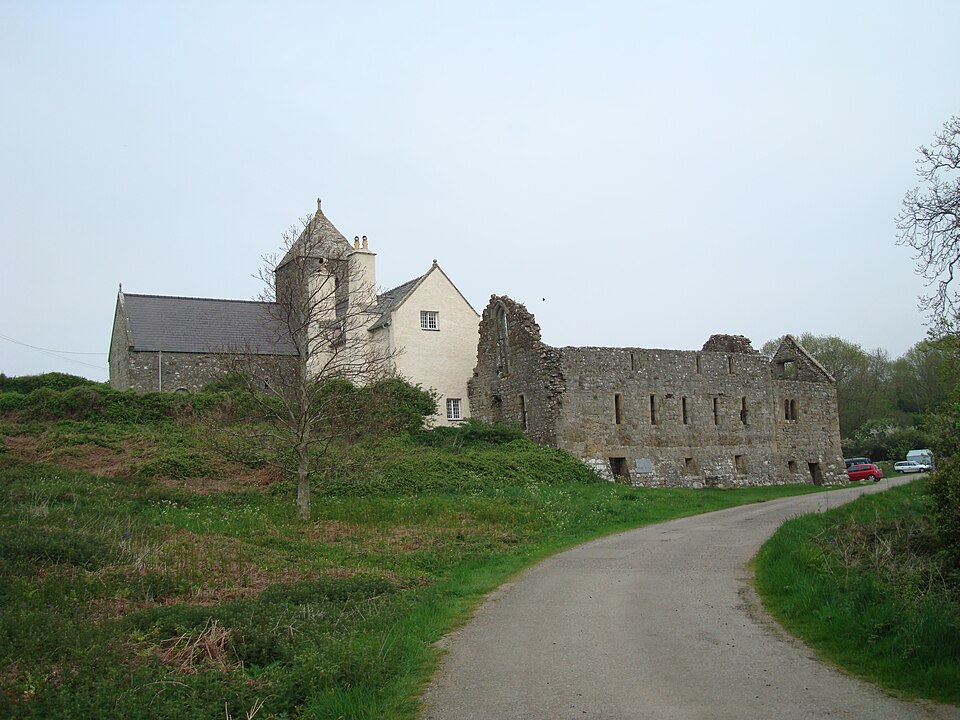
Penmon Priory is a historic monastic site located on the eastern tip of the Isle of Anglesey in Wales. Traditionally founded in the early 6th century by Saint Seiriol, it evolved from a clas into an Augustinian priory before its dissolution in 1538. The site is notable for its surviving medieval buildings, including the Priory Church of St Seiriol, two ancient crosses, and a well, with parts of the complex potentially dating back to the earliest Christian structures in Wales.
Key Facts
- ›Founded as a monastery (clas) in the early 6th century by Saint Seiriol.
- ›Became an Augustinian priory in the 13th century.
- ›Dissolved in 1538 and its buildings passed to the Bulkeleys of Beaumaris.
- ›Features the Priory Church of St Seiriol, with parts potentially dating to the 6th century.
- ›Includes two medieval crosses, one of which was used as a lintel for refectory windows.
- ›Associated with St Seiriol's Well, believed by some to have healing powers and potentially part of the oldest Christian building in Wales.
Romanesque
Priory Church of St Seiriol, Medieval Crosses, St Seiriol's Well, Dovecot, Refectory, Penmon Crosses, Penmon Marble Quarried Locally
St Seiriol's Monastery
Saint Seiriol, Saint Einion, Gruffudd Ap Cynan, Owain Gwynedd, Llywelyn Ap Iorwerth
- Viking Destruction In 971
- Rebuilding of the Abbey Church In the 12th Century
- Became An Augustinian Priory In the 13th Century
- Dissolution of the Monasteries In 1538
About Penmon Priory
Penmon Priory is a historically significant monastic site situated on the easternmost point of the Isle of Anglesey in Wales. Its origins are traditionally traced to the early 6th century with the establishment of a monastery, or 'clas', by Saint Seiriol. This early Christian community grew, and by the 10th century, it had a wooden church building. The site later underwent significant development, particularly in the 12th century when the abbey church was rebuilt in stone. In the 13th century, Penmon transitioned to a more regular monastic rule, becoming an Augustinian priory with the construction of conventional buildings.
The priory prospered for centuries, receiving land grants from successive rulers of Gwynedd. However, like many monastic institutions, it faced decline and was eventually dissolved in 1538 during the Dissolution of the Monasteries. Following its dissolution, the buildings and lands were acquired by the prominent local Bulkeley family of Beaumaris. Despite the changes in ownership and function, the priory complex has retained significant historical structures.
Key Structures and Features
Several notable buildings and features remain from the monastic period and its subsequent history. The Priory Church of St Seiriol forms the centerpiece, with parts of its structure dating back to the 12th century. The priory complex includes a refectory, and the southern range containing this dining hall, with a dormitory above, still stands. Two medieval crosses, originally erected in front of the monastery in the 10th century, are now housed within the church. St Seiriol's Well, a structure associated with the church, is believed by some to have healing properties, and its surrounding stone walls may represent one of the oldest Christian buildings in Wales.
A dovecot, likely built around 1600 by Sir Richard Bulkeley, also stands near the church, serving the needs of the estate after the priory's dissolution. The priory and its refectory are recognized as Grade I listed buildings, and the entire priory complex is a Scheduled monument, underscoring its importance as a heritage site. Penmon's historical significance is further amplified by its geological context, with local 'Penmon marble' quarried for substantial structures like Birmingham Town Hall and the Menai Strait bridges.
Source: Wikipedia ↗
Frequently Asked Questions
When was Penmon Priory founded?
According to tradition, the monastery at Penmon was established in the early 6th century by Saint Seiriol. The church buildings have undergone various stages of construction and rebuilding since that time.
What is the religious tradition of Penmon Priory?
Penmon began as a clas, a type of early Celtic Christian community. In the 13th century, it became an Augustinian priory, following the Rule of Saint Augustine.
What are the most significant surviving structures at Penmon Priory?
The Priory Church of St Seiriol is the main surviving structure, with its oldest parts dating to the 12th century. Also notable are the two medieval crosses and St Seiriol's Well, with walls near the well potentially being the oldest Christian building in Wales.
What happened to Penmon Priory after its dissolution?
Penmon Priory was dissolved in 1538 and its buildings were transferred to the ownership of the Bulkeleys of Beaumaris, a prominent local family. These buildings are still in use today.
Are there any notable historical figures associated with Penmon Priory?
Saint Seiriol is the traditional founder of the monastery. The priory also saw rebuilding efforts under figures like Gruffudd ap Cynan and Owain Gwynedd in the 12th century, and Llywelyn ap Iorwerth in the 13th century.
Related Monasteries

Llandeilo
Llandeilo is a historic town in Carmarthenshire, Wales, named after the 6th-century Celtic saint, Saint Teilo. Founded as an early Christian settlement and later a significant ecclesiastical center, it evolved into an important medieval market town. Today, Llandeilo is recognized for its sophisticated shopping, local arts and crafts, and its adjacency to the Brecon Beacons National Park.

Bangor Monastery
Bangor Cathedral, dedicated to its founder Saint Deiniol, stands on a site of Christian worship since the sixth century. Originally established as St Deiniol's Monastery, it has a long and tumultuous history marked by destruction and rebuilding, evolving from its Norman origins to its current Gothic Revival appearance. The cathedral is a significant religious and historical landmark in Gwynedd, Wales, known for its architectural evolution and notable features.
Caergybi Monastery
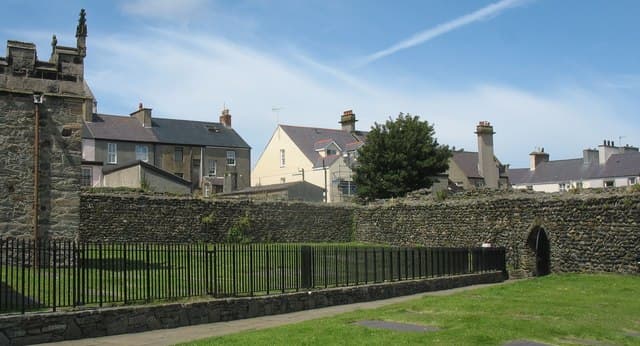
Caergybi Monastery, also known as the Church of St Cybi, is a historical religious site in Holyhead, Wales, with origins tracing back to a Roman fortlet. It was refounded as a monastery in the 6th century by Saint Cybi, and the church on the site today preserves elements of its long history, including its Roman foundations and a chapel reputedly over the saint's grave.