
Abergavenny Priory
The Priory Church of St Mary, Abergavenny, is a significant parish church in Monmouthshire, Wales, often referred to as "the Westminster Abbey of Wales" due to its size and collection of high-status tombs. Originally established as a Benedictine priory in the late 11th century, it became a parish church after the Dissolution of the Monasteries. The church is renowned for its numerous medieval effigies and notable architectural features, including 15th-century choir stalls and a unique 15th-century wooden carving known as "The Jesse."
Key Facts
- ›Originally the church of a Benedictine priory founded by Hamelin de Balun around 1070.
- ›Became a parish church after the Dissolution of the Monasteries, being spared due to connections with the Tudor dynasty.
- ›Features a notable collection of memorial effigies dating from the 13th to 17th centuries.
- ›Houses "the Jesse," a unique and elaborate 15th-century wooden carving of the lineage of Jesus Christ.
- ›The church has a large cruciform layout with a central tower containing ten bells.
- ›A new monastic community, the Holywell Community, was established on the site in 2014.
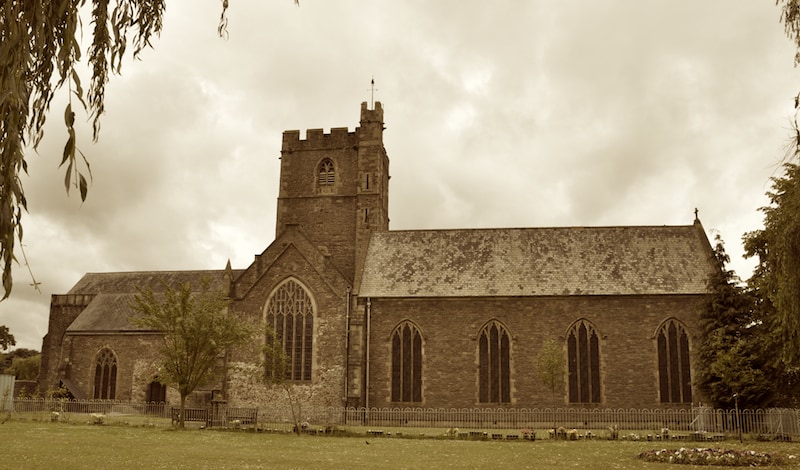
Decorated, Perpendicular Gothic, Norman
- Collection of Medieval Effigies
- the Jesse
- 15th-Century Choir Stalls With Carved Misericords
- Lewis Chapel
- Herbert Chapel
- Tithe Barn Heritage Centre
- Jesse Window
Priory Church of St Mary, Abergavenny
Hamelin De Balun, Henry De Abergavenny, William De Braose, John Hastings, 2nd Baron Hastings, Fulk Gaston, Dr David Lewis, Eva De Braose, Sir Richard Herbert, William Ap Thomas, Gwladys Ferch Dafydd Gam, Laurence Hastings, 1st Earl of Pembroke, Richard Herbert of Ewyas, Henry Vii, John Abbot, Helen Whittaker, Most Revd John Sentamu, Charles, Prince of Wales, Jeremy Winston, Fr Mark Soady
- Establishment of Benedictine Priory
- Investigation Into the Priory By Pope
- Dissolution of the Monasteries
- Victorian Refurbishment
- Re-Casting and Augmentation of Bells
- Restoration of the Church, Including Organ Work
- Installation of New Stained-Glass Jesse Window
- Restoration of the Tithe Barn
- Establishment of the Holywell Community
About Abergavenny Priory
The Priory Church of St Mary, Abergavenny, is a prominent parish church located in the center of Abergavenny, Monmouthshire, Wales. Its status and historical significance have earned it the moniker "the Westminster Abbey of Wales," a testament to its considerable size and the wealth of high-status tomb monuments and medieval effigies it preserves.
History and Foundation
The site of Abergavenny Priory has a history predating the Norman era, with evidence of previous structures from the Iron Age, Roman, or Post-Roman periods. The current church structure originated as the church of a Benedictine priory officially established around 1070 by Hamelin de Balun, the first Norman holder of the Lordship of Abergavenny. Initially, it functioned as a cell of the Abbey of Saint Vincent at Le Mans in France. Notable figures associated with the priory include Henry de Abergavenny, who served as prior before becoming a prior at Llandaff and assisted at the coronation of King John I in 1199. The priory faced scrutiny in 1320 when John Hastings, 2nd Baron Hastings, initiated an investigation into accusations of the monks failing to adhere to the Benedictine Rule. By the time of the Dissolution of the Monasteries in the 16th century, the priory had a small community of only a prior and four monks. Its unique preservation is attributed to the close ties between the Lords of Abergavenny and the Tudor dynasty, which led to its sparing and subsequent conversion into the parish church.
Architectural Features and Notable Contents
The church exhibits a cruciform layout and is notably large, with a chancel and nave measuring 172 feet (52 meters) in length. The central tower houses ten bells. While Victorian refurbishment in the 19th century left little of the original Norman architecture, the church primarily showcases Decorated and Perpendicular Period styles. Surviving from the 15th century are the oaken choir stalls, complete with carved misericords and lattice work backs; the stall of Prior Wynchestre, slightly raised and surmounted by a mitre, is particularly preserved.
Abergavenny Priory is distinguished by its extensive collection of memorial effigies crafted from wood, alabaster, and marble, dating from the 13th to the 17th centuries. Among these is the effigy of John de Hastings, Lord of Abergavenny (died 1324), depicted as a young knight. The Lewis Chapel, named after Dr. David Lewis, contains two female effigies: one believed to be Eva de Braose, distinguished by a shield bearing the Cantilupe arms, and another, possibly representing a member of the Hastings family, uniquely accompanied by a chain that once held a small squirrel.
Artistic and Religious Significance
A particularly significant artistic treasure within the church is "The Jesse," an elaborate and large 15th-century wooden carving that was once part of a Jesse Tree sculpture illustrating the lineage of Jesus Christ. It is recognized as a unique piece in Britain and is described as one of the world's finest medieval sculptures. In 2016, a new Jesse window designed by Helen Whittaker was installed in the Lewis Chapel, incorporating "The Jesse" carving at its base.
In 2018, the Herbert Chapel was dedicated to St Benedict, whose rule the priory monks followed. The chapel itself contains recumbent monuments and effigies associated with the ap Thomas and Herbert families, including Sir Richard Herbert of Coldbrook.
Modern Community and Heritage
Today, Abergavenny Priory continues to serve as an active parish church. Notably, in 2014, a new monastic community, the Holywell Community, was established on the site, marking a return to monastic life after nearly five centuries. The restored Tithe Barn, opened in 2008, now functions as the Priory's Heritage Centre, housing a large tapestry depicting the history of Abergavenny and offering interpretative information to the public and visitors.
Source: Wikipedia ↗
Frequently Asked Questions
What is the history of Abergavenny Priory?
Abergavenny Priory was established as a Benedictine priory under Hamelin de Balun in the late 11th century. It was a cell of the Abbey of Saint Vincent at Le Mans. After the Dissolution of the Monasteries, it was spared and became the parish church of Abergavenny.
Why is Abergavenny Priory called "the Westminster Abbey of Wales"?
The church is often referred to by this title due to its large size and the significant number of high-status tomb monuments and medieval effigies it contains, similar to Westminster Abbey in London.
What are the main architectural styles found at Abergavenny Priory?
The church is primarily in the Decorated and Perpendicular Period architectural styles. While some Victorian refurbishment occurred in the 19th century, little of the original Norman architecture survives, though a Norman baptismal font was rediscovered.
What notable effigies are located at Abergavenny Priory?
The priory church holds a notable collection of memorial effigies in wood, alabaster, and marble from the 13th to 17th centuries. These include effigies of John de Hastings, Lord of Abergavenny, and believed representations of Eva de Braose and a member of the Hastings family.
What is "The Jesse" at Abergavenny Priory?
"The Jesse" is a unique and elaborate 15th-century wooden carving that was once part of a larger Jesse Tree sculpture depicting the lineage of Jesus Christ. It is considered one of the finest medieval sculptures in the world.
Is there an active monastic community at Abergavenny Priory today?
Yes, after a gap of nearly five hundred years, a new monastic community known as the Holywell Community was established at the priory on September 2, 2014.
Related Monasteries

Mozac Abbey
Mozac Abbey, located in Auvergne, France, was founded in the 6th or 7th century and later became affiliated with the Cluniac Order in 1095. Despite significant damage from earthquakes in the late 15th century, the abbey church, which now serves as the local parish church, retains notable Romanesque architectural elements, particularly its sculpted capitals. The abbey was dissolved during the French Revolution in 1790, and its collection of relics, including those of Saint Austremonius, are still preserved.

Bellecelle Abbey
Castres Cathedral, originally the church of Bellecelle Abbey, served as the episcopal seat for the Diocese of Castres from its creation in 1317 until its suppression after the French Revolution. The original Benedictine abbey church was destroyed by Huguenots in the 1570s, with only the bell tower surviving. Following incomplete reconstructions, the present building was begun in 1678 and consecrated in the early 18th century, though it remains unfinished.

Gottstatt Abbey
Gottstatt Abbey was a Premonstratensian monastery established in 1255 by Count Rudolf I von Neuchâtel-Nidau in what is now Switzerland. It served as a local pilgrimage site and the burial church for the Counts of Neuchâtel-Nidau before being acquired by Bern. The monastery was closed during the Reformation in 1528 and its buildings were later used as a secular administrative seat before being returned to the Reformed Church and now functions as a parish church.