
Gottstatt Abbey
Gottstatt Abbey was a Premonstratensian monastery established in 1255 by Count Rudolf I von Neuchâtel-Nidau in what is now Switzerland. It served as a local pilgrimage site and the burial church for the Counts of Neuchâtel-Nidau before being acquired by Bern. The monastery was closed during the Reformation in 1528 and its buildings were later used as a secular administrative seat before being returned to the Reformed Church and now functions as a parish church.
Key Facts
- ›Founded in 1255 by Count Rudolf I von Neuchâtel-Nidau.
- ›Served as the burial church for the Counts of Neuchâtel-Nidau.
- ›Was a local pilgrimage site and expanded multiple times.
- ›Attacked and heavily damaged during the Gugler War in 1375.
- ›Closed in 1528 due to the Reformation.
- ›Currently serves as the parish church for Orpund.

- Burial Church For the Counts of NeuchâTel-Nidau
- Former Monastery School
Rudolf I Von NeuchâTel-Nidau, Konrad Meyer, Georg Simon Ohm
Gugler War Attack, Closure During the Reformation
About Gottstatt Abbey
Gottstatt Abbey was a significant Premonstratensian monastery located in the municipality of Orpund, within the Canton of Bern, Switzerland. Its establishment in 1255 by Count Rudolf I von Neuchâtel-Nidau marked a new chapter for the site, following an earlier unsuccessful attempt at founding a monastery there in 1247. The monastery church, constructed in 1300, held particular importance as the final resting place for the Counts of Neuchâtel-Nidau, solidifying its connection to the ruling dynasty of the region.
The community at Gottstatt served as a local pilgrimage destination, evidenced by documents from the early 14th century, and underwent several expansions over its history. A monastery school was in operation from its inception, contributing to the intellectual life of the area. However, the monastery's history was not without conflict; it was attacked and severely damaged by Gugler knights during the Gugler War of 1375, though it was subsequently rebuilt. The last significant construction project occurred between 1504 and 1514 under Abbot Konrad Meyer. Despite owning various properties and rights, the monastery's political influence was limited, and none of its known abbots were of noble birth.
The course of Gottstatt Abbey was irrevocably altered by the Reformation. In 1528, the monastery was closed, and its buildings were repurposed. For nearly three centuries, from 1528 until 1798, they served as the administrative center for the bailiwick and low court of Gottstatt. The entire monastery compound was eventually sold into private ownership in 1803. Beginning in 1965, the Reformed Church initiated a process of repurchasing the monastery's assets piece by piece. Today, the former monastery church functions as the active parish church for the community of Orpund.
Source: Wikipedia ↗
Frequently Asked Questions
When was Gottstatt Abbey founded?
Gottstatt Abbey was established in 1255 by Count Rudolf I von Neuchâtel-Nidau. This followed an unsuccessful prior attempt to establish a monastery on the same site in 1247.
What was the significance of Gottstatt Abbey's church?
The monastery church, built in 1300, was notable for serving as the burial church for the Counts of Neuchâtel-Nidau. It continued in this role until their line became extinct in 1375.
What happened to Gottstatt Abbey after the Reformation?
The monastery was closed in 1528 as part of the Reformation. From 1528 until 1798, the monastery buildings were utilized as the administrative seat for the bailiwick and low court of Gottstatt.
Is Gottstatt Abbey still an active monastery?
No, Gottstatt Abbey is no longer an active monastery. It was sold into private ownership in 1803 and parts of it have been repurchased by the Reformed Church, with its former church now serving as the parish church for Orpund.
Who were the Counts of Neuchâtel-Nidau and their connection to Gottstatt?
The Counts of Neuchâtel-Nidau were the founders of Gottstatt Abbey, with Count Rudolf I establishing it in 1255. Their family line was later interred in the monastery church.
Related Monasteries
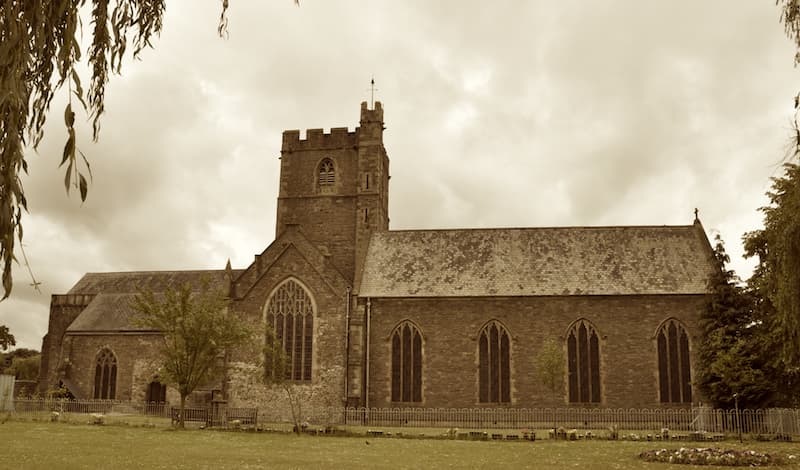
Abergavenny Priory
The Priory Church of St Mary, Abergavenny, is a significant parish church in Monmouthshire, Wales, often referred to as "the Westminster Abbey of Wales" due to its size and collection of high-status tombs. Originally established as a Benedictine priory in the late 11th century, it became a parish church after the Dissolution of the Monasteries. The church is renowned for its numerous medieval effigies and notable architectural features, including 15th-century choir stalls and a unique 15th-century wooden carving known as "The Jesse."

Bellecelle Abbey
Castres Cathedral, originally the church of Bellecelle Abbey, served as the episcopal seat for the Diocese of Castres from its creation in 1317 until its suppression after the French Revolution. The original Benedictine abbey church was destroyed by Huguenots in the 1570s, with only the bell tower surviving. Following incomplete reconstructions, the present building was begun in 1678 and consecrated in the early 18th century, though it remains unfinished.

Mozac Abbey
Mozac Abbey, located in Auvergne, France, was founded in the 6th or 7th century and later became affiliated with the Cluniac Order in 1095. Despite significant damage from earthquakes in the late 15th century, the abbey church, which now serves as the local parish church, retains notable Romanesque architectural elements, particularly its sculpted capitals. The abbey was dissolved during the French Revolution in 1790, and its collection of relics, including those of Saint Austremonius, are still preserved.