
Le Mans
Le Mans is a historic city in northwestern France, traditionally the capital of the province of Maine and now the seat of the Sarthe department. Known to the Romans as Vindinium, it boasts significant Gallo-Roman remnants, including an ancient defensive wall and amphitheater. The city is globally renowned for hosting the "24 Hours of Le Mans," the world's oldest active endurance sports car race, which has been a major fixture since 1923.
Key Facts
- ›The city was originally a Roman settlement named Vindinium and later known as Civitas Cenomanorum.
- ›It preserves one of the most complete circuits of Gallo-Roman city walls in existence.
- ›Le Mans was a key site in 11th-century struggles between the counts of Anjou and the dukes of Normandy.
- ›Henry II Plantagenet, King of England, was born in Le Mans.
- ›The city has hosted the "24 Hours of Le Mans" endurance race since 1923, becoming a global motorsports hub.
- ›Wilbur Wright conducted early public airplane demonstrations near Le Mans in 1908.

Gallo-Roman, Gothic, Neogothic
24 Hours of Le Mans Circuit, Gallo-Roman Defensive Walls, Roman Amphitheatre, Roman Baths, Cité PlantagenêT, CathéDrale Saint-Julien
Vindinium, Civitas Cenomanorum, Cenomanus
Claudius Ptolemy, William the Conqueror, Geoffrey V of Anjou, Matilda of England, Henry Ii Plantagenet, Wilbur Wright
- Seized By the Romans In 47 Bc
- Crisis of the Third Century
- Struggles Between Counts of Anjou and Dukes of Normandy In the 11th Century
- Norman Revolt and Expulsion In 1069
- Marriage of Geoffrey V of Anjou and Matilda of England
- Birth of Henry Ii Plantagenet
- Came Under French Crown Control In the 13th Century
- Invasion During the Hundred Years' War
- Industrialization In the 19th Century
- Wilbur Wright's Public Airplane Demonstrations In 1908
- Liberation By U.S. Forces In World War Ii
- Construction of Combat Advanced Landing Ground 'A-35' In 1944
- Introduction of the 24 Hours of Le Mans Race In 1923
- the 1955 Le Mans Disaster
About Le Mans
Le Mans is a historic city situated in northwestern France, traditionally recognized as the capital of the province of Maine and currently serving as the seat of the Sarthe department and the Roman Catholic diocese of Le Mans. Its origins trace back to the Roman era, when it was known as Vindinium and later Civitas Cenomanorum. The city is distinguished by its remarkably well-preserved Gallo-Roman defensive walls, which form one of the most complete circuits of ancient city walls to survive, along with remnants of a Roman amphitheater and baths.
Historical Significance and Development
The strategic location of Le Mans made it a focal point for territorial disputes, particularly in the 11th century, when it was contested between the counts of Anjou and the dukes of Normandy. This period saw significant figures like William the Conqueror and later, Henry II Plantagenet, King of England, who was born in the city. Le Mans eventually came under the direct control of the French crown in the 13th century and experienced further conflict during the Hundred Years' War. The 19th century brought industrialization, with advancements in railway and motor vehicle production.
Modern Identity and Global Recognition
In the 20th century, Le Mans gained international prominence through motorsports, most notably by hosting the "24 Hours of Le Mans," the world's oldest active endurance sports car race, first held in 1923. This event has cemented the city's association with automotive sports. The city also holds cultural and historical significance, with attractions like the Cité Plantagenêt (old town) and the Cathédrale Saint-Julien attracting visitors. Early aviation history is also linked to Le Mans, with Wilbur Wright conducting public demonstrations of his airplane near the city in 1908.
Source: Wikipedia ↗
Frequently Asked Questions
What is Le Mans known for?
Le Mans is most famously known for hosting the "24 Hours of Le Mans," a prestigious and historic endurance sports car race that has taken place annually since 1923. It is also recognized for its rich history, dating back to Roman times, with well-preserved Gallo-Roman architecture.
What are the historical origins of Le Mans?
Le Mans originated as the Roman city of Vindinium, the capital of the Aulerci tribe. It was later known as Civitas Cenomanorum. The city's ancient defensive walls are among the most complete Gallo-Roman circuits still standing, and remnants of Roman baths are also visible.
What historical figures are associated with Le Mans?
Several notable figures have connections to Le Mans. Henry II Plantagenet, King of England, was born there. Geoffrey V of Anjou married Matilda of England in its cathedral. The city also played a role in the history of the Counts of Anjou and the Dukes of Normandy.
What are the main historical and architectural sights in Le Mans?
The city features a well-preserved old town, known as the Cité Plantagenêt or Vieux Mans, which includes remnants of Roman walls and Roman baths. The Cathédrale Saint-Julien is another significant landmark. The ancient Gallo-Roman defensive walls are a prominent feature.
When did Le Mans become part of France?
Le Mans came under the control of the French crown in the 13th century. It later experienced invasions by England during the Hundred Years' War.
Related Monasteries
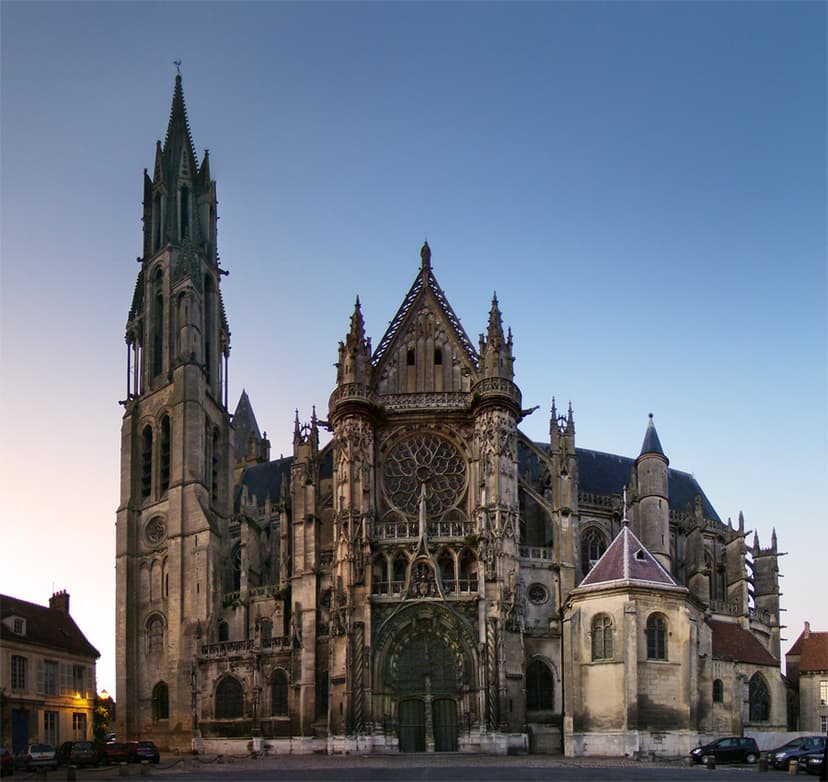
Senlis
Senlis is a historic commune in the Oise department of France, recognized for its Gothic cathedral and significant ties to early French monarchies. Situated near the Chantilly forest, the town was a royal residence and strategic settlement during Roman times, featuring substantial defensive walls and an amphitheater. Despite periods of decline, Senlis remains an attraction for its historical monuments and its role in French history, including its designation as a royal city.

Solesmes Abbey
Solesmes Abbey, officially known as St. Peter's Abbey, Solesmes, is a Benedictine monastery in Solesmes, France, founded in 1010. It played a pivotal role in the revival of Benedictine monastic life in France following the French Revolution, under the leadership of Dom Prosper Guéranger. The abbey is renowned for its contributions to the advancement of Roman Catholic liturgy and the revival of Gregorian chant, maintaining these traditions to the present day.

Alet Abbey
Alet Abbey, also known as the Cathedral of Our Lady of Alet and later St. Benedict's Cathedral, was an important religious site in Languedoc, France. Established as part of the Diocese of Alet in 1317, the cathedral was built adjacent to an existing monastery. It suffered significant destruction during the Wars of Religion and was largely demolished in the late 18th century, with its diocese suppressed after the French Revolution.