
Solesmes Abbey
Solesmes Abbey, officially known as St. Peter's Abbey, Solesmes, is a Benedictine monastery in Solesmes, France, founded in 1010. It played a pivotal role in the revival of Benedictine monastic life in France following the French Revolution, under the leadership of Dom Prosper Guéranger. The abbey is renowned for its contributions to the advancement of Roman Catholic liturgy and the revival of Gregorian chant, maintaining these traditions to the present day.
Key Facts
- ›Founded in 1010 by Geoffrey, Lord of Sablé, as a priory and later elevated to an abbey.
- ›Instrumental in the restoration of Benedictine monastic life in France after the Revolution, led by Dom Prosper Guéranger.
- ›Known for its significant contributions to the revival and advancement of Gregorian chant and Roman Catholic liturgy.
- ›The abbey church contains 15th-century statues, including a notable depiction of Saint Peter.
- ›Has been dissolved and re-established by the French Government multiple times, notably facing exile in England between 1901 and 1922.
- ›Serves as the mother house for the Solesmes Congregation, a significant Benedictine group.

Romanesque, Gothic
- Restoration of Benedictine Monastic Life In France
- Revival of Gregorian Chant
- Advancement of Roman Catholic Liturgy
- the 'Saints of Solesmes' Statuary
- 15th-Century Statue of Saint Peter
- Well-Manicured Gardens, Including An Enclosed Area For Monks
St. Peter's Abbey, Solesmes, Abbaye Saint-Pierre De Solesmes
Dom Prosper GuéRanger, Geoffrey, Lord of Sablé, Dom Abbot Geoffrey Kemlin
- Sacked and Burned During the Hundred Years' War
- Prohibition of Religious Vows and Subsequent Departure of Monks During the French Revolution
- Reacquisition and Refoundation By Prosper GuéRanger In 1833
- Elevation To the Rank of Abbey In 1837
- Multiple Ejections and Re-Entries By the French Government
- Exile In England
About Solesmes Abbey
Solesmes Abbey, officially known as St. Peter's Abbey, Solesmes (French: Abbaye Saint-Pierre de Solesmes), stands as a significant Benedictine monastery located in Solesmes, Sarthe, France. Its history is deeply intertwined with the revival of Benedictine monastic life in France after the tumultuous period of the French Revolution. The monastery was founded in 1010 by Geoffrey, Lord of Sablé, and was dedicated to Saint Peter.
Historical Significance and Revival
Following its initial foundation, Solesmes experienced periods of destruction and rebuilding, notably during the Hundred Years' War and later with architectural developments in the late 15th and early 16th centuries. However, the monastery faced a significant decline from the 17th century onwards due to the system of commendatory abbots. The French Revolution brought further upheaval, leading to the dispersal of the monks, the commandeering of the buildings, and the burning of its archives. The monastery's modern resurgence began in 1833 when the locally born priest Prosper Guéranger acquired the then-threatened buildings. Under his visionary leadership, the new Benedictine community flourished, receiving papal approval and elevation to the rank of an abbey in 1837. Guéranger's efforts were central to the restoration of Benedictine monasticism in France, and Solesmes Abbey became the mother house of the Solesmes Congregation.
Religious and Cultural Contributions
Solesmes Abbey is particularly celebrated for its profound impact on Roman Catholic liturgy and the revival of Gregorian chant. The monks have dedicated themselves to the meticulous study, reform, and preservation of these traditions. Life within the abbey adheres to the Rule of Saint Benedict, encompassing the "Work of God" (Opus Dei) through common prayer and reflective scripture reading (Lectio Divina), alongside the essential practice of manual labor. The abbey church itself showcases architectural elements spanning from the 11th century, with later additions and restorations, including notable 15th-century statuary and 16th-century choir stalls depicting Jesus' lineage.
Modern Life and Public Access
Despite facing numerous dissolutions and expulsions by the French Government throughout its history, including a period of exile in England from 1901 to 1922, Solesmes Abbey continues to thrive. The monastic community remains active, maintaining its spiritual mission and contributing to the broader Benedictine Confederation. The Abbey Church is open to the public for worship, and exhibitions on monastic life are also made available, allowing visitors to experience a glimpse of the enduring traditions preserved at Solesmes.
Source: Wikipedia ↗
Frequently Asked Questions
When was Solesmes Abbey founded?
Solesmes Abbey was founded in 1010 by Geoffrey, Lord of Sablé. The church was dedicated on October 12th, between 1006 and 1015.
What is Solesmes Abbey famous for?
Solesmes Abbey is particularly famous for its role in restoring Benedictine monastic life in France after the French Revolution, and for its significant contributions to the revival and advancement of Gregorian chant and Roman Catholic liturgy.
Can the public visit Solesmes Abbey?
Yes, the Abbey Church is open to the public for worship from 9:00 am (9:30 am on Sundays and Feast Days) to 6:15 pm. Exhibitions on monastic life are also available daily.
What is the Rule followed at Solesmes Abbey?
Solesmes Abbey strictly follows the Rule of Saint Benedict, which emphasizes obedience, prayer (Opus Dei and Lectio Divina), and manual labor as integral parts of monastic life.
Has Solesmes Abbey faced challenges throughout its history?
Yes, Solesmes Abbey has faced numerous challenges, including being sacked during the Hundred Years' War and being dissolved by the French Government multiple times. It also experienced exile in England between 1901 and 1922.
Related Monasteries

Montsalvy Abbey
Montsalvy Abbey, originally known as Abbaye Notre-Dame de l'Assomption de Montsalvy, was an 11th-century Benedictine monastery located in Montsalvy, Cantal, France. While the monastery itself no longer operates as such, its former abbey church now serves as the Roman Catholic parish church for the village. The surviving dependencies and the church, recognized as historical monuments, showcase Romanesque architecture with later 17th-century modifications.
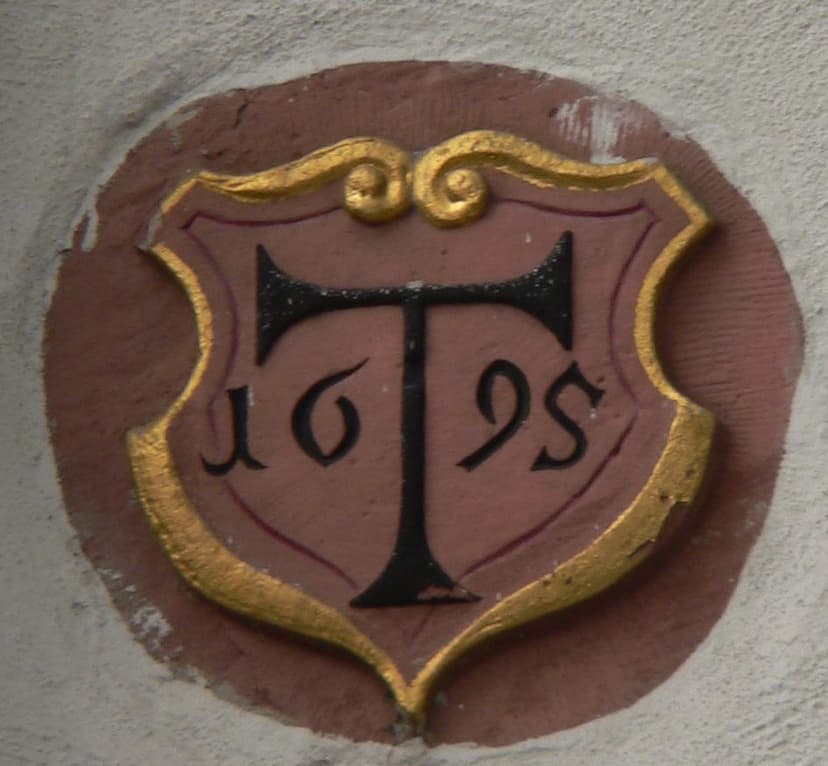
Antonite
The Hospital Brothers of Saint Anthony, also known as Antonites, were a Roman Catholic congregation founded around 1095. Their primary mission was to care for those suffering from Saint Anthony's fire, a common medieval disease. The order grew significantly, establishing numerous hospitals across Europe and even caring for the papal household, but its influence waned with the Reformation and a better understanding of the disease's cause, eventually leading to its suppression.

Cleves
Kleve, historically known as Cleves, is a town in northwestern Germany with a history dating back to at least the 11th century when it became the capital of a county and later a duchy. Its strategic location on a promontory overlooking the Rhine made it a significant administrative and cultural center, most famously associated with the Schwanenburg Castle. Despite extensive damage during World War II, the town has been rebuilt and remains the capital of the Kleve district, known for its university campus and its historical ties to figures like Anne of Cleves.