
Carmarthen
Christianity·Wales·Active town and community·1st century AD
Carmarthen, known in Welsh as Caerfyrddin, is a historic town in Wales with a history stretching back to Roman times, possibly serving as the oldest town in the country. It was strategically important throughout the Middle Ages, developing as twin settlements around a priory and a castle, and later becoming a significant administrative and commercial center. The town is deeply interwoven with Welsh legend, particularly the figure of Merlin, and has been a site of religious activity including Benedictine and Augustinian priories, as well as Franciscan friaries.
Key Facts
- ›Carmarthen has a claim to be the oldest town in Wales, with Roman origins dating back to approximately AD 75.
- ›The town's Welsh name, Caerfyrddin, is often linked to the legend of Merlin, the legendary wizard.
- ›It was the site of both Carmarthen Priory (Augustinian) and a Franciscan Friary (Grey Friars) in the Middle Ages.
- ›Carmarthen Castle was built by the Normans around 1094 and played a significant role in Welsh history.
- ›The town was a major administrative and judicial center for South-West Wales during the 16th to 18th centuries.
- ›The Black Book of Carmarthen, an important medieval Welsh text, is associated with the town's priory.

Roman, Medieval, 19th-Century Ecclesiastical Architecture
Roman Amphitheatre, Carmarthen Castle Ruins, St Peter's Church, Merlin's Oak, Carmarthen Bridge
Caerfyrddin, Moridunum
Merlin, William Camden, William Fitz Baldwin, Llywelyn the Great, Owain GlyndŵR, Edmund Tudor, King Henry Vii, Rhys Ap Thomas, Tudur Aled, Geoffrey of Monmouth, Gruffudd Ap Nicolas, Bishop Ferrar, John Osborne, 1st Earl of Danby, Titus Lewis, Peter Williams, John Spurrell, William Spurrell, John Nash, Sir Percy Thomas, Clough Williams-Ellis, Sir Thomas Picton, Gwynfor Evans
- Roman Settlement Established
- Norman Conquest and Castle Construction
- Castle Destroyed By Llywelyn the Great and Rebuilt
- Town Captured and Castle Sacked By Owain GlyndŵR
- Black Death Arrives
- Dissolution of the Monasteries
- Bishop Ferrar Burnt At the Stake
- Carmarthen Grammar School Founded
- Eisteddfodau Held
- Rebecca Riots Attack On Workhouse
- World War Ii Prisoner-of-War Camps Established
- Creation of Carmarthen Community Council
About Carmarthen
Carmarthen, known in Welsh as Caerfyrddin, is a historic county town in Carmarthenshire, Wales, situated on the River Towy. With roots stretching back to Roman times as the settlement of Moridunum, it holds a claim to be the oldest town in Wales. Its strategic location has shaped its history, from its origins as a Roman civitas capital to its medieval development as twin settlements centered around Carmarthen Priory and Carmarthen Castle.
Religious History
The town has a rich religious heritage, beginning with an ancient Clas church that evolved into the Augustinian Priory of St John the Evangelist and St Teulyddog. In the 13th century, Franciscan Friars established a friary, which became a notable burial site, including for Edmund Tudor, father of King Henry VII. St Peter's Church, the parish church, has a long history and remains a significant religious edifice. Nonconformist chapels, such as Baptist and Congregational chapels, also form part of Carmarthen's religious landscape, with some dating back to the 18th century.
Historical Significance and Legends
Carmarthen was a vital administrative and judicial center for South-West Wales, particularly during the 16th to 18th centuries, and was once the most populous borough in Wales. It is famously intertwined with Arthurian legend, with its Welsh name, Caerfyrddin, often interpreted as 'Merlin's fort,' referencing the legendary wizard. The Black Book of Carmarthen, a significant medieval Welsh manuscript, is associated with the town's priory. Landmarks include the remnants of Carmarthen Castle, the historic St Peter's Church, and the modern Carmarthen Bridge, a Grade II listed structure.
Modern Carmarthen
Today, Carmarthen is an active community and town, retaining elements of its historical past while functioning as a modern administrative center. The town council is based at St Peter's Civic Hall, and the county council headquarters occupy much of the former castle site. Carmarthen has been recognized as one of the best places to live in Wales, reflecting its enduring appeal and historical depth.
Source: Wikipedia ↗
Frequently Asked Questions
What is the historical significance of Carmarthen?
Carmarthen is considered by some to be the oldest town in Wales, with a history that began with a Roman settlement named Moridunum. It was a strategically important location throughout the Middle Ages, featuring a castle and significant religious institutions like the Carmarthen Priory and a Franciscan Friary.
What is the origin of Carmarthen's Welsh name, Caerfyrddin?
The Welsh name Caerfyrddin is widely claimed to mean 'Merlin's fort,' linking the town to the legendary wizard Merlin. However, an alternative etymology suggests that the name Merlin might have originated from the town's name, or that Myrddin is a corruption of the Roman name Moridunum.
What religious institutions were historically present in Carmarthen?
Carmarthen was home to the Augustinian Priory of St John the Evangelist and St Teulyddog, which replaced an earlier Benedictine Priory. The town also had a Franciscan Friary (Grey Friars) established in the 13th century, and St Peter's Church, which remains a prominent religious building.
Is Carmarthen associated with any historical legends?
Yes, Carmarthen is famously associated with the legend of Merlin. The town's name is often linked to him, and local legend also speaks of Merlin's Oak, a tree whose fall was prophesied to bring about the town's downfall.
What role did Carmarthen play in medieval Wales?
During the Middle Ages, Carmarthen developed as twin settlements: Old Carmarthen around the Priory and New Carmarthen around the Castle. The construction of Carmarthen Castle by the Normans around 1094 and the subsequent development of town walls made it a key defensive and administrative center.
Related Monasteries

Cologne
Cologne, originally founded as the Roman Colonia Agrippina in the 1st century AD, is a major German city with a rich history spanning over two millennia. It served as a vital Roman provincial capital and later flourished as a medieval trade center and a free imperial city within the Holy Roman Empire. Today, Cologne is renowned for its magnificent cathedral, a globally recognized landmark and pilgrimage site, as well as its numerous Romanesque churches and its historical significance as a cultural and economic hub.

Llandeilo
Llandeilo is a historic town in Carmarthenshire, Wales, named after the 6th-century Celtic saint, Saint Teilo. Founded as an early Christian settlement and later a significant ecclesiastical center, it evolved into an important medieval market town. Today, Llandeilo is recognized for its sophisticated shopping, local arts and crafts, and its adjacency to the Brecon Beacons National Park.
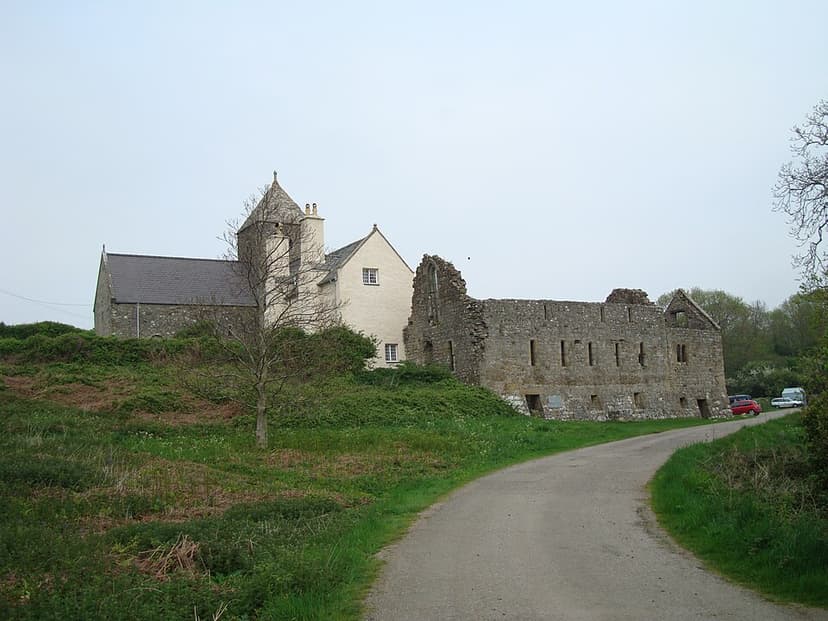
Penmon Priory
Penmon Priory is a historic monastic site located on the eastern tip of the Isle of Anglesey in Wales. Traditionally founded in the early 6th century by Saint Seiriol, it evolved from a clas into an Augustinian priory before its dissolution in 1538. The site is notable for its surviving medieval buildings, including the Priory Church of St Seiriol, two ancient crosses, and a well, with parts of the complex potentially dating back to the earliest Christian structures in Wales.